
Denim Research & Design Studio in the state of the art denim factory | Shell Apparels Pvt Ltd, Bangalore
”Worn as the fabric of hard honest work, and as the expression of angry rebellion; used for the sails of Columbus’ ships in legend; and worn by American cowboys in fact.” A Denim Factory as our site with state of the art facilities for sustainable denim production practices is not only inspiring, this project is almost addictive. To research on our natural building techniques together with the factory byproducts to create a personalized material palette, to complement their vision with ours and create a neutral studio space for textile designers from around the globe.
Category: Lime Plaster
The breath-ability and aesthetics of LIME
One important aspect of ecological construction is to guarantee a good ‘breathability’ of the building. The plasters being the first layer in contact with the outside and inside air, it plays an important role in the regulation of humidity, odors and temperature. Natural plasters such as earth or lime plasters have the capacity to make the wall breathable and significantly improve the quality of the inside air. Eliminating the need for a chemical paint over it, these renders can be sponge finished, smooth or trowel finished, rough or brush finished, hand finished, fibrous, plain, grainy, and together with natural colour pigments; the options are infinite!
Eleven Thousand Sun Dried Bricks
“Of Three little pigs, one built a house of straw, another of sticks and the last built his house of bricks, Soon came the days of the big bad wolf, who huffed and puffed and blew the straw house down! He huffed and puffed and blew the stick house down, but try as he might, he couldn’t blow the brick house down. The other two piglets resented not having built a brick house and did so soon after, and they lived happily ever after.”
There are two blatant lies in this story, that is impressed on to the minds of many a children. One, that brick houses are better than straw houses and stick houses. Two, that a wolf (Canis Lupus) can ‘Huff and puff and blow the house down. Of these which we choose to overlook is completely left to us. Statistically speaking, the Straw houses and the wattle and daub constructions of many countries have been providing shelter in human settlements for centuries. However, the instance of a wolf blowing down a house has rarely (if not ever) been reported.
In a manner of speaking it was this metaphysical wolf that needed to be tackled when we took up the Sheegehalli Project.
The Premise
Sheegehalli is a small village located about 60 kms from the northern tip of Bangalore. A kilometer further away from the village, on a long strip of land is where our clients decided to do some organic farming as well as build themselves a small cottage. Suma and Shuba both work in the city and are looking forward to a quite retreat where they can both look forward to a little organic farm. Being organic farmers at heart, the two wanted a natural home to live in, where cement, paint and other man made chemical use is pushed to a minimum. This is where the project starts in all earnest, for it begins far from the city as we know it, in the outskirts of a village that is tangled in its customs, beliefs, work cultures, building practices, farming, cultural knowledge and what not.
The Brick Makers
Munshamappa was a swarthy fellow, the kind of person who you wouldn’t come in the way of. Yet as his personality unfolded, he seemed more and more a sensitive and sensible person. Hesitance prevailed over our first meeting as we explained to him that we needed him to produce around 11 thousand sun dried bricks. The hesitance did not stem from the quantity of bricks or the one week deadline, but from our choice of un burnt or un cooked bricks itself. Now Munshamappa has been making bricks for over 40 years since the tender age of 16. For a man whose memory of adobe production is overshadowed by the demand for fired bricks, it seemed as If we were mis-informed. He even tried to convince us to set fire to the pile of adobes to give it ‘some strength at least’. It was only after Jeremie got into the mixing pit and cast a few bricks that Munshamappa’s eyes widened with realization. We seemed to know what we were asking for, and what’s more, we spoke the same language of earth. The way Jeremie stacked the earth and checked the consistency of the mix was exactly how Munshamappa would do it himself. It was a bonding like no other, between a man from the mountains of France and another from the semi-arid dry lands of Karnataka. Neither spoke a common language apart from earth. It had taken only one gesture to turn the tables, he knew perfectly well how to cast adobes, he would spread sand on the flat land before he cast the mud into the molds, he explained in detail as to how he would cover the bricks lest they dry too fast. Of how he would work from 5 in the morning till 9 and again 5 in the evening till 10. Of how he would flip the bricks to the side in two days, or the rows and columns he would make on the ‘kana´ the flat ground on which one casts the adobe.
Rice husk, Quarry dust and Soil we told him, as he ruminated over how light the bricks were. ‘Olagade thamp aag irutthe’ he said (it will be cool inside the house) as we smiled at his understanding of the material.
The Master Mason (Mestri)
Shrewdness was probably just his professional trait. But it is most noticeable one when we first met Lakshmana, our local contractor. Lakshmana nodded at all the drawings presented to him and with a casual flick of head committed to wall sections that were detailed to the last brick. It took only three days for us to realize that he did not know how to read drawings, let alone drawings, he couldn’t read at all! Now, every site visit was marked by us creating demo structures be it the lost formwork to a beam or even the brick masonry. He was soon famed in the office for calling us and asking about “this wall” and “that wall” while frantically pointing at a spot roughly 70 kilometers away from us on the other side of the phone.
Though Lakshmana comes off as completely ignorant to natural building techniques, he is not. He is hesitant and unsure of building the way his forefathers taught him. This becomes glaringly obvious every time we explain the next step of the construction. If one were to explain to him the idea of mud mortar, he would complete the explanation by remarking that it would be better to leave the mix overnight, lest the clay doesn’t fully dissolve! Coming from a background where he cannot afford any financial risks, it is his trust in us and his enthusiasm to build that keeps him going on a path that he hasn’t walked before.
The Roofers
Visits to the nearby village, casual chats with familiar faces revealed that Suma’s dream of having a stone roof might actually be possible. A few enquiries and Suma driving to nearby stone quarys made it evident that there was an abundance of this material too! Stone roofs are the roofs of choice for ‘hulu-mane’ or vast rooms in the house used for silk worm rearing. On entering one of these spaces we were mesmerized by stones that spanned 16 – 18 feet! Another rendezvous bought us to Ullurappa- A man whose words were as strong as his material. We learnt that the span of a stone he could cut was limited only by the size of his vehicle. He was willing to cut stones of 20 feet length, and yet as the walls began to rise and we gave him detailed drawings of the stones and their measurements, so did his insecurities about the drawings. “Just tell me your overhangs and leave the rest to me”. Whether he dint trust the drawings or he dint trust Lakshmana’s wall conforming to the drawings we will never know. But what we will remember is that the house has no metal girders in its Stone roof, it is just stone all the way. A lime and Rice husk layer to insulate and local surkhi to waterproof, and we should have an al weather roof!
Several Cooks and a Wonderful Broth
This building experience has taught us one thing. There is more to the craft of building than a drawing and execution. Not one of our belief / theory/ know how was left unchallenged. Everything from the way a brick is laid, to the roof, to how the foundation is dug, nothing was left the way we wanted it. The work wouldn’t begin because the plan had fundamental vaastu issues that we had never thought of. The local priest refused to even do the puja for the marking. This would send ripples down the whole village if we were to continue. The plan was revised, rather drastically. The foundation sections changed to how it is locally done. The porch detail changed to lower it rather than heighten it as the roofers refused to work on a roof that elevated towards the east. If this was the cultural facet to the project then there was the money aspect. Lakshmana wanted to hire an extra labor just to remove small stones stuck to the adobes, while we learnt that Munshamappa, our brick maker had asked labor for a man with an injured leg to sit between the wet bricks, on a chair, through the day to chase the dogs away!! As we would raise our eyebrows, Suma would calmly say “We shouldn’t be surprised, money is hard to come by, and at least they are doing something about it”. The quarrels between the teams, the haggling, Suma and Shuba running the show and communicating the designs to the mason week after week, hundreds of phone calls, all form a chaotic background while the building steadily rises, seemingly of its own accord.
So, why so much hassle for a small cottage? A cottage that would have otherwise taken fewer than a few site visits. Home is familiarity. Familiarity of not just a place or a space, but of what it is made of. Very little of that house is made of a mystery material that was procured at a shop. Every ounce of energy that went into that house came from the breakfast the team had that morning and not from hidden machinery that run on un-thought of fuel from unseen forest. The bricks from earth, the water from the nearby well, the stones of the nearby quarry, the hands of the neighbor, the care of the farmers, the beliefs that shaped the house, Suma and Shuba know them all, and that is the closest truth to making your own home.
The Little Green Cafe
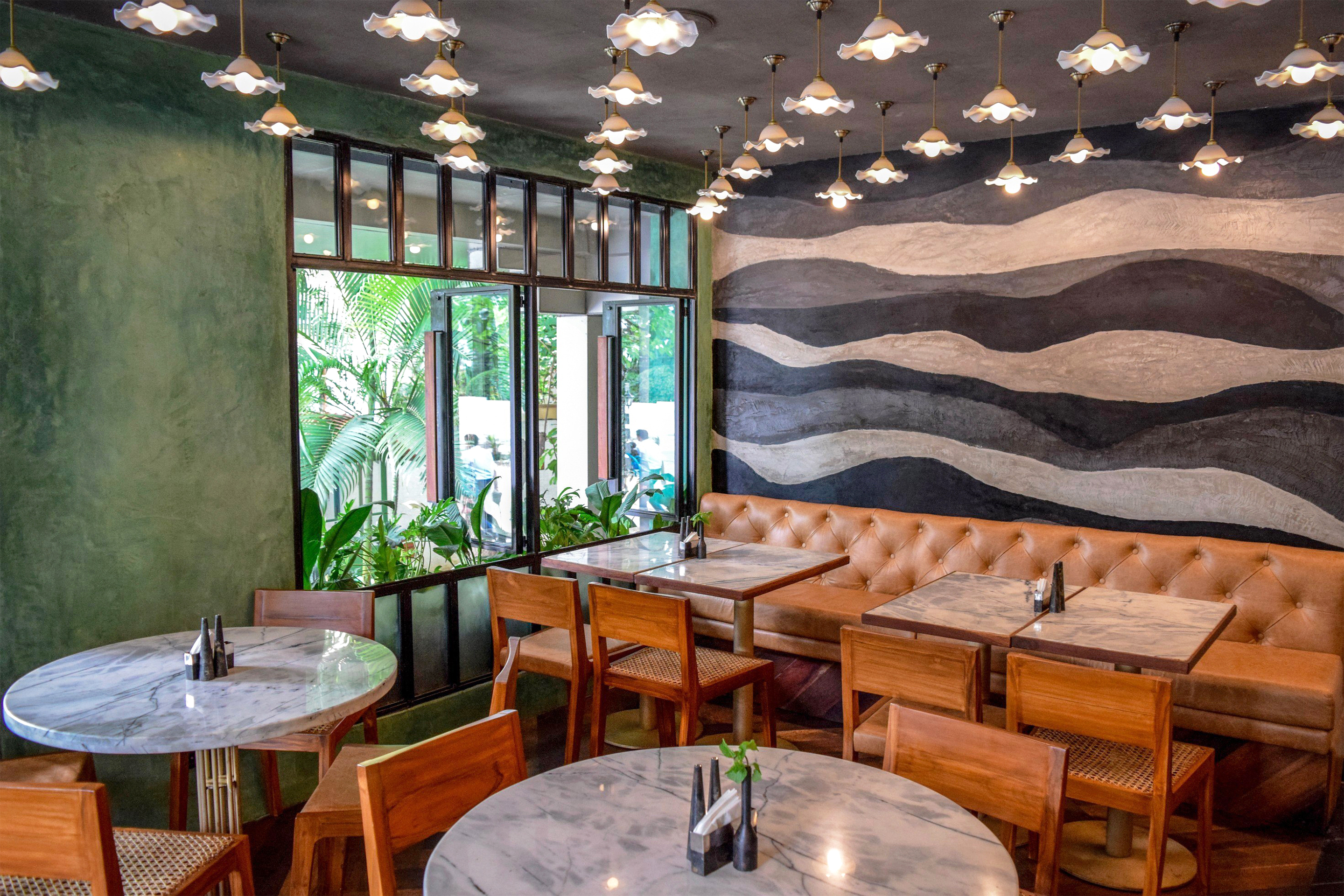
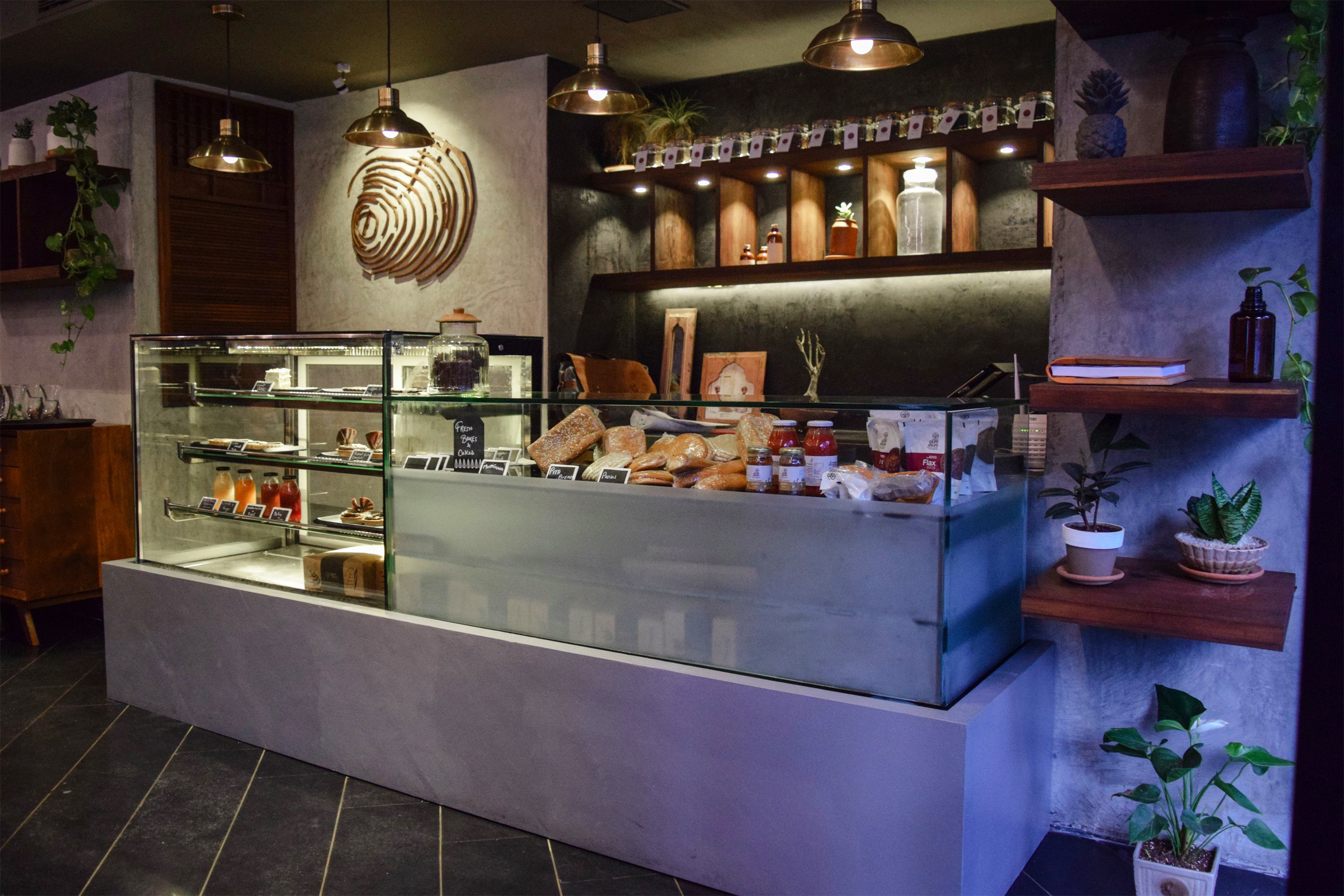
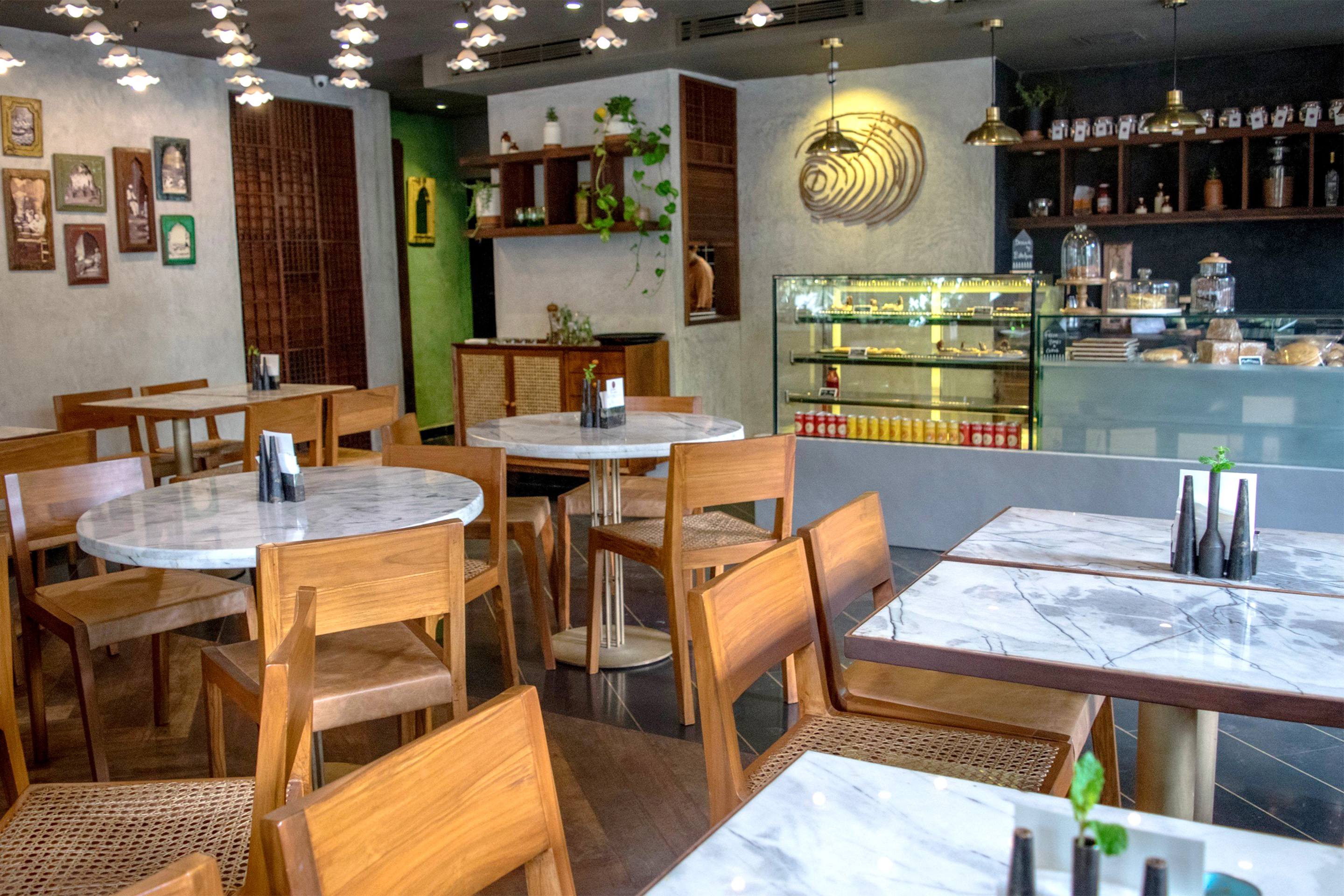
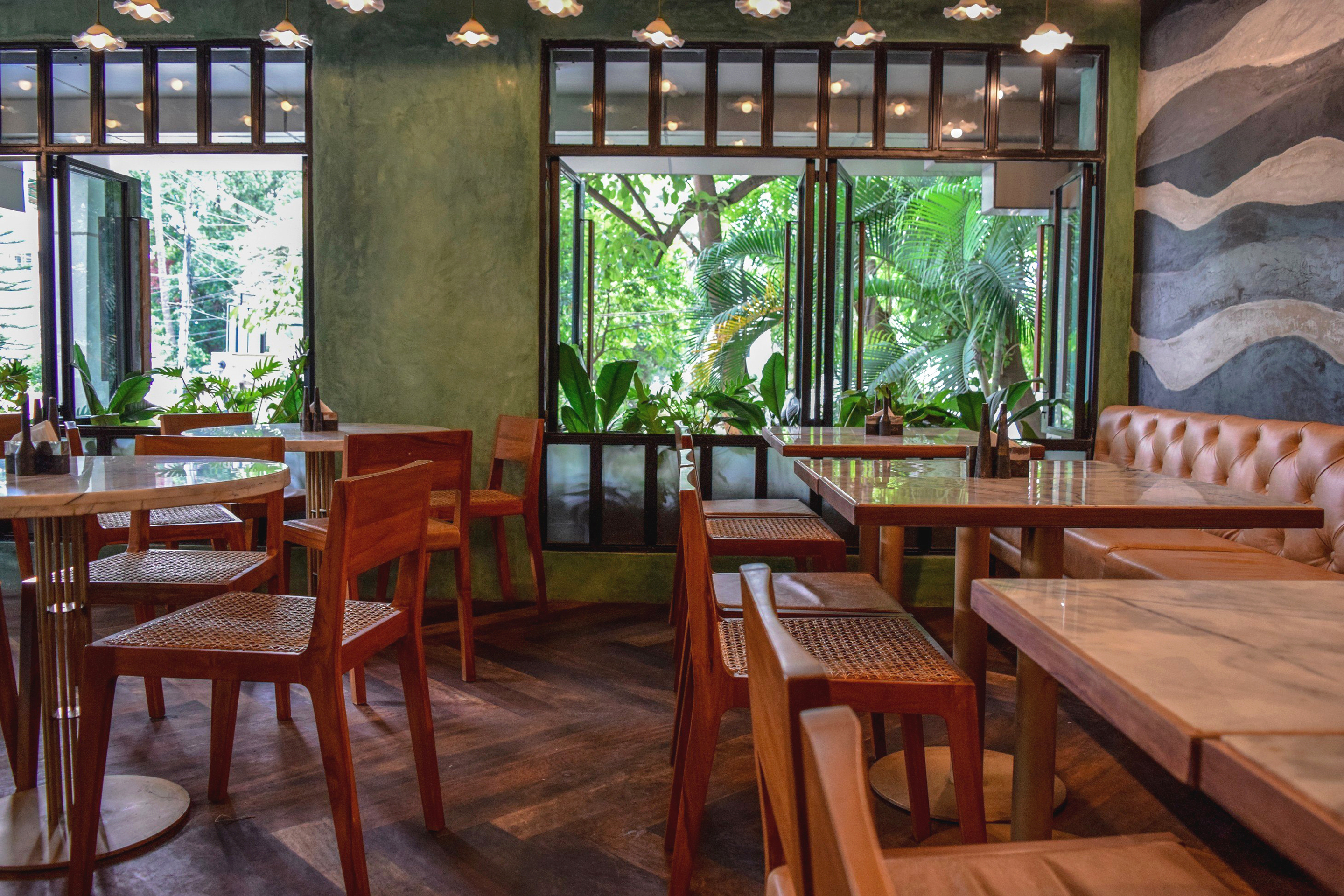
We wanted to bring the values that the team at the little green cafe bring to their plate; health, ecology and authenticity. Natural materials like lime and clay plasters, together with chemical free paints render each textured wall and ceiling. The wood is upcycled teakwood and antique printer shelves. The woodwork and brass inlay in stone for the floor, the woven cane work for the furniture, and the metal fabrication work for the tables were customized and put together by craftsmen of our city. And the little sky of stars above are vintage lampshades from another era! A special attention has been taken to keep the energy consumption of the cafe to a minimum. All the LED bulbs add up to the consumption of just one bulb of sixty watts! Additionally, we have introduced a passive air cooling system as an alternative to air conditioning, a one of its kind for our city that consumes just one tenth of the energy! Each material in its natural and honest form, with as minimum transformation as possible, come together to give you a comfortable, healthy, and uniquely handcrafted surrounding.


2015 Creative Plasters : earth, lime, clay … and you
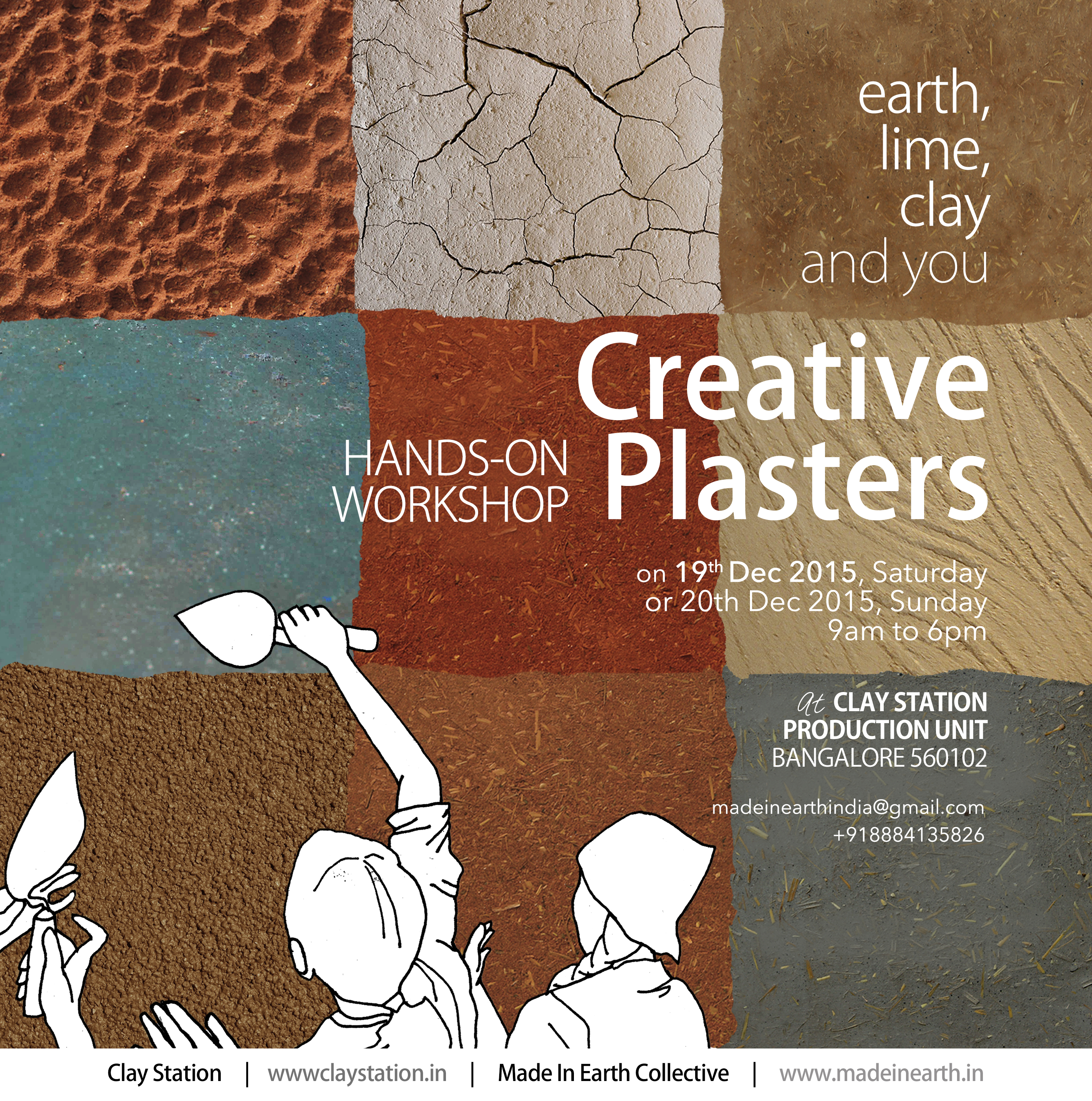
We are happy to announce a collaboration with Clay Station, Bangalore for the Creative Plasters Workshop. Clay Station is a space for the experienced, aspiring and recreational potter. We love earth, and so do they. Together we bring a workshop to explore with you, what we are most passionate about.
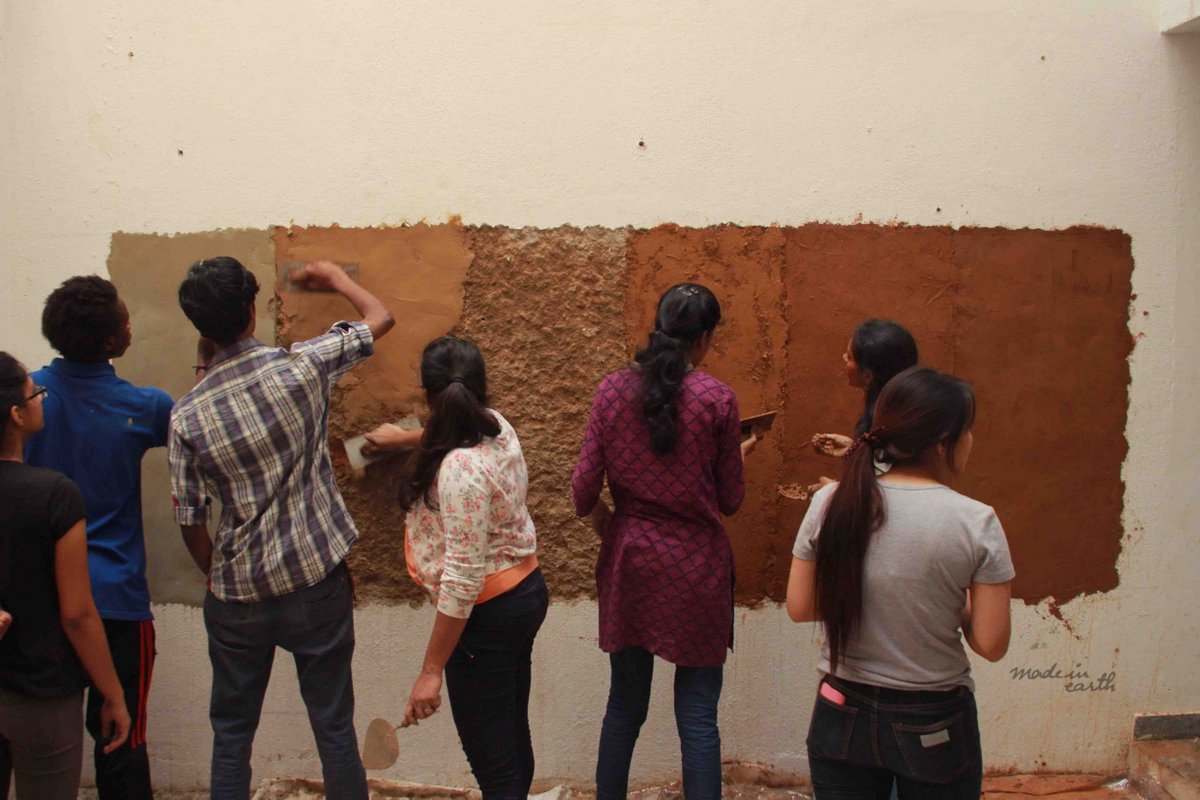
A plaster that breathes; that regulates temperature and humidity inside a building; that absorbs both noise and odors; that ages beautifully with time. Add to that the infinite possibilities in aesthetics; pigmented or plain, smooth or grainy, regular or patterned, contemporary or rustic; natural plaster is irresistible!
Earth is the most widely available natural building material. It uses little or no energy in processing. It’s incredible plasticity, ecological and aesthetic qualities have enabled our ancestors to use it in abundance to build their homes, and in perfect harmony with their environment. Earth plaster, unlike paints and chemical coatings, do not emit any volatile components which could be harmful to our health. Being locally sourced, earth plasters reduce the environmental impact of our construction.
All over the world, there exists an incredible diversity of traditional recipes of natural plaster. It is this diversity of ingredients married with the many possibilities of textures and colors offered by the land, that is at the origin of this workshop.
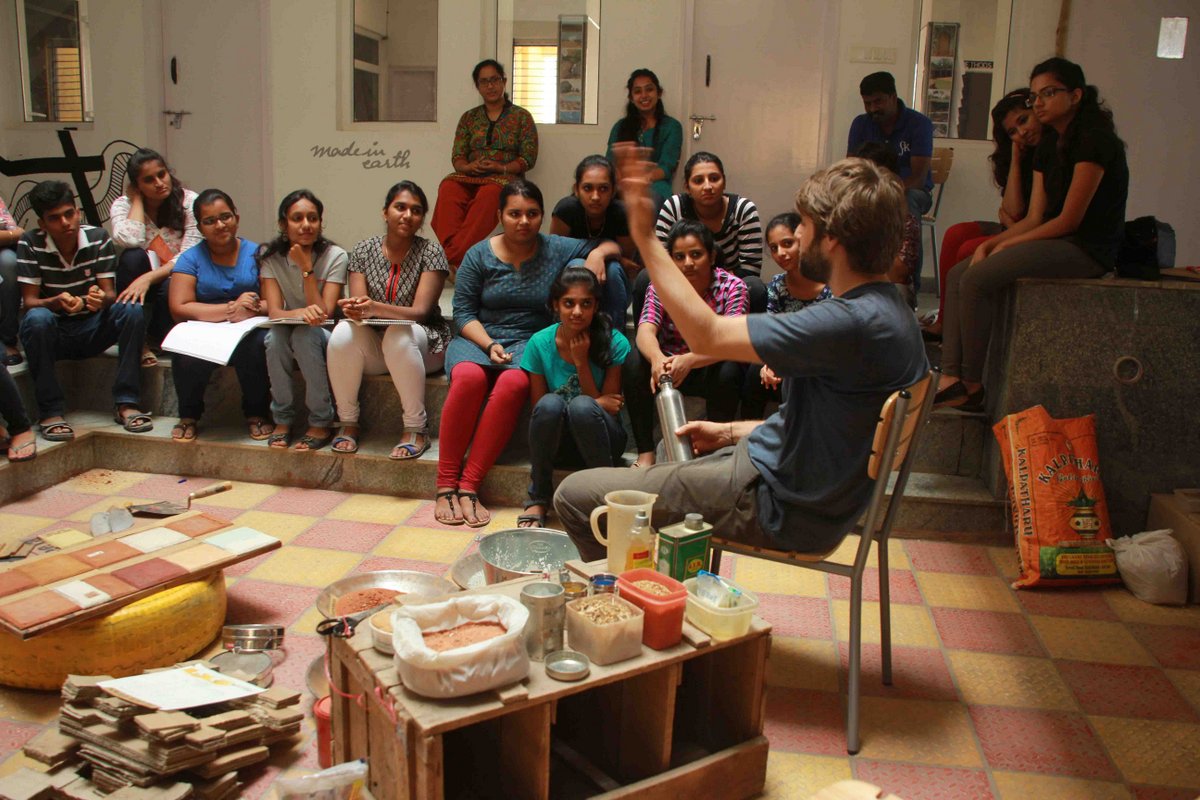
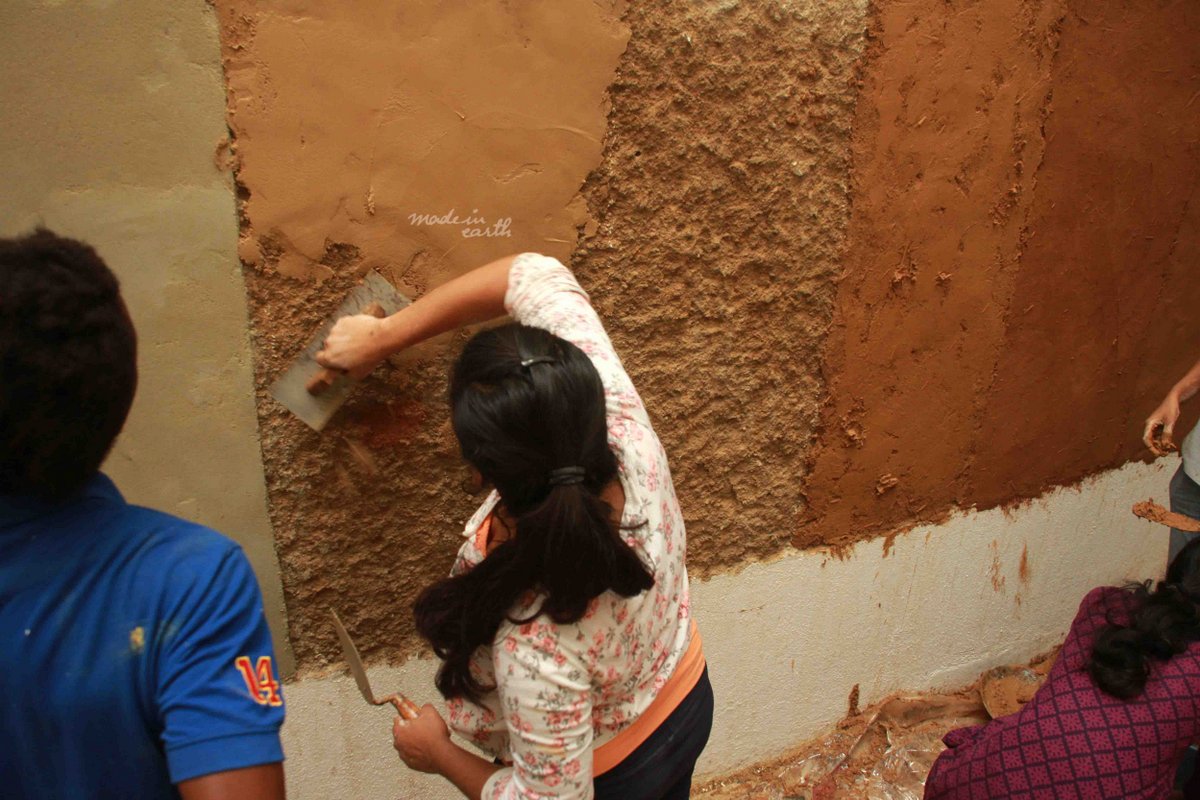
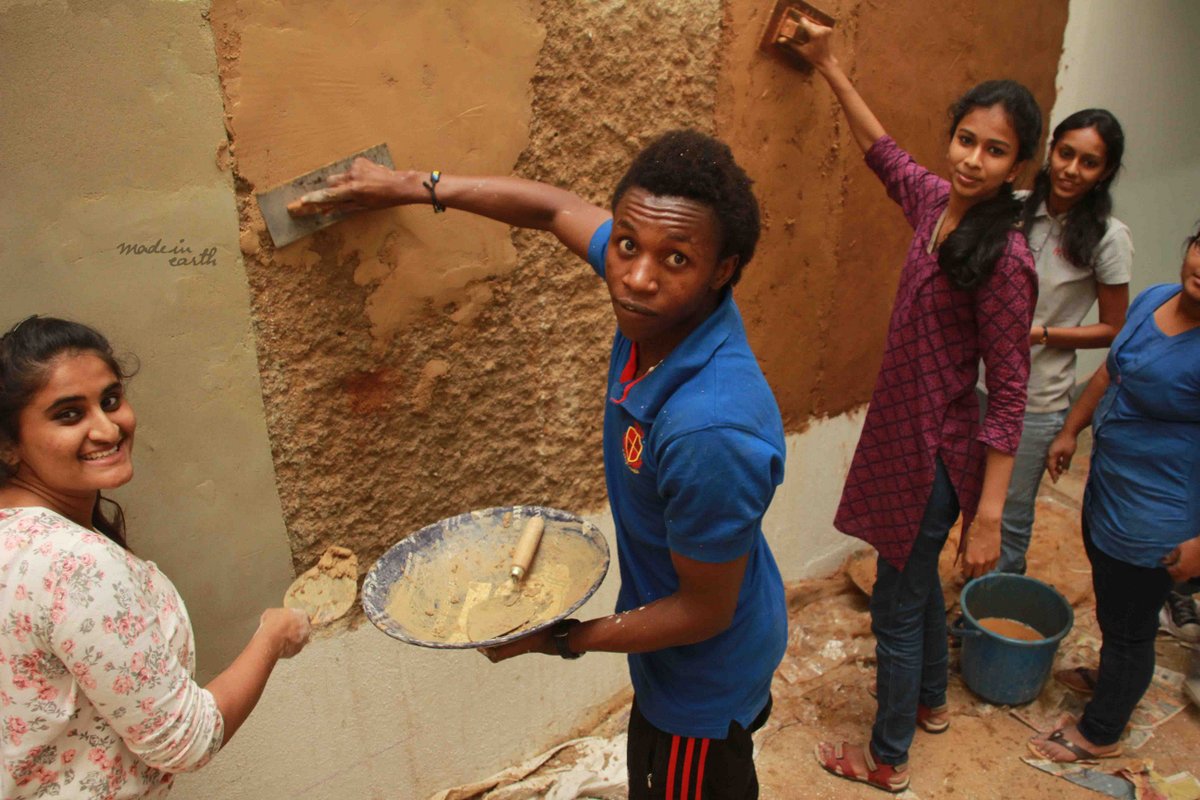
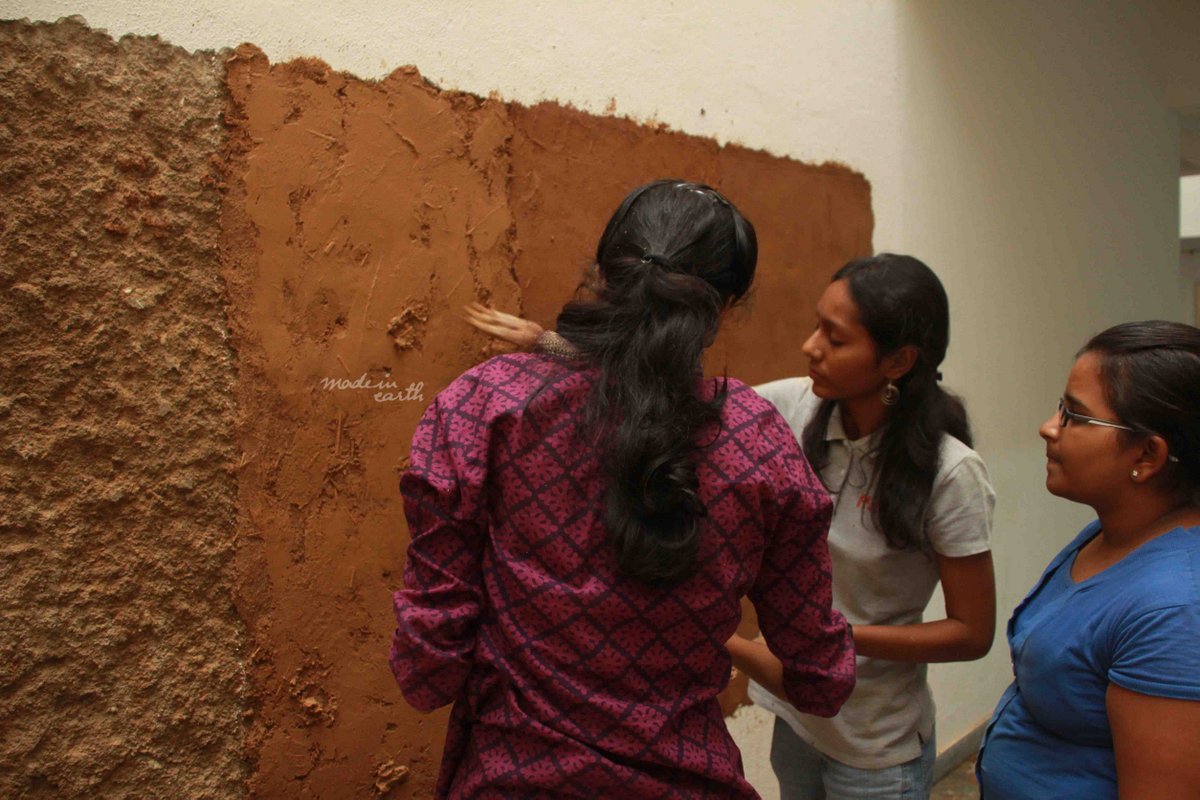
Anybody can create natural plasters, together with the soil of their place, a dose of creativity, a trowel of motivation and a bit of experience! A place for experimentation, exhibition and knowledge sharing, the Creative Plasters workshop invites you to Clay Station for a one day hands-on session on the 19th or 20th of December 2015
Come and learn with us!
What will you learn?
Prepare, test and apply earth plasters (raw and stabilised) | Wall preparation | Base plaster | Finishing plaster | Decoration, plaster carving, embossing, use of color oxides and pigments | Discover and try the traditional Moroccan Tadelakt technique, a fine richly coloured water-proof plaster.
Prerequisites
Earth construction is for all! No requisite except the motivation to learn and the desire to play with the material.
The Program
One day workshop on the 19th or 20th of December 2015
from 9:00 am to 06:00 pm, lunch included.
The venue
The workshop will take place in the production facility of “Clay Station”
Clay station production unit,
L75, 15th cross, near Indian Bank
HSR layout, Bangalore 56 0102
Google map : https://goo.gl/maps/rL9up9jvxtB2
GPS coordinates : 12.914055, 77.630304
Equipment and material
Dress to get dirty! Bring a round smooth stone for the Tadelakt technique
Registration and fees
Maximum 20 participants on a first come first served basis
Fees : 2000 Rs (1200 Rs for students, please send a scan of your student ID card, to : madeinearthindia@gmail.com )
ONLINE REGISTRATION FORM : http://tinyurl.com/151219-PlasterWorkshop
Registration closes on the 14th of December.
Contact
madeinearthindia [at] gmail.com
Organisers
Clay Station www.claystation.in

Made In Earth Collective www.madeinearth.in

2015 Brick Kiln House
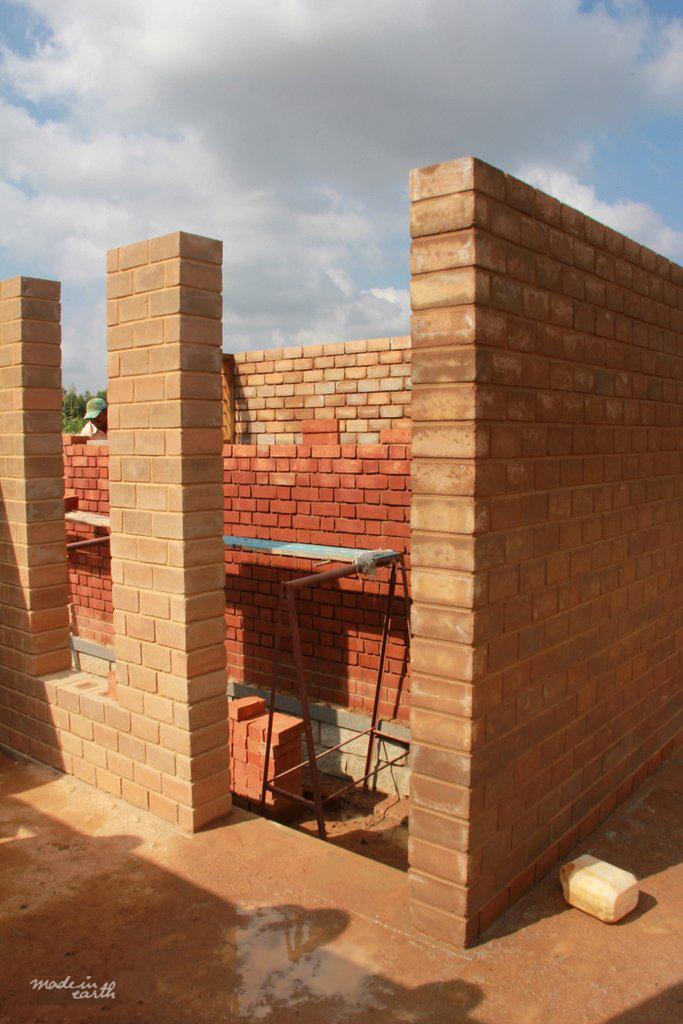
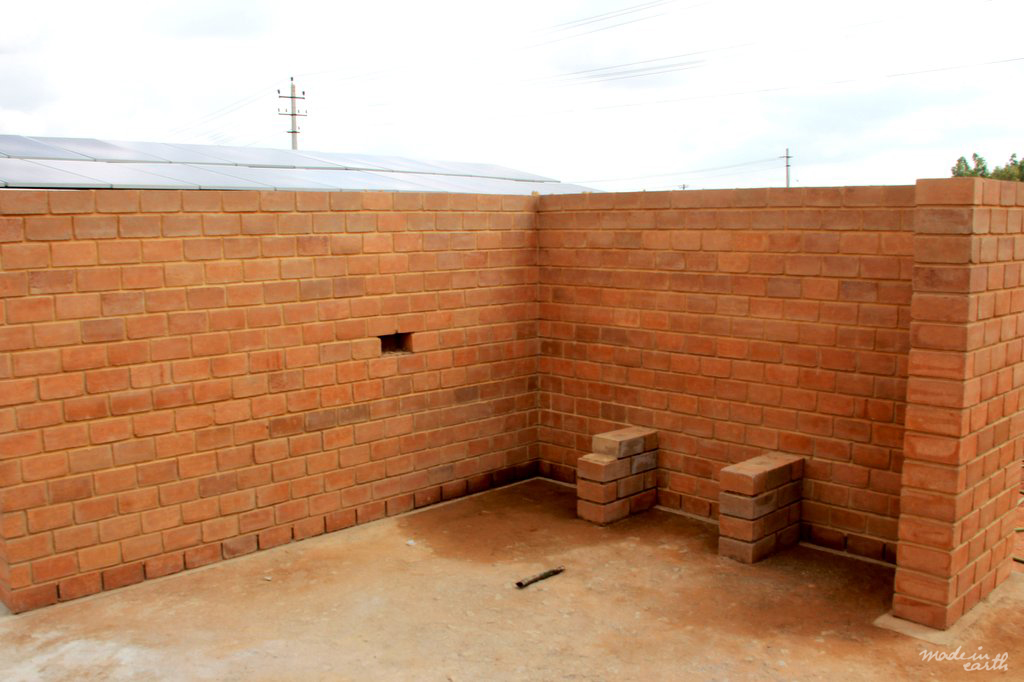
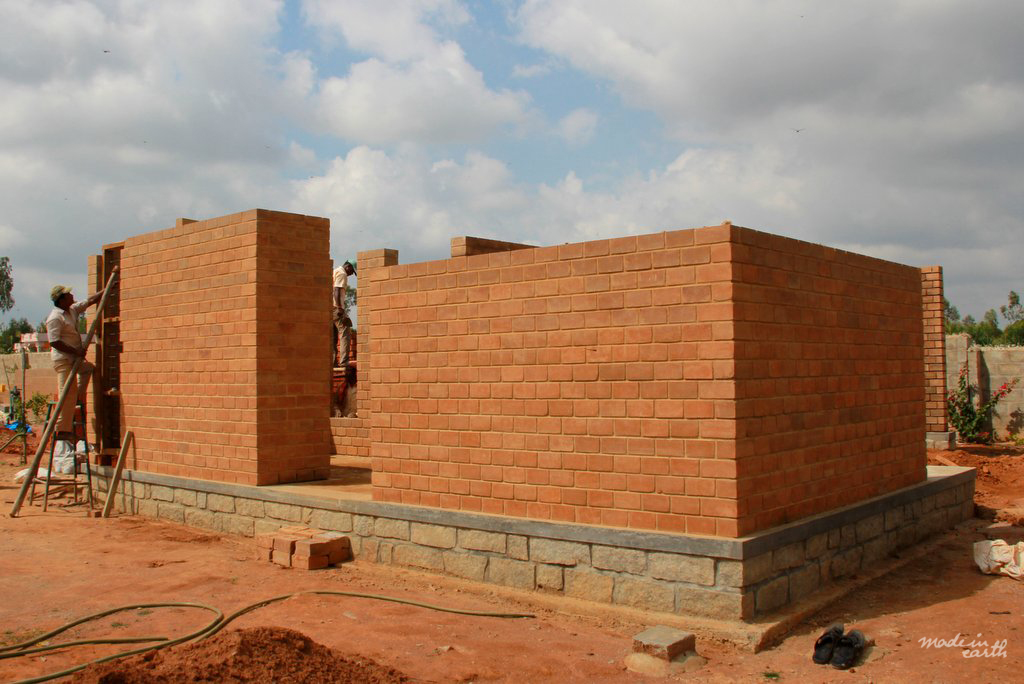
The brick Kiln house is coming up! Stone foundation and compressed stabilized earth blocks (CSEB).
Read more about the project here.
Tadelakt, a Moroccan Marvel
There is a certain magic in working with natural materials, there is life in using earth and lime. There is a large palette to play with, but it was not until I learnt about Tadelakt, the Moroccan marvel technique, did I discover the pure class of craftsmanship in earth.
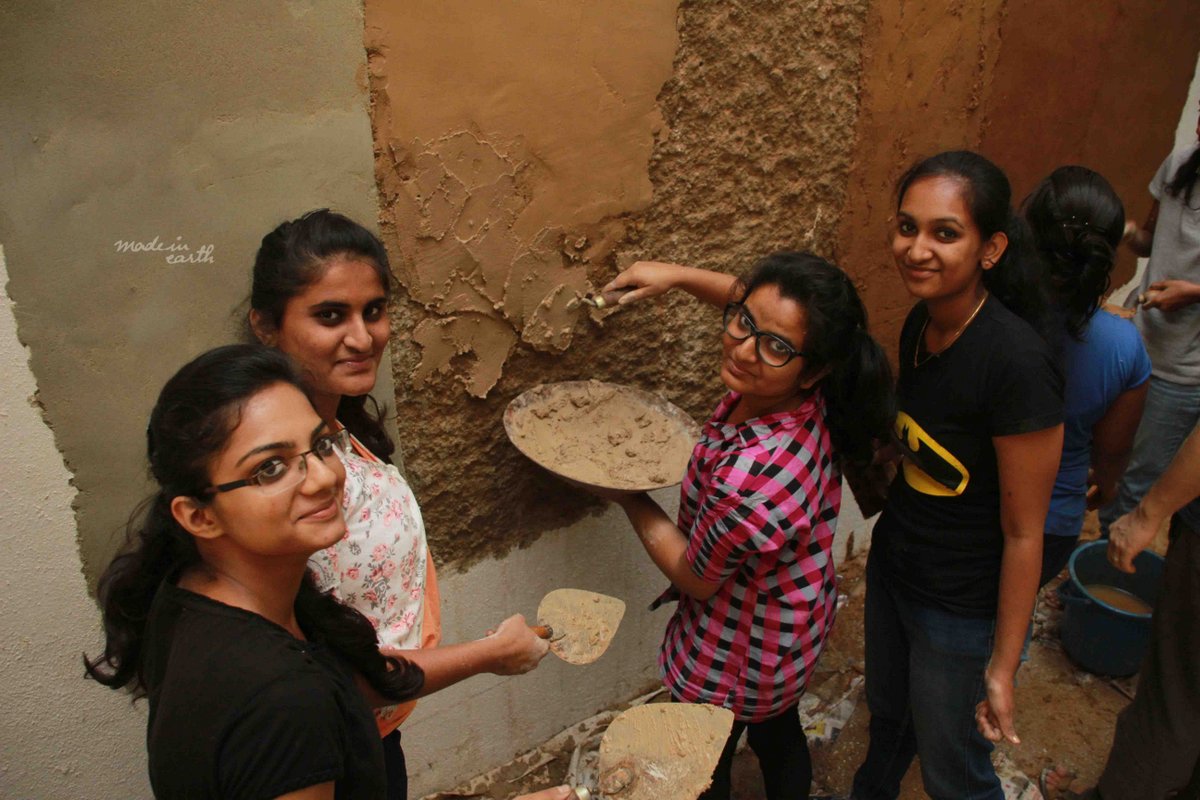
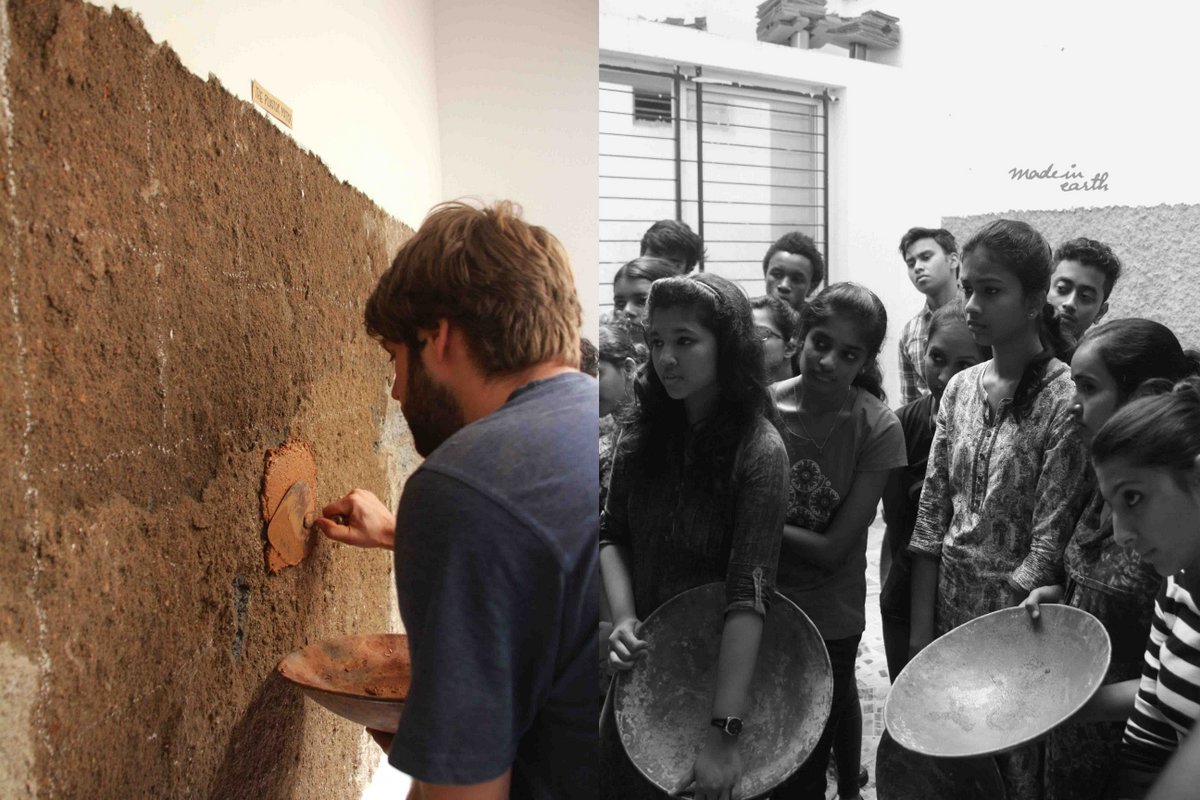
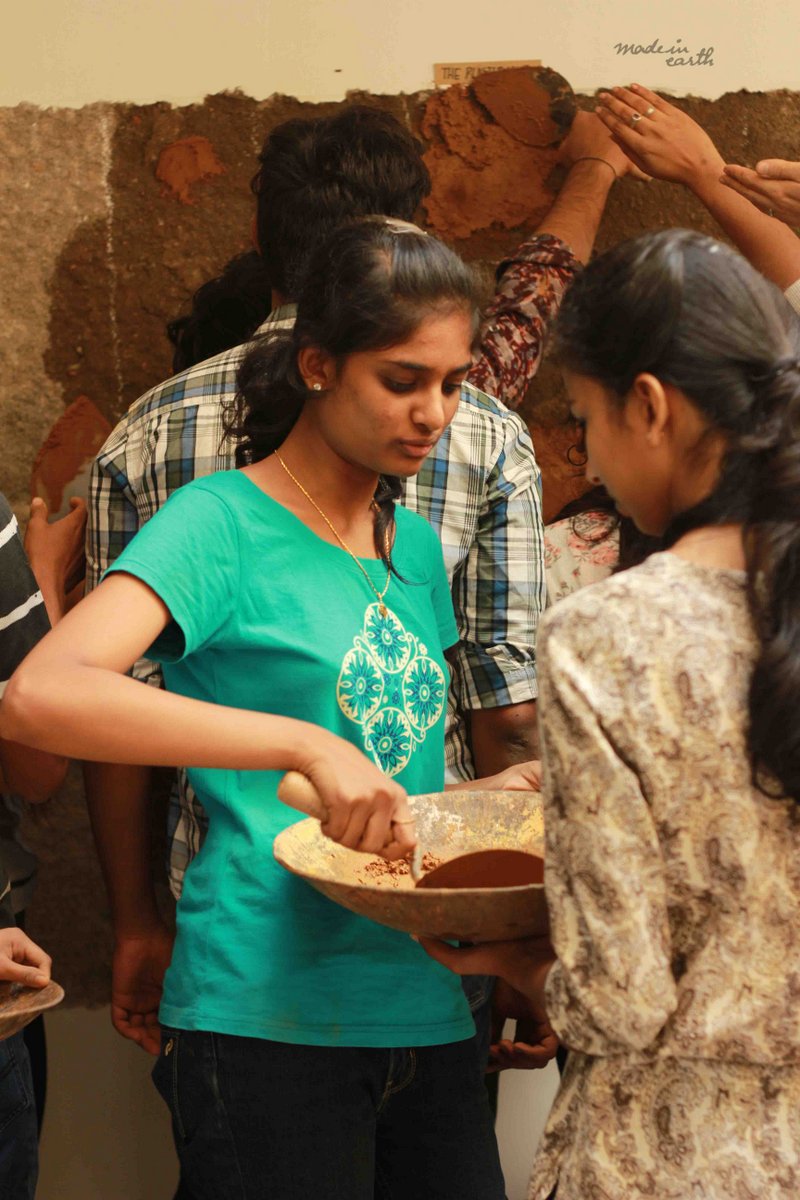
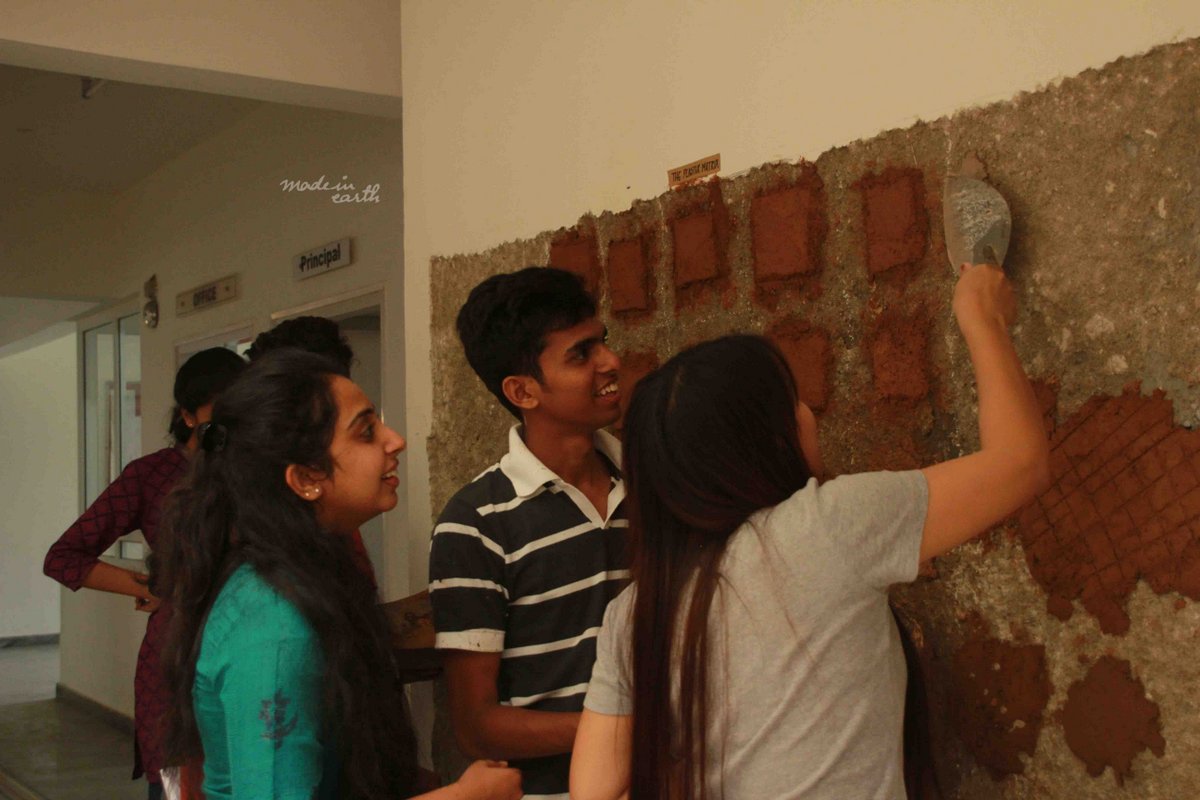
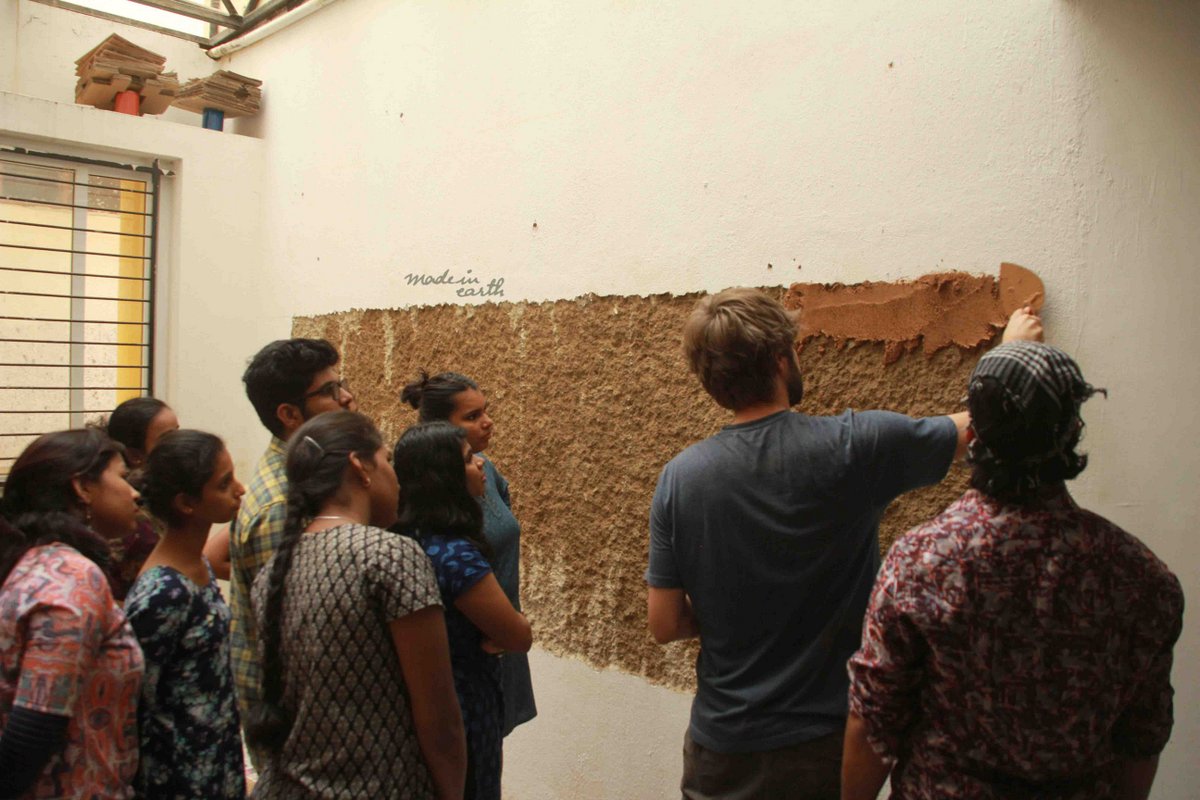
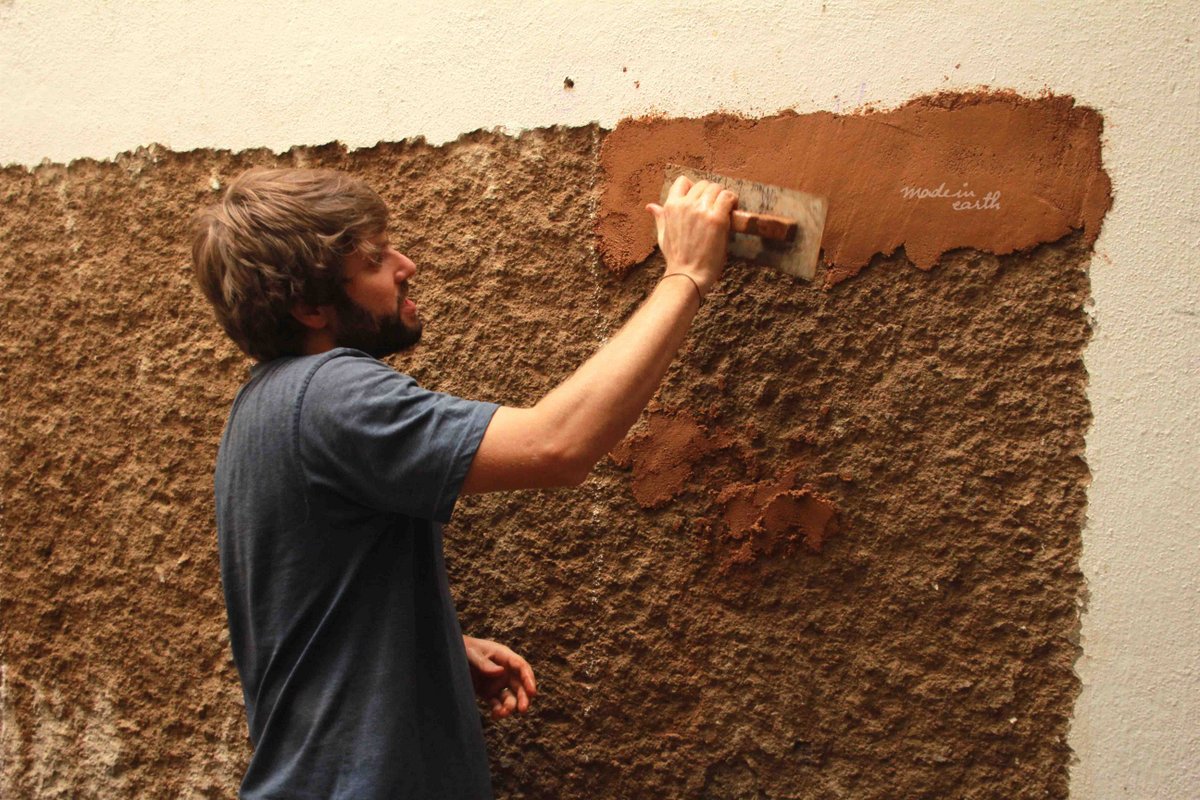
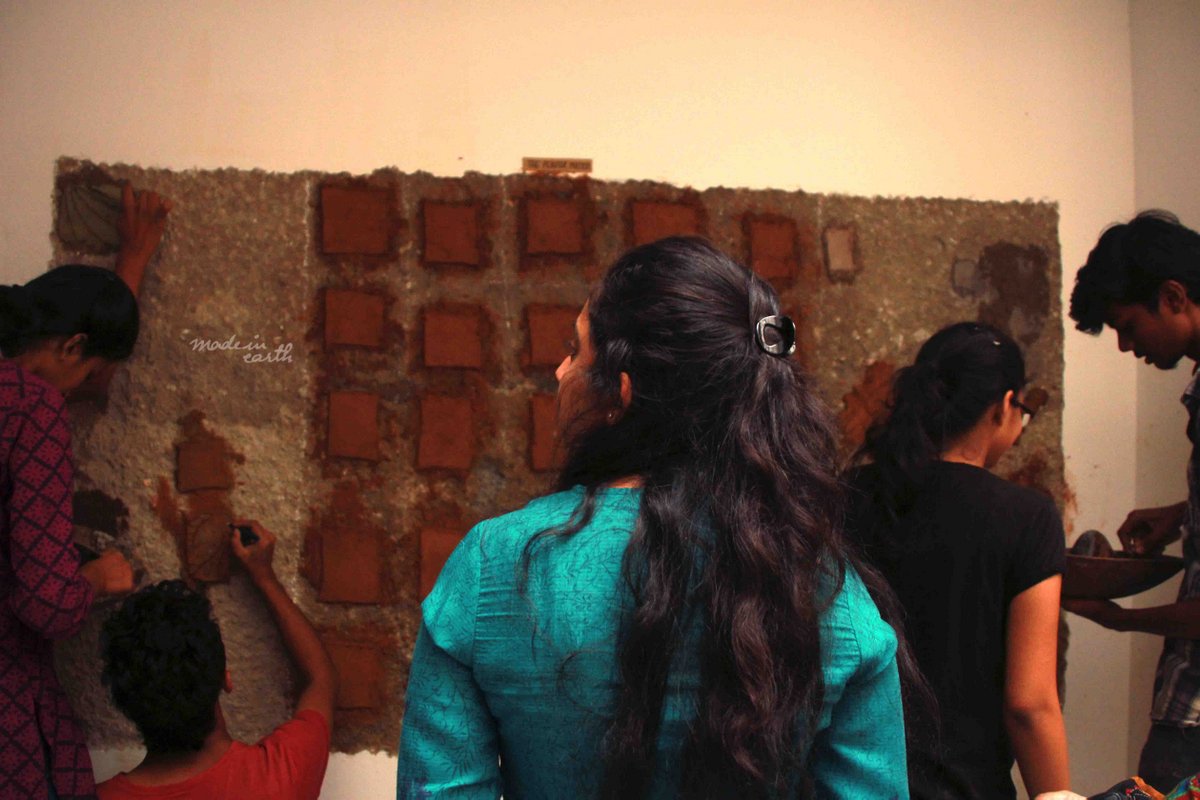
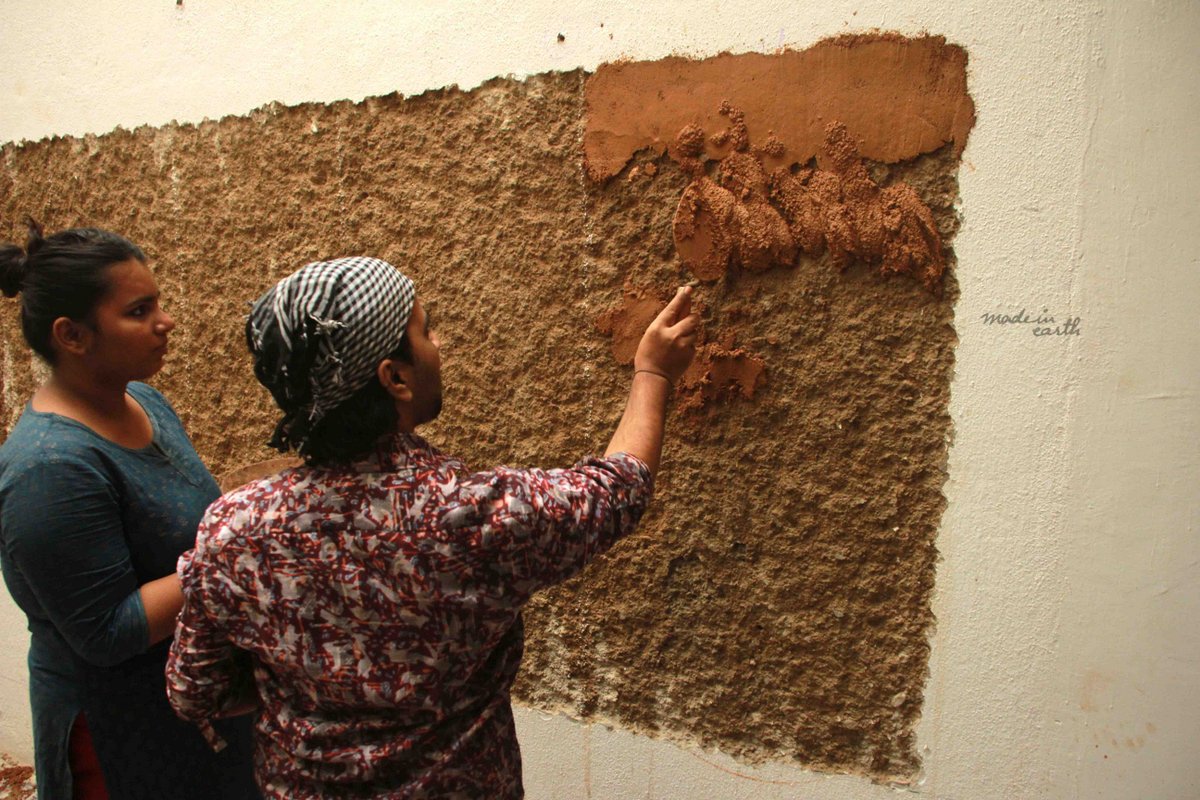
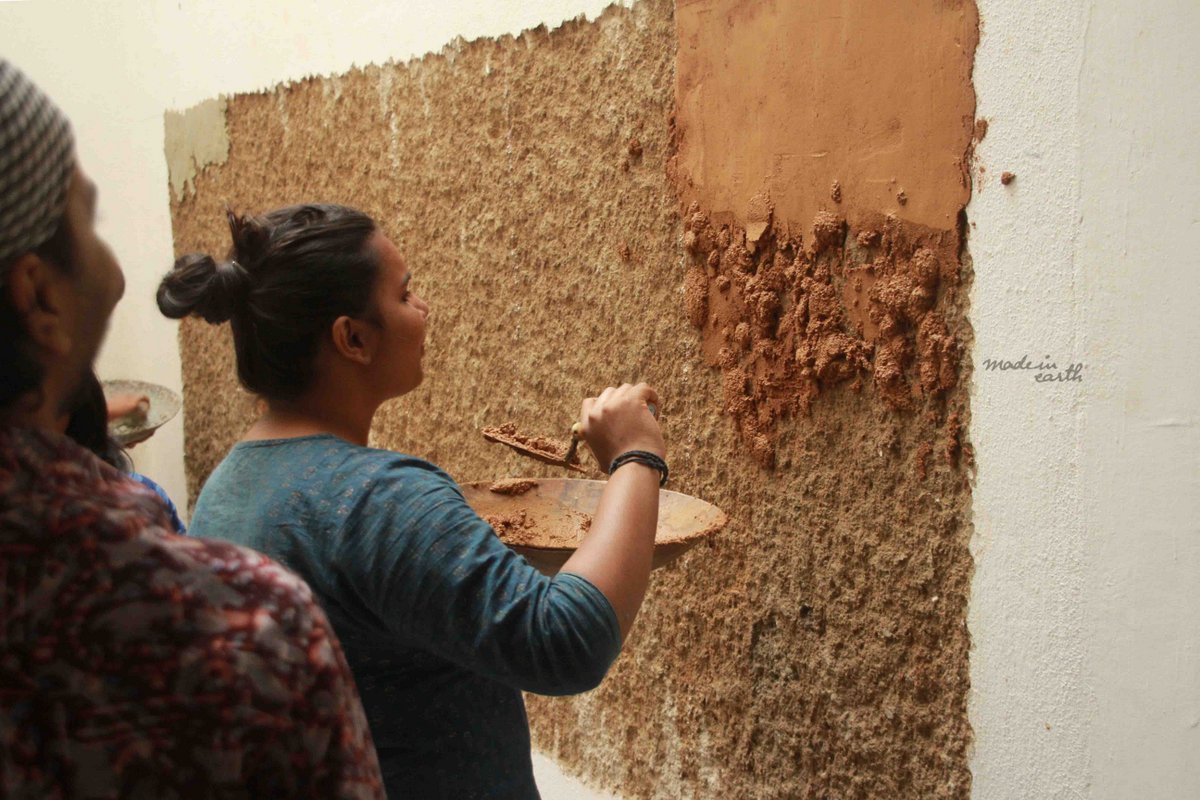
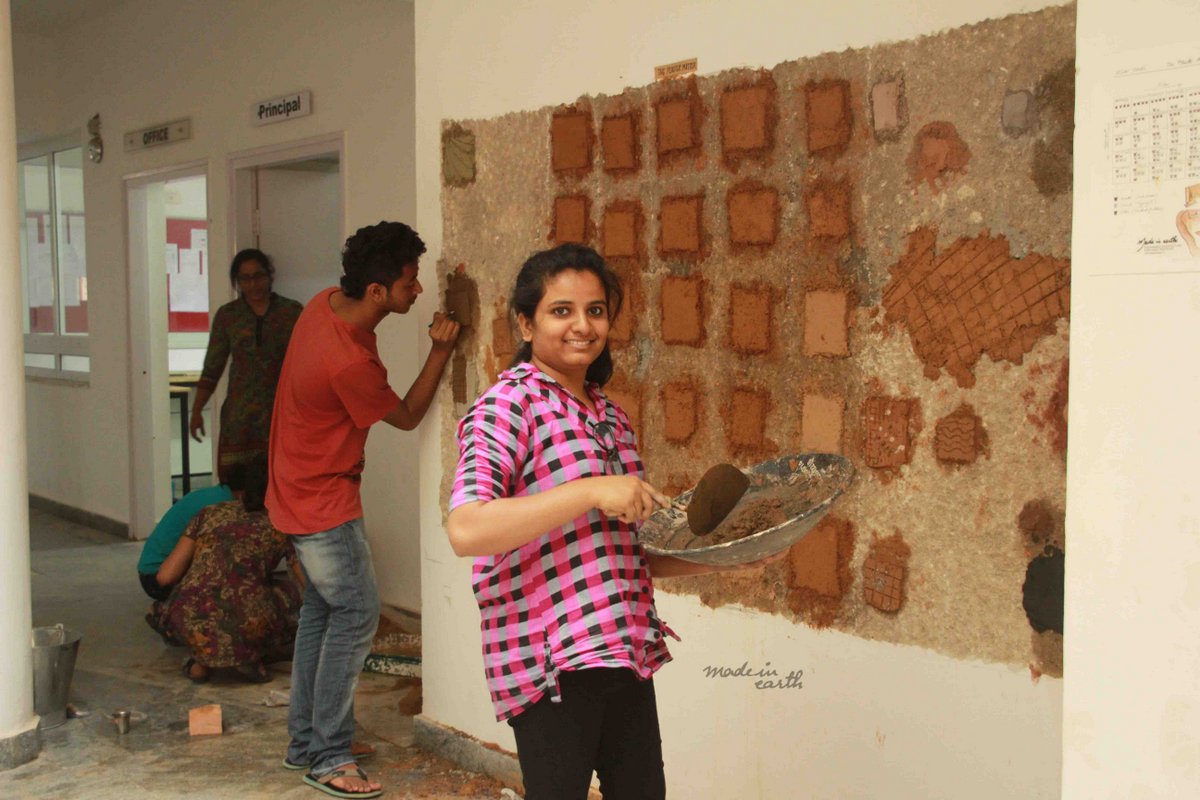
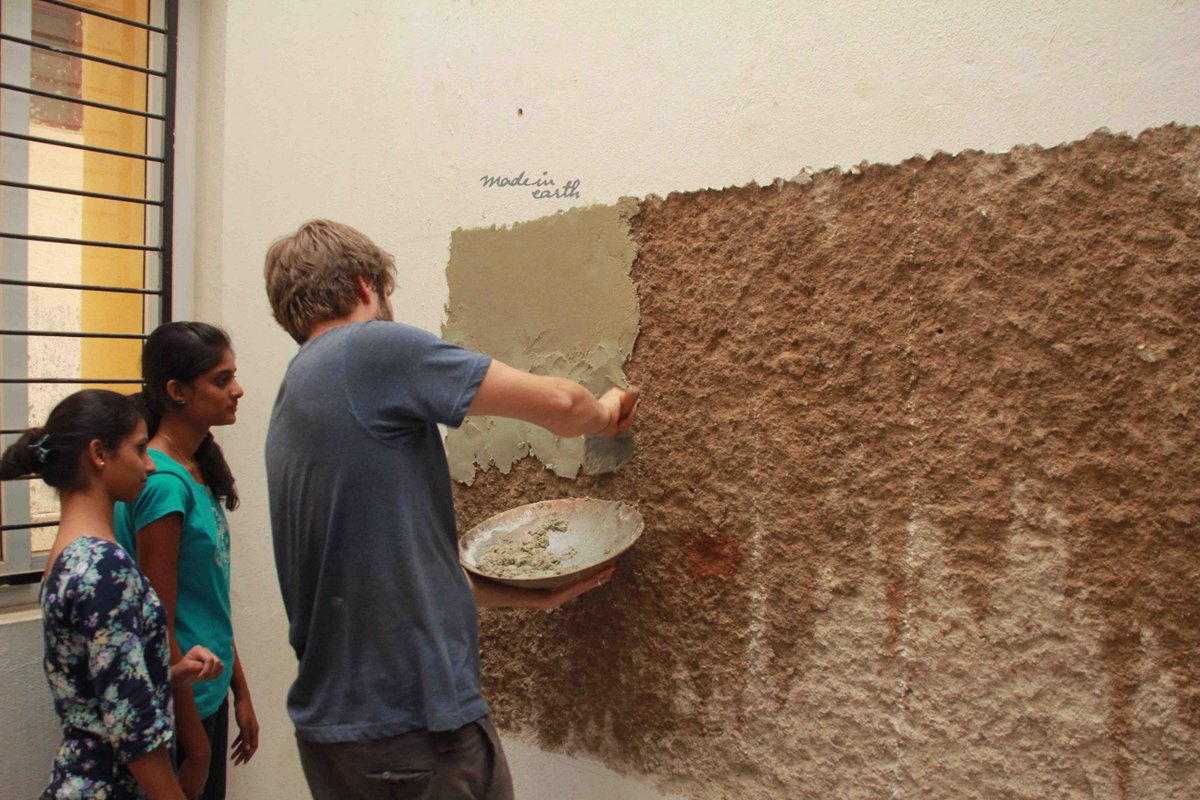
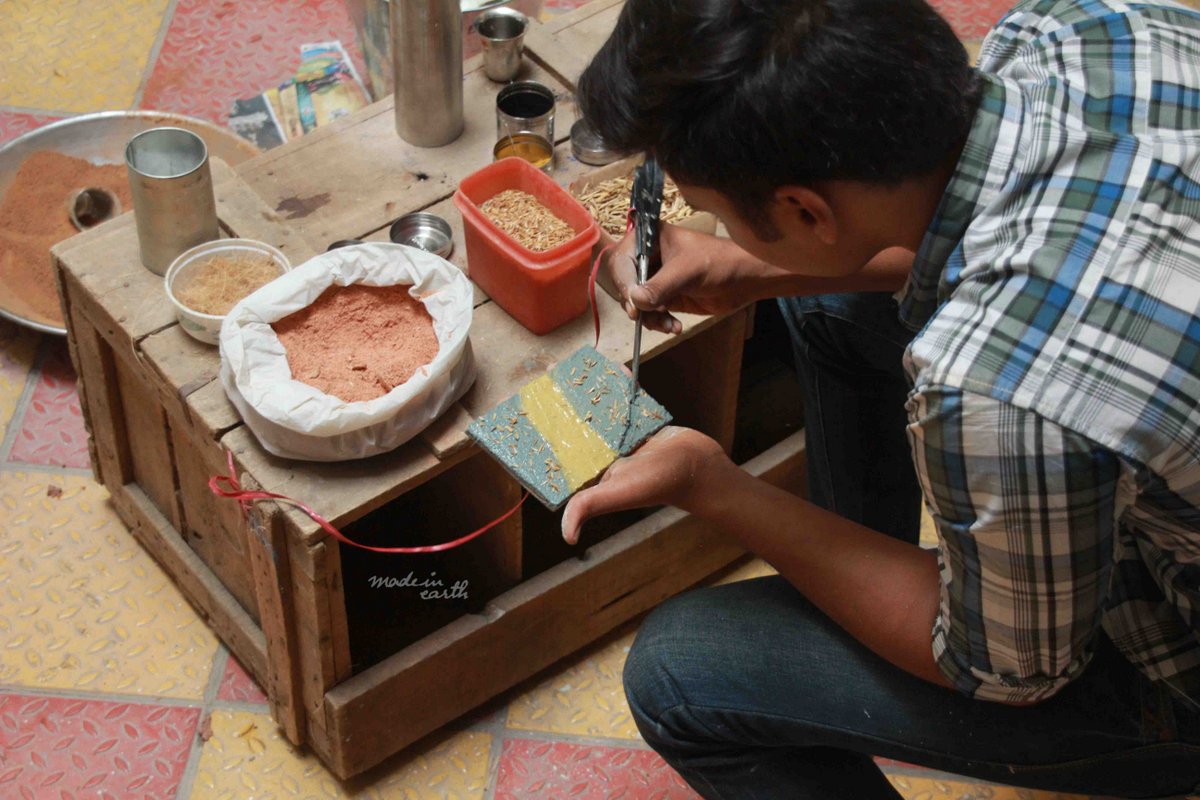
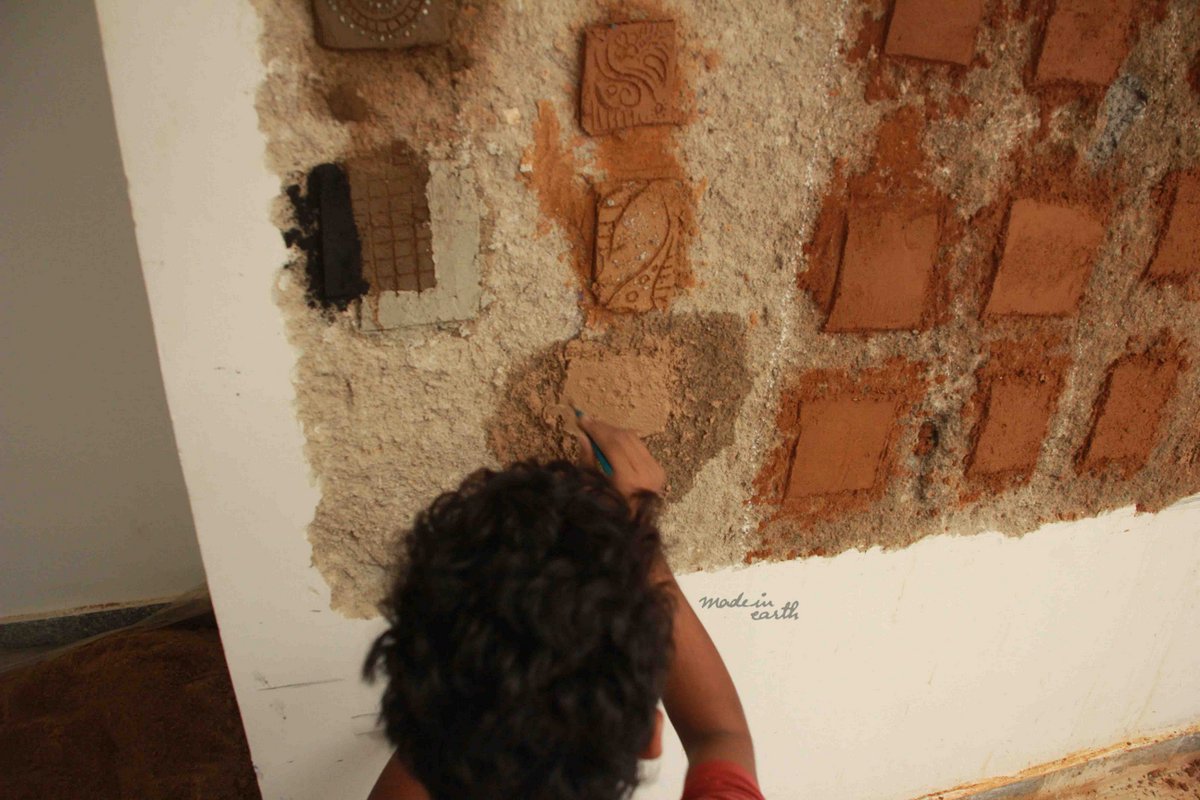
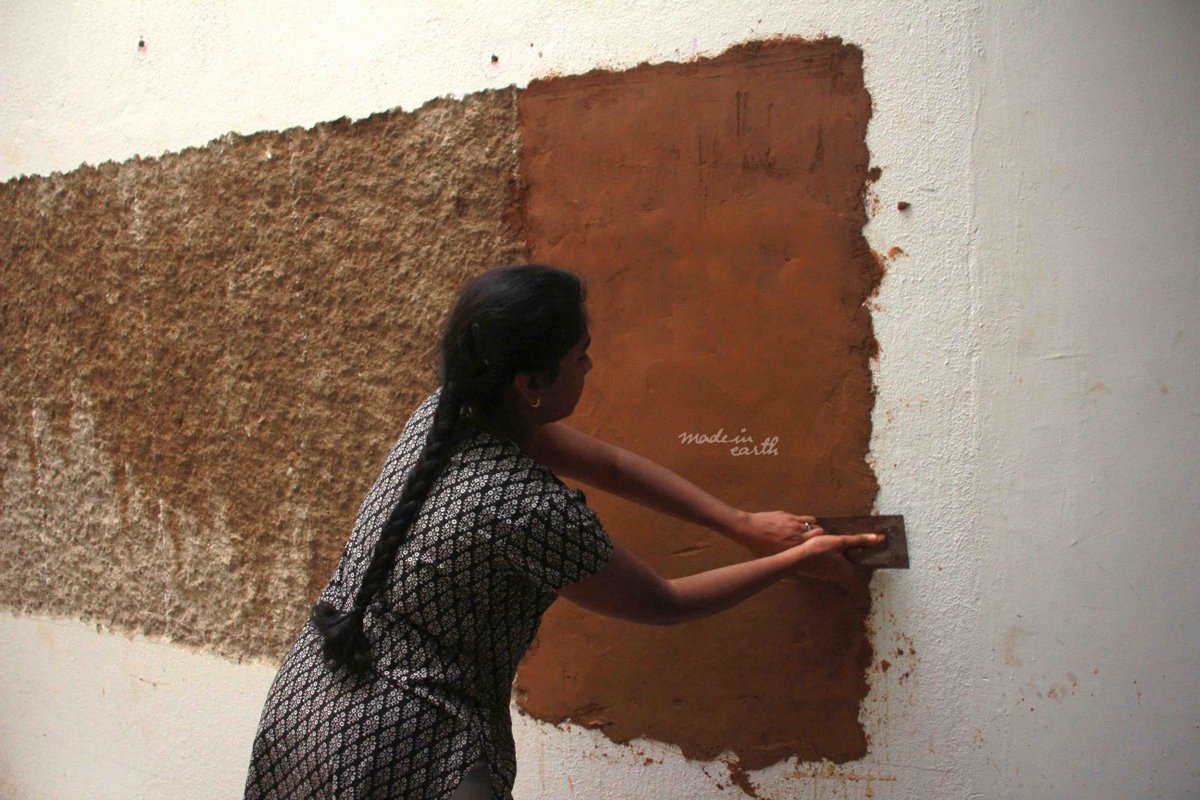
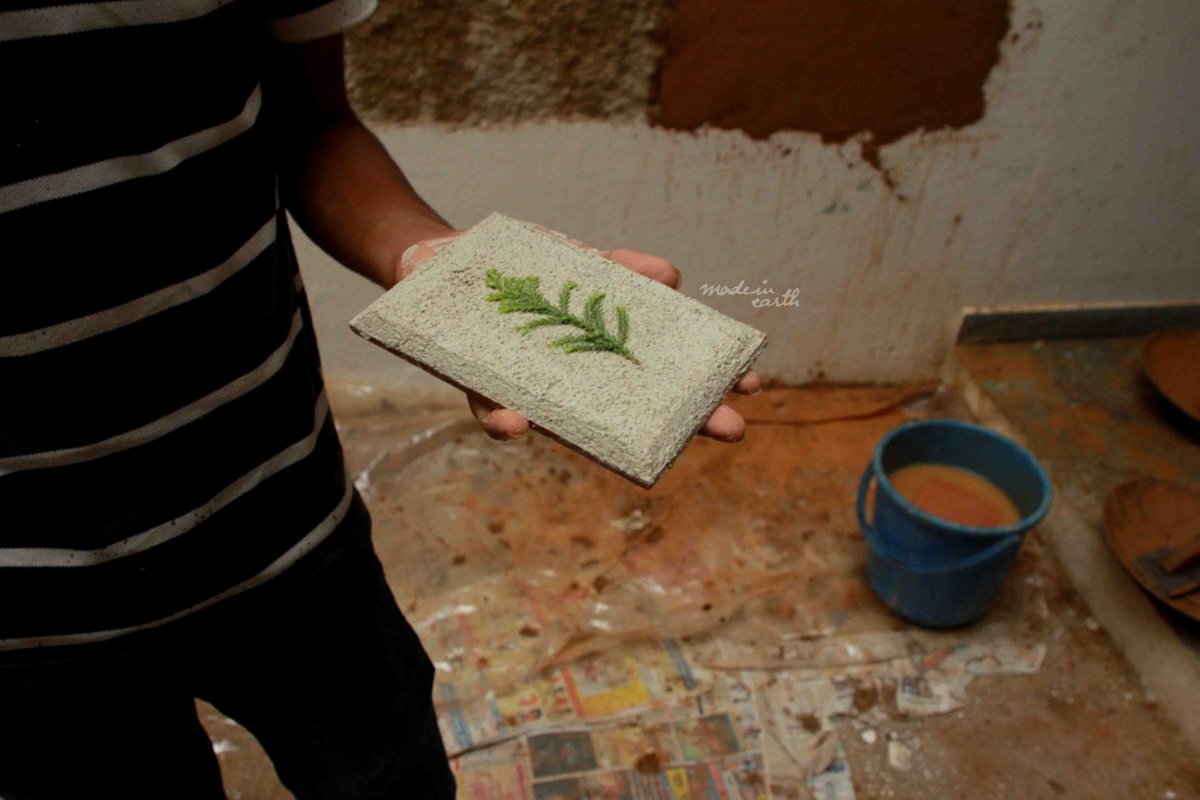
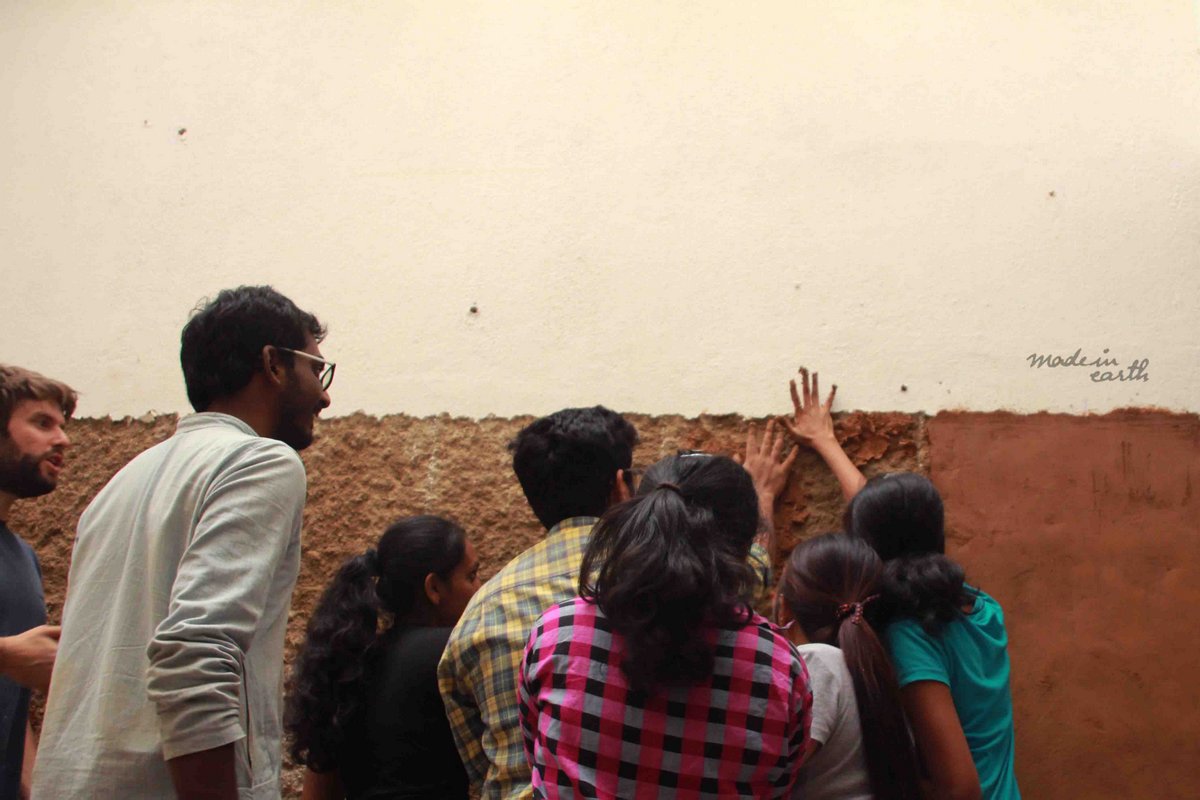
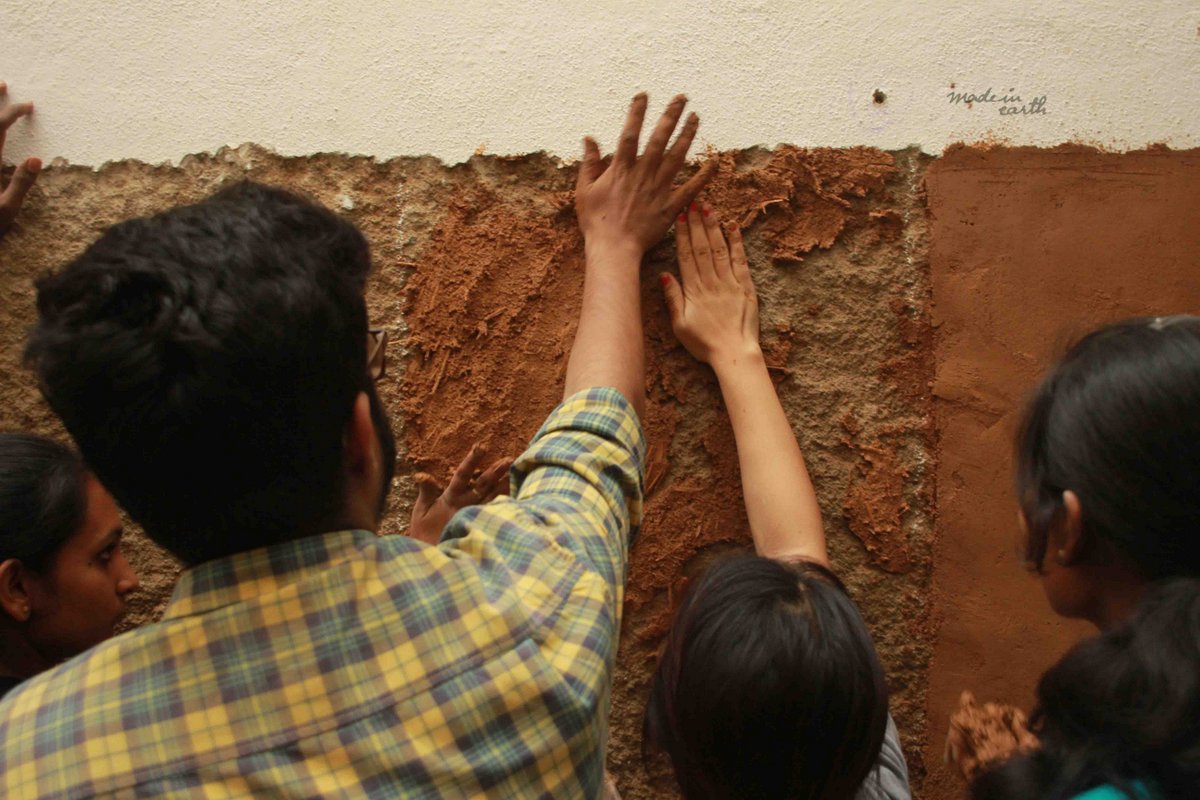
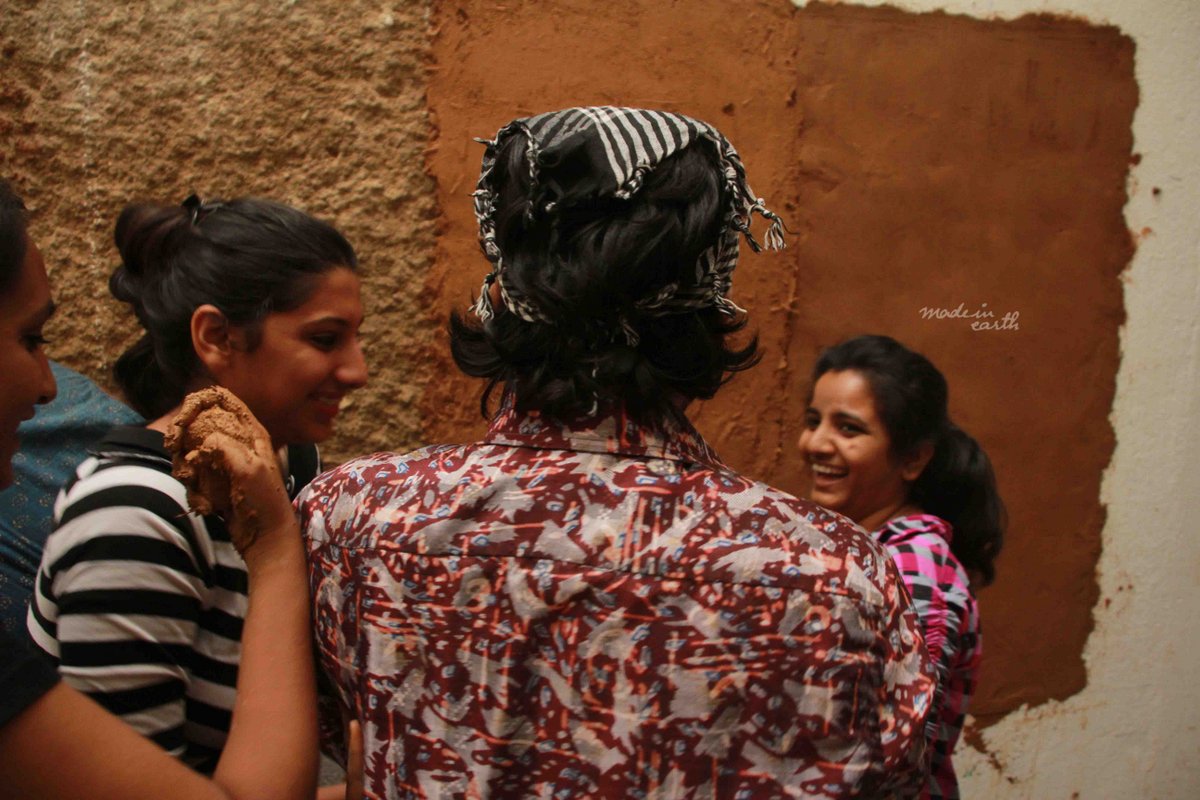
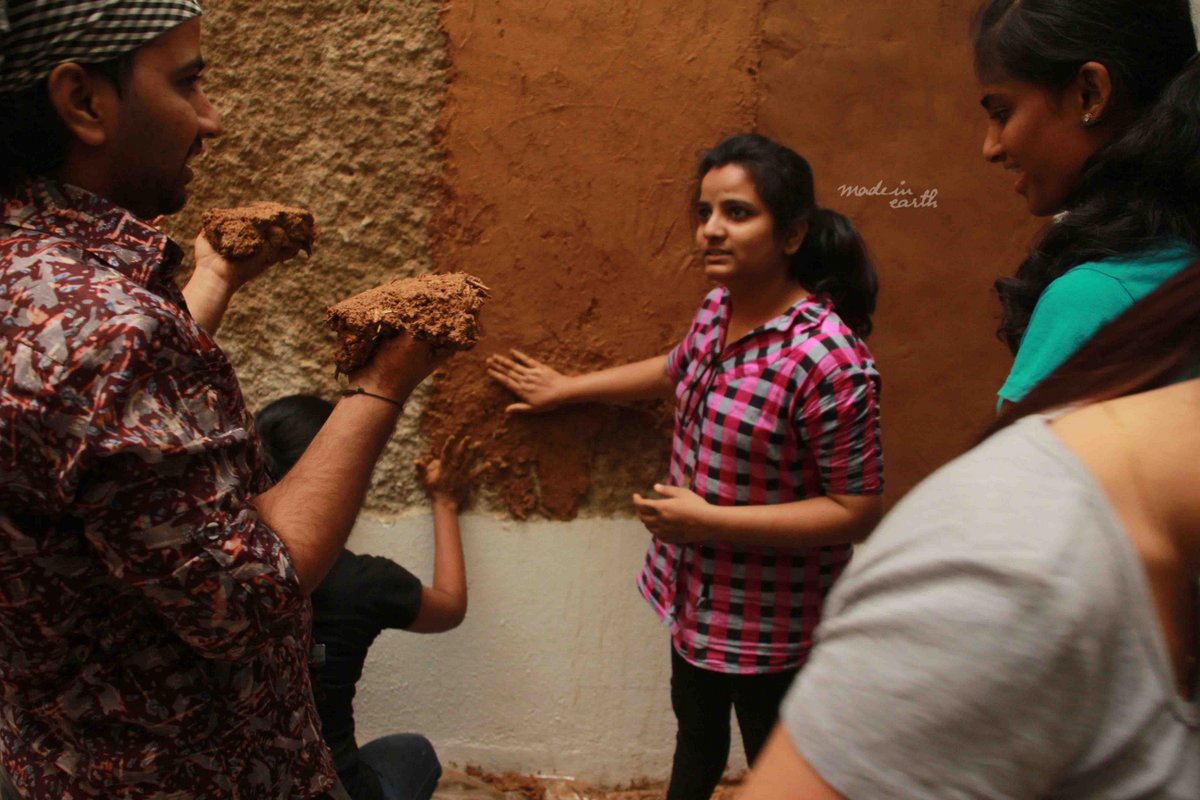
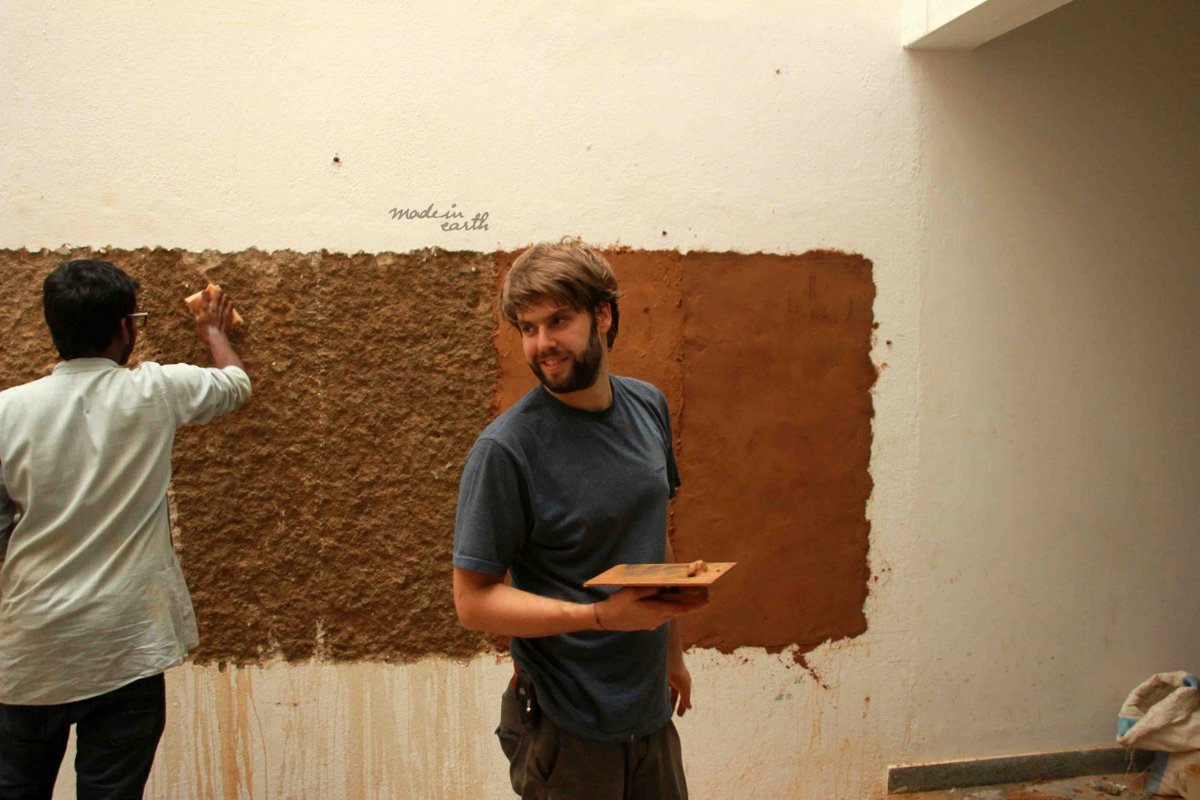
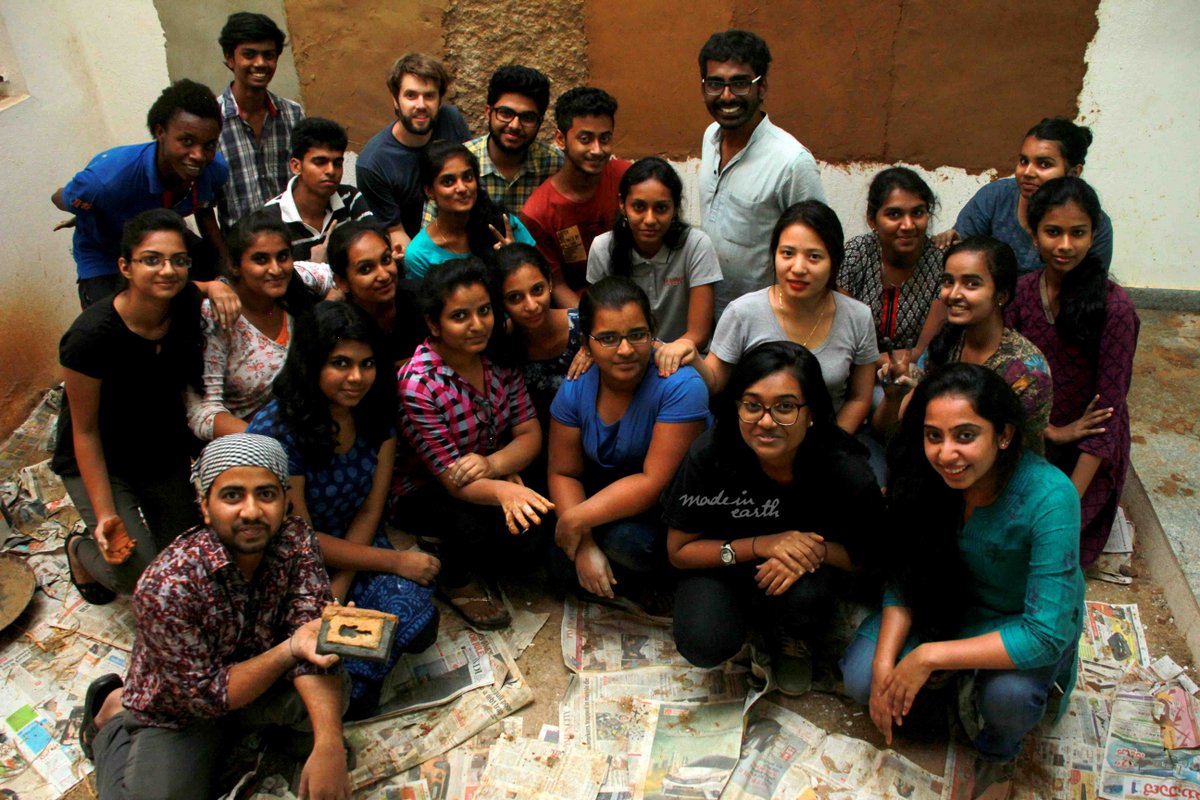
There were almost twenty of us, trying out this magical technique, on small earth block samples; Unsure of what it is going to feel like, how it is going to turn out, and what kind of commitment it requires. We had prepared our based plaster with lime and pigment on an adobe block, asked to choose a stone and begin!
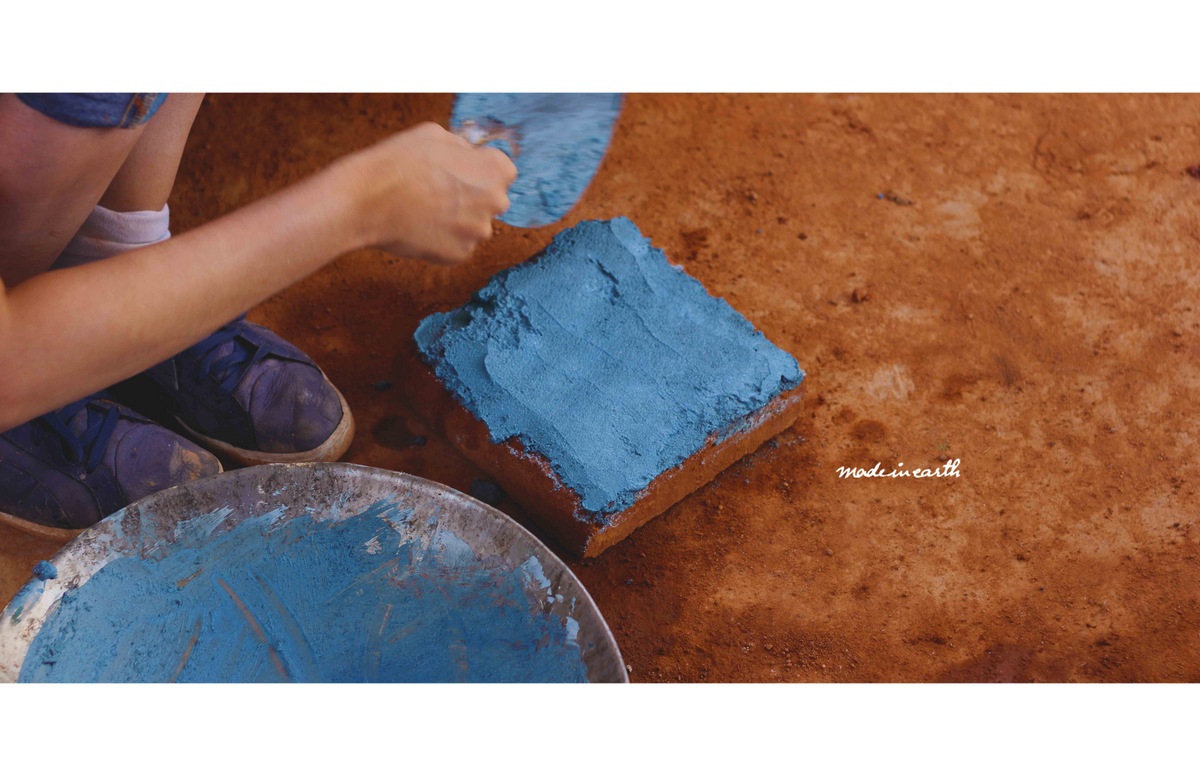
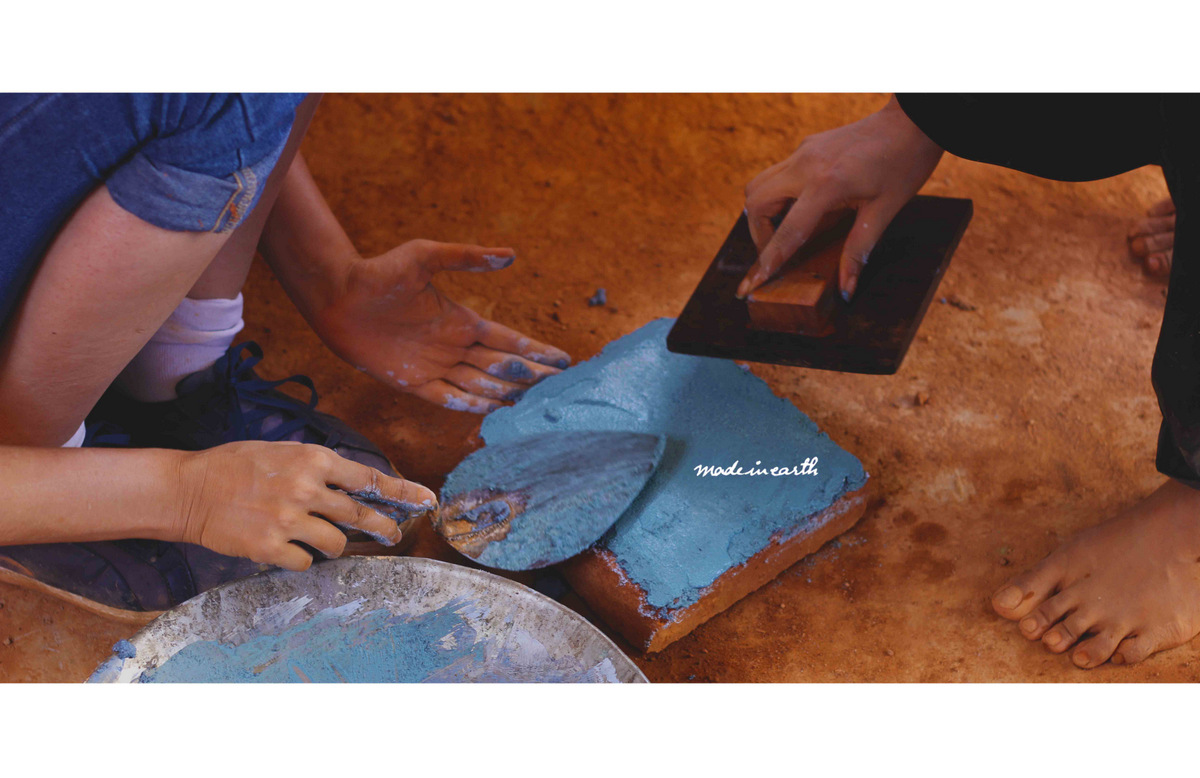
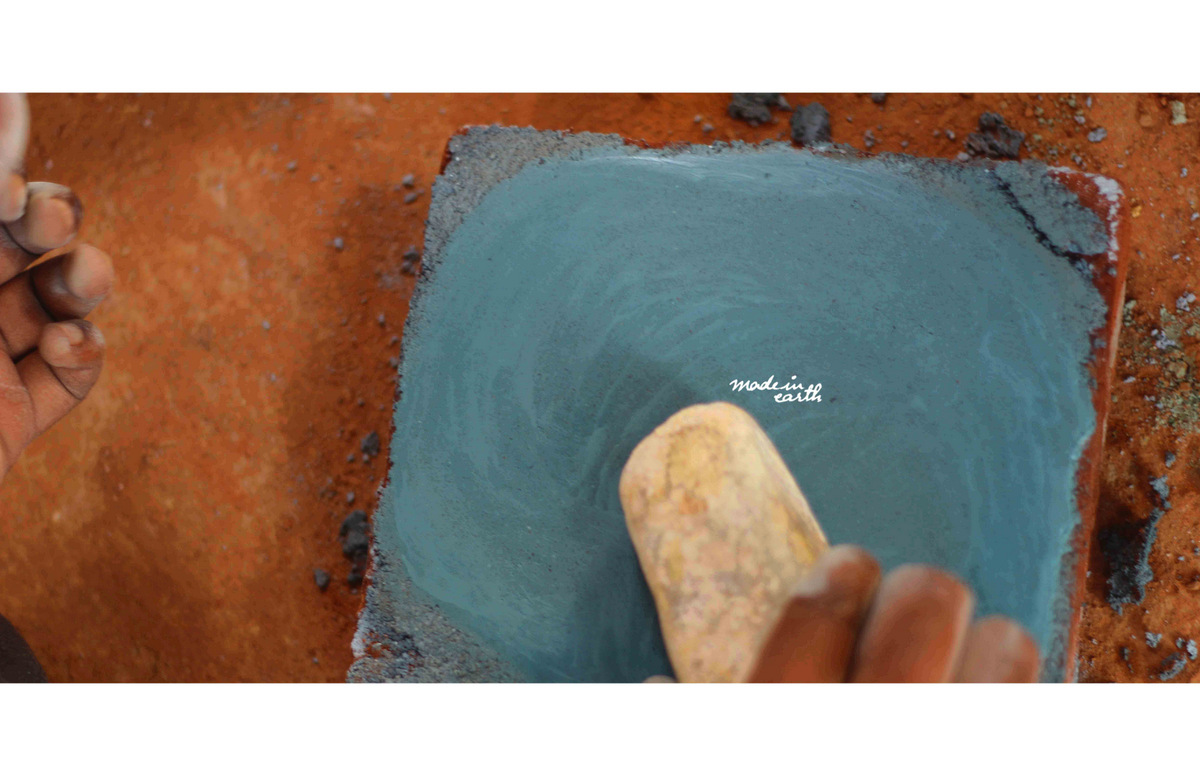
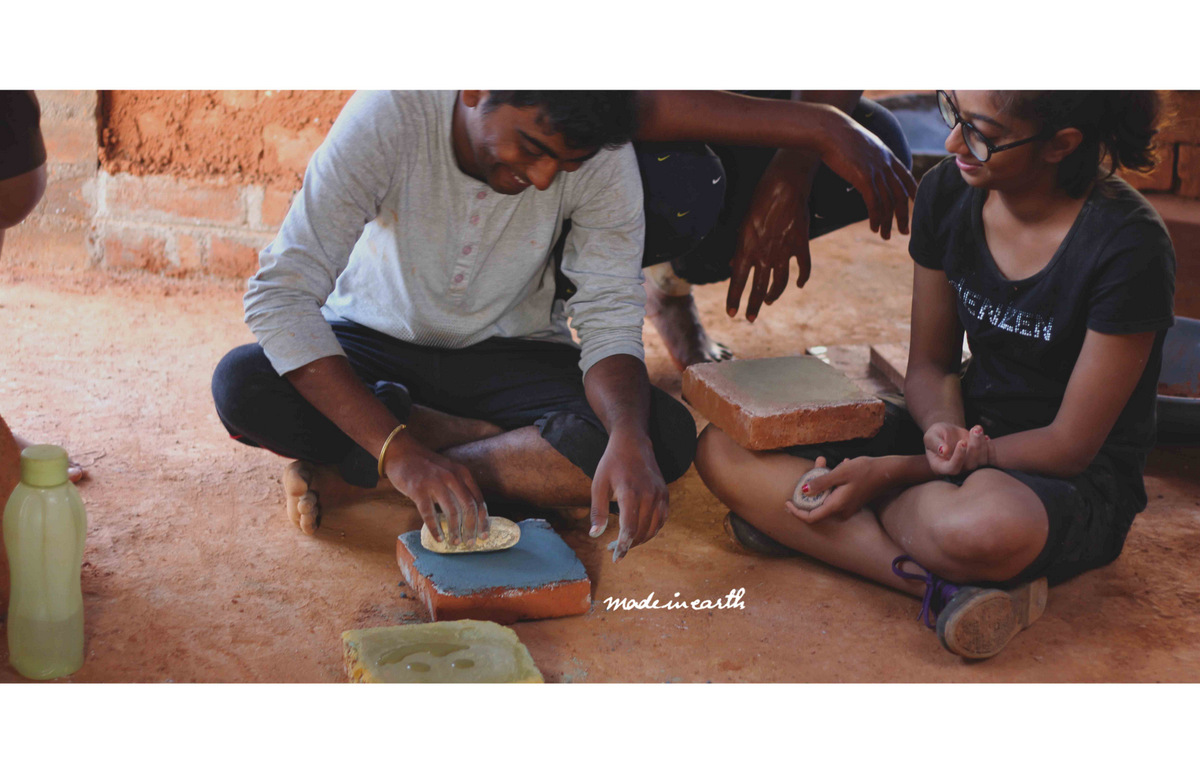
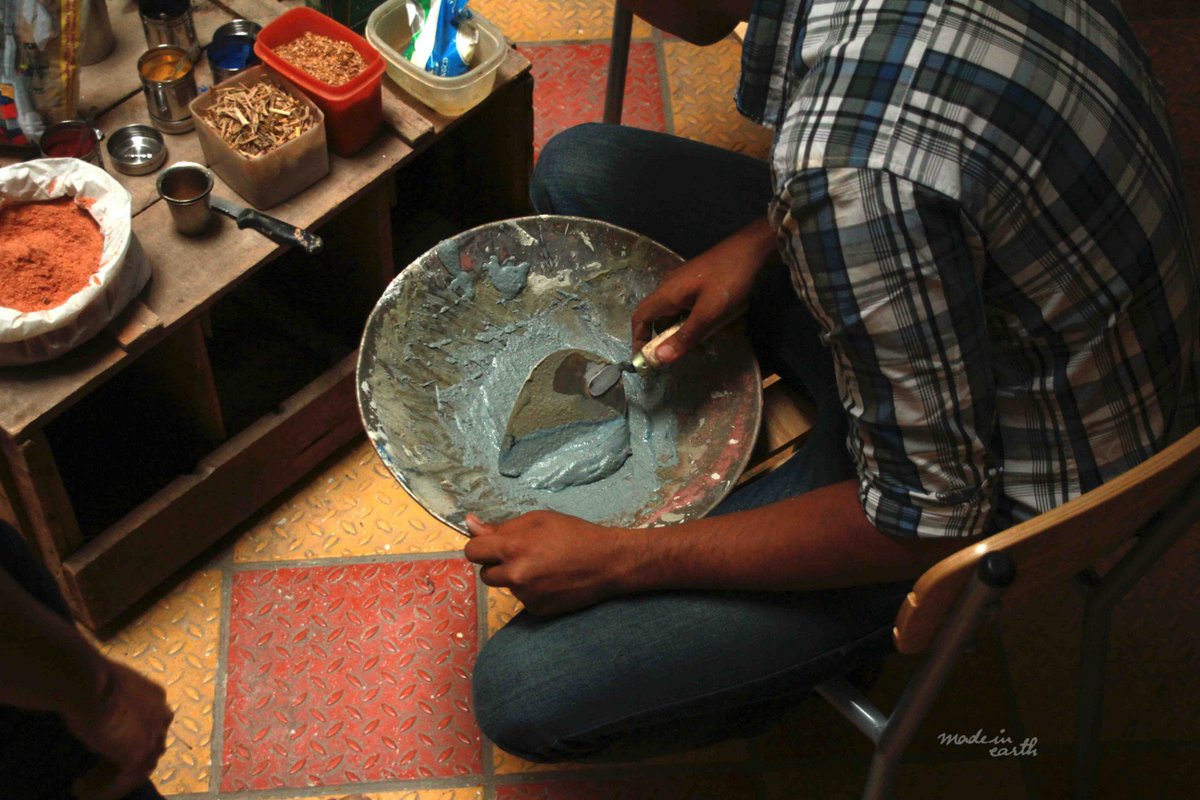
Dating thousands of years, Tadelakt is a magical water resistant chemistry of lime & vegetable oil resulting in a glimmering monolithic plaster that twinkles in the light as it seamlessly extends across surfaces of our structures, showcasing its extreme craftsmanship. A living surface that’s as hard as stone and as soft as leather, as breathing and waterproof as our skin; has its origins in the ancient city of Marrakech in Morocco.
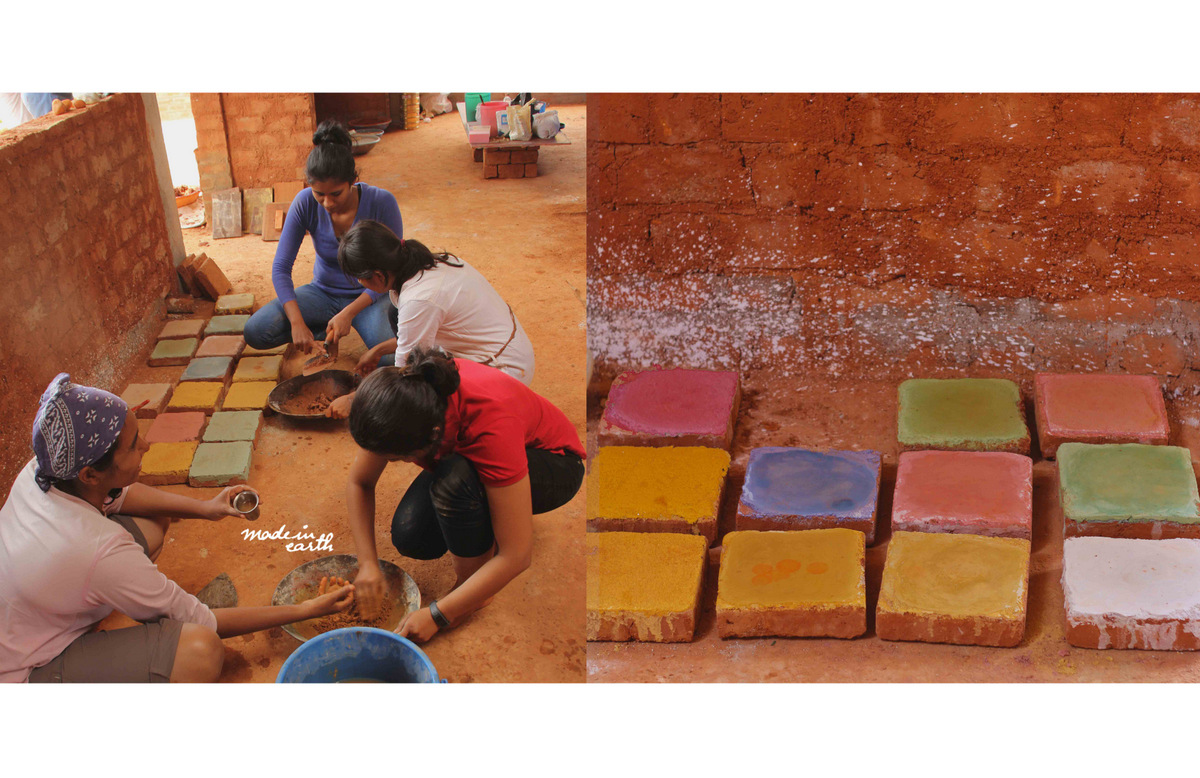
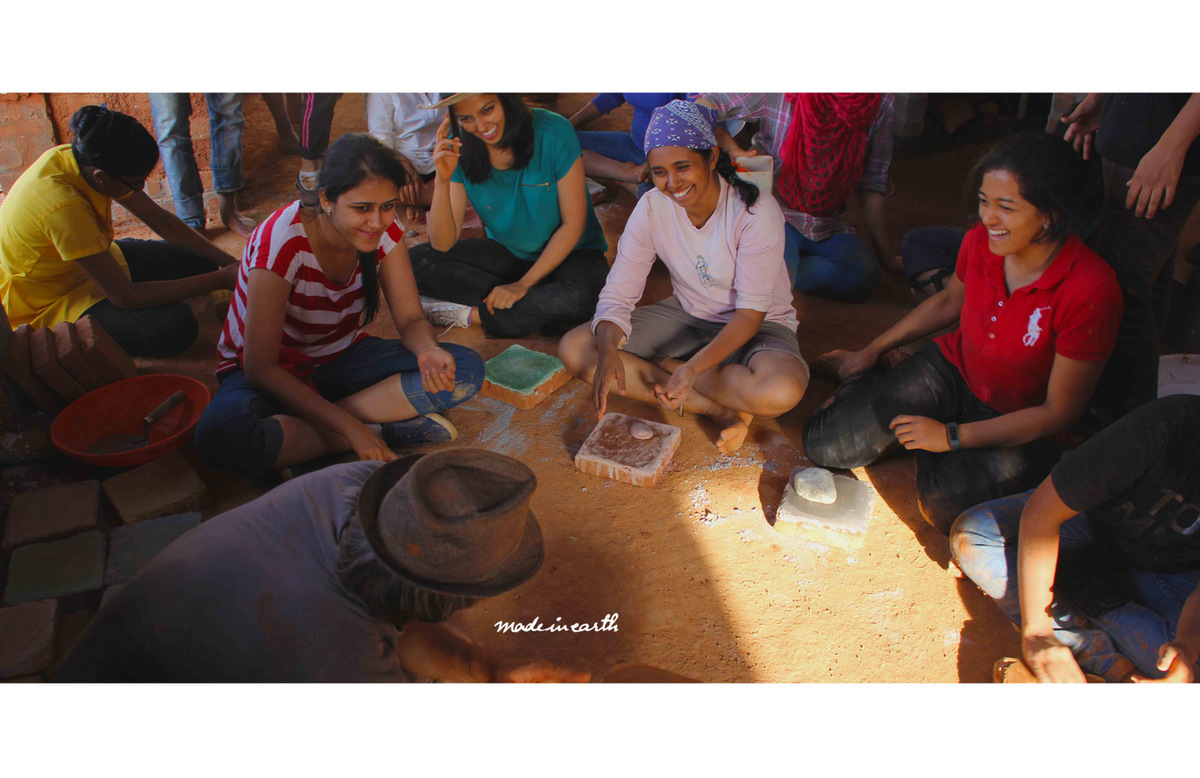
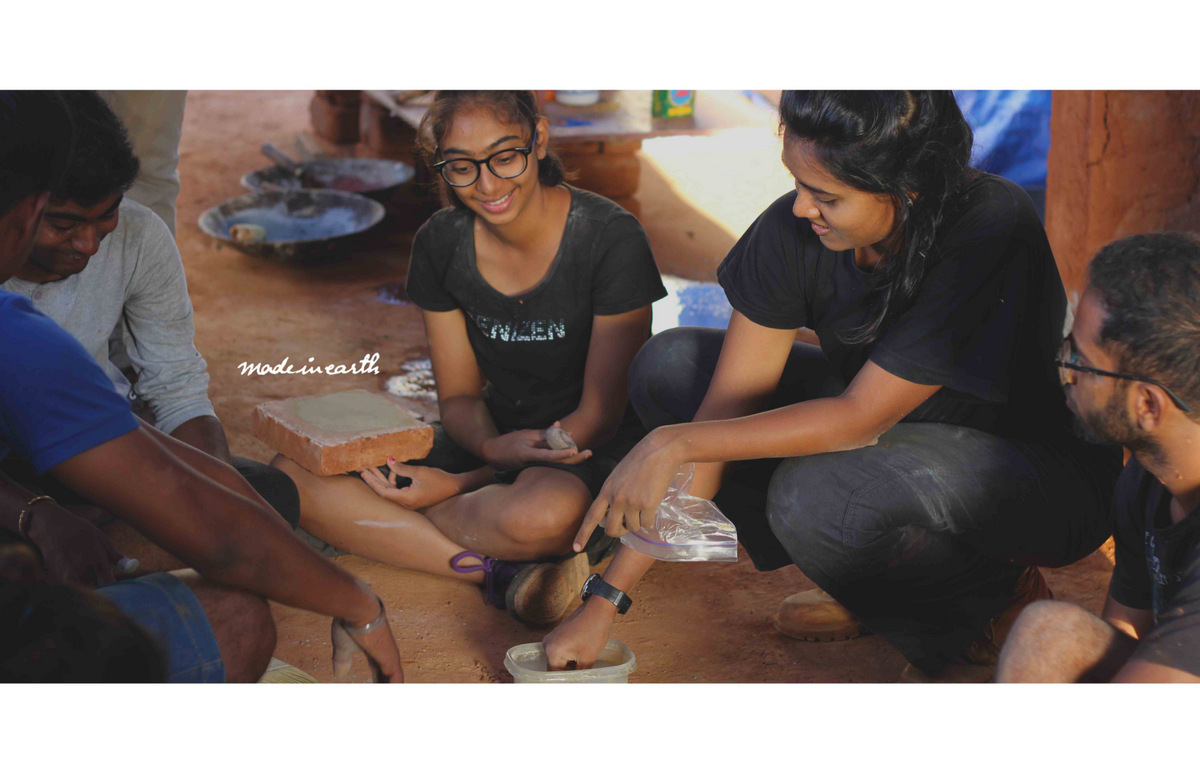 Tadelakt is a particularly high lime-to- aggregate ratio which is applied in multiple thin coats to a substrate, such as an earthen wall surface, polished and then caressed with smooth stones. Finally. it is rubbed down with organic soap, with patience and a lot of love to make the surface seamless.
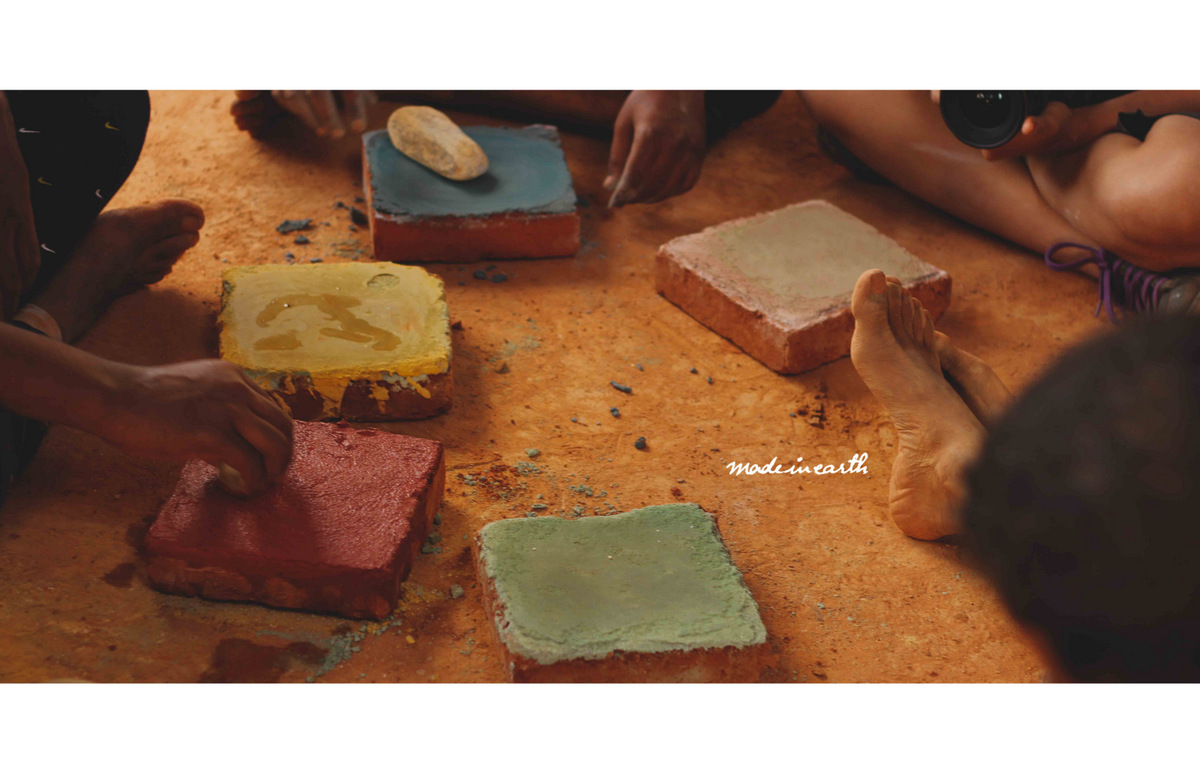
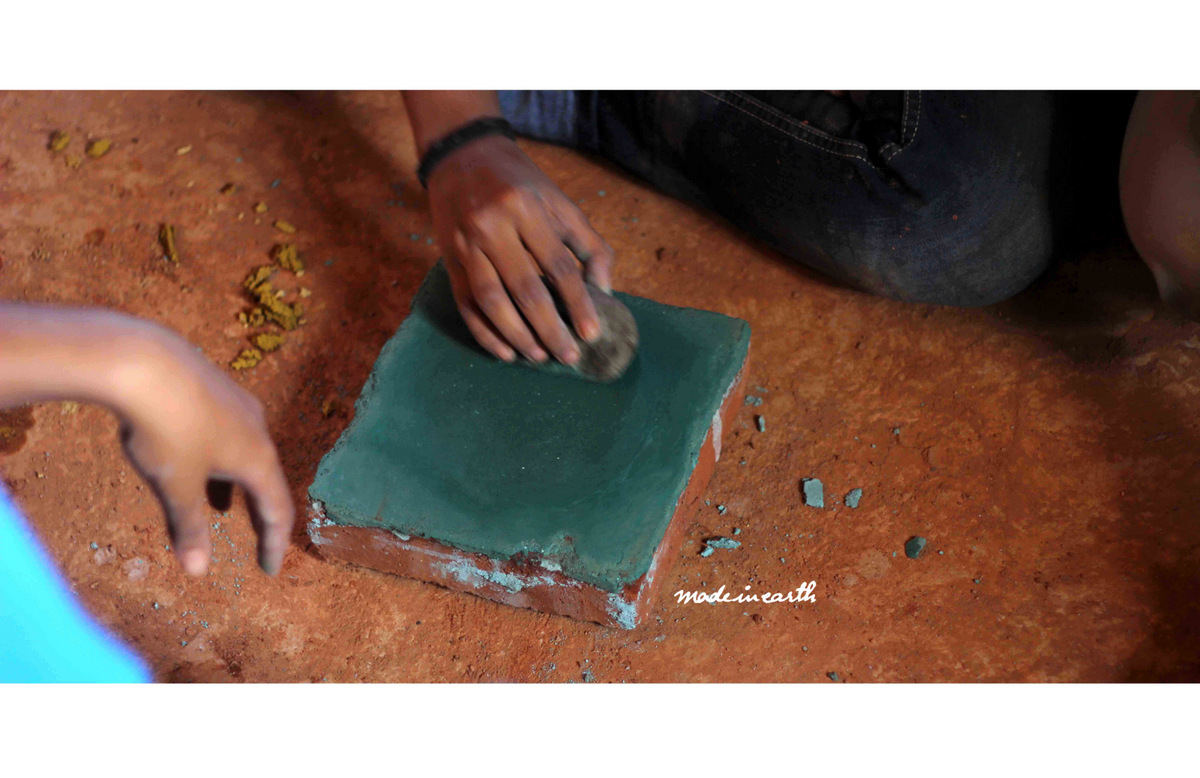
It took time, a lot of time, for the surface to evolve, and to obtain the finish for this technique is all about the time spent making it.
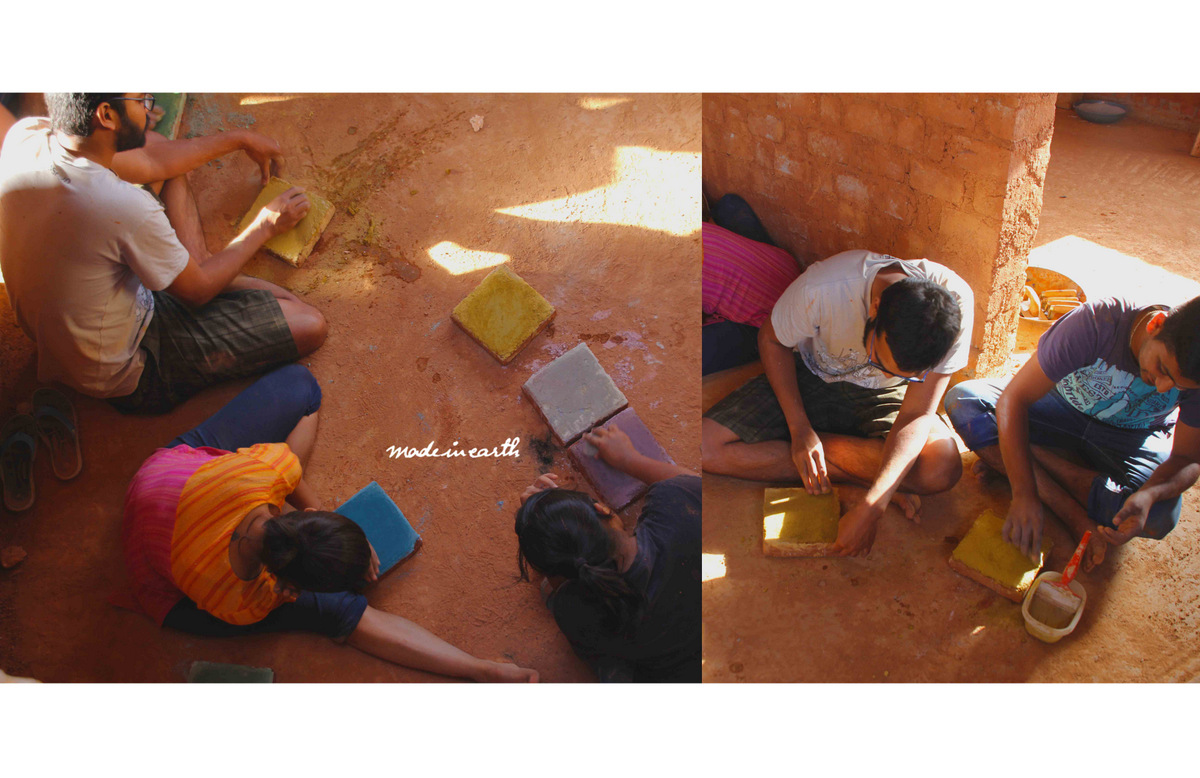
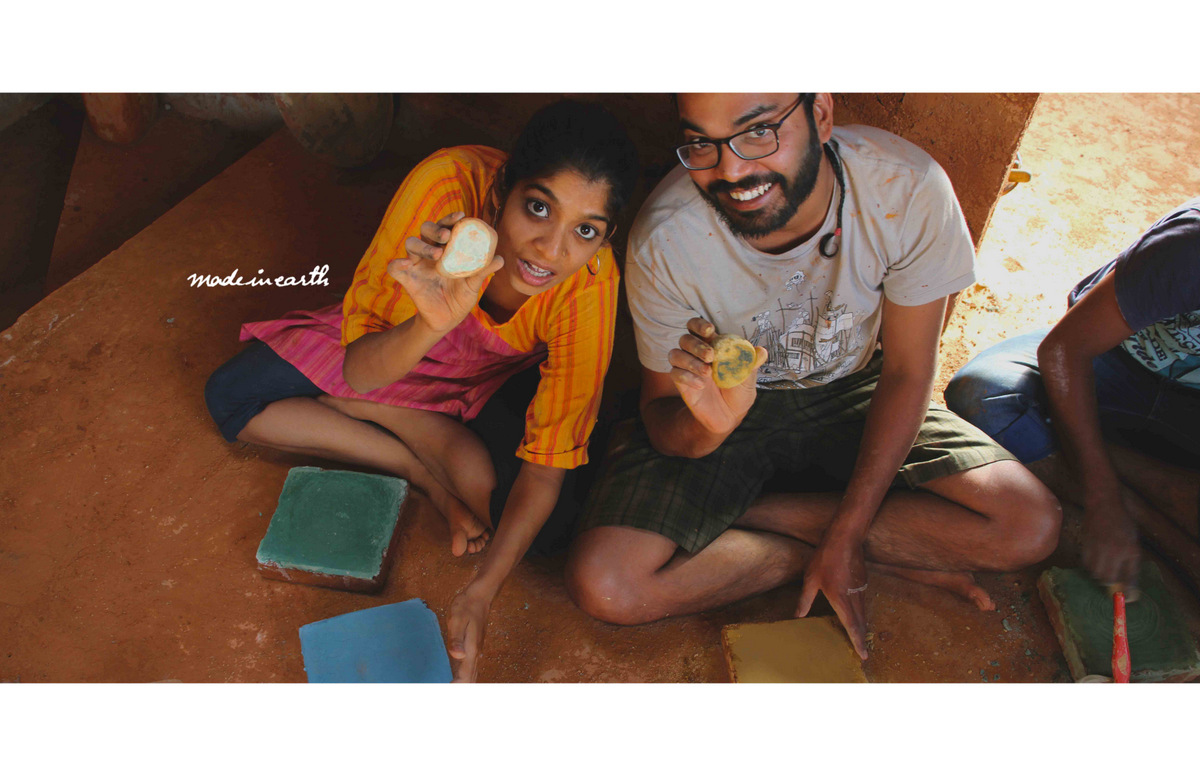
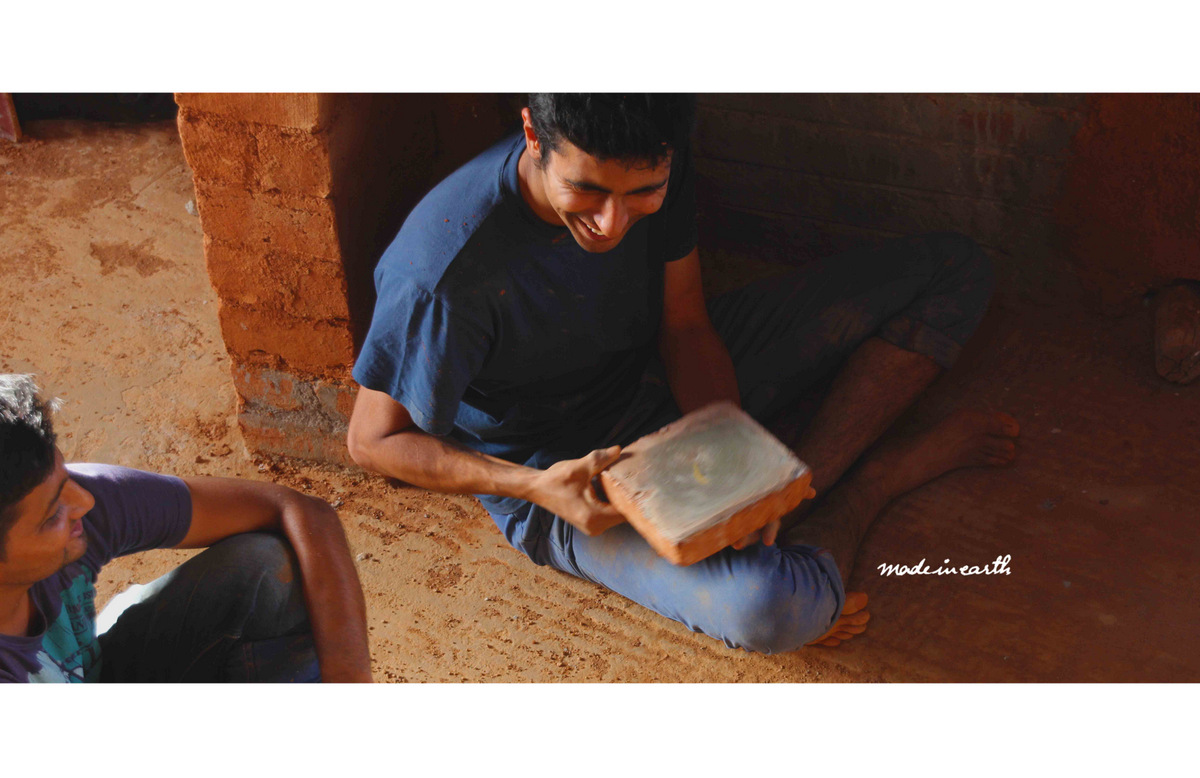
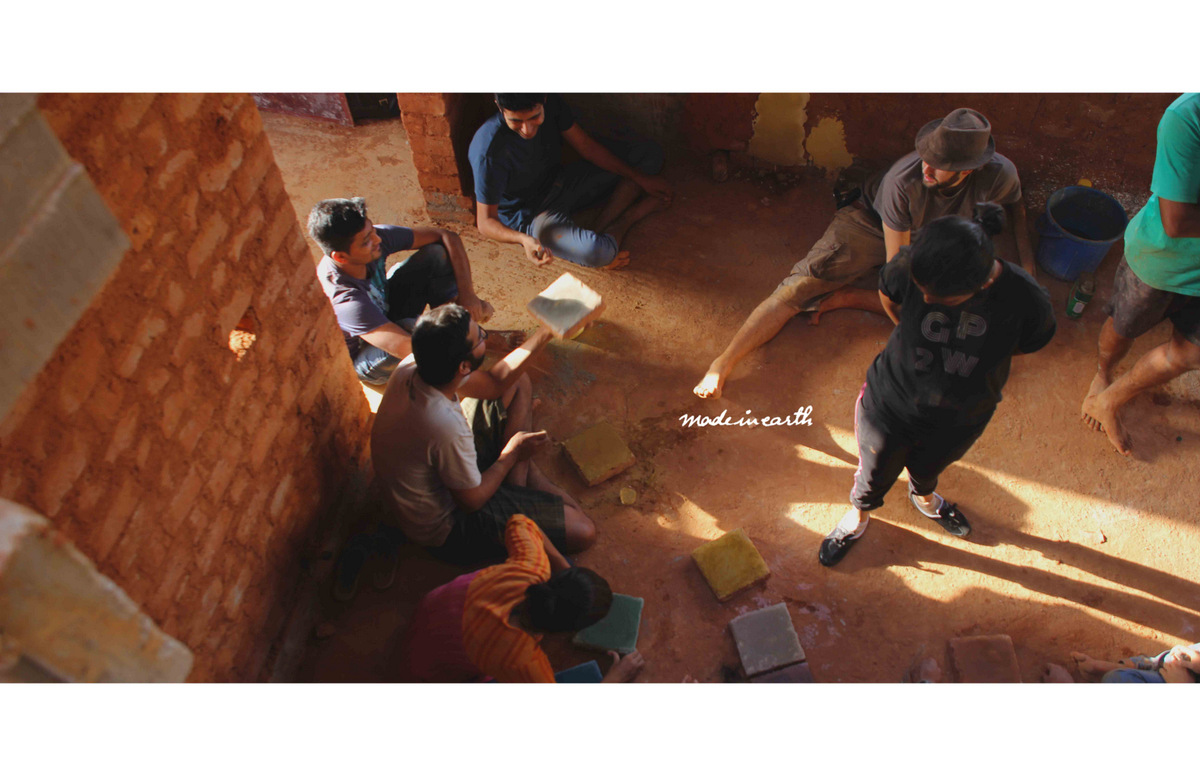
Tadelakt did surprise us. It demanded much more respect, and turned out much more elegant than what we expected. Now I know how and why this moroccan masterpiece had the ability to withstand the sands of time. Being water proof and customisable in different coloured finishes, having the ability to follow all forms of building; still holding the ability to breathe, with a property to gain beauty and strength over time, there is definitely magic here. It takes time to create timeless masterpieces; and if we have enough, Tadelakt surfaces are carefully sculpted artwork with a soul.
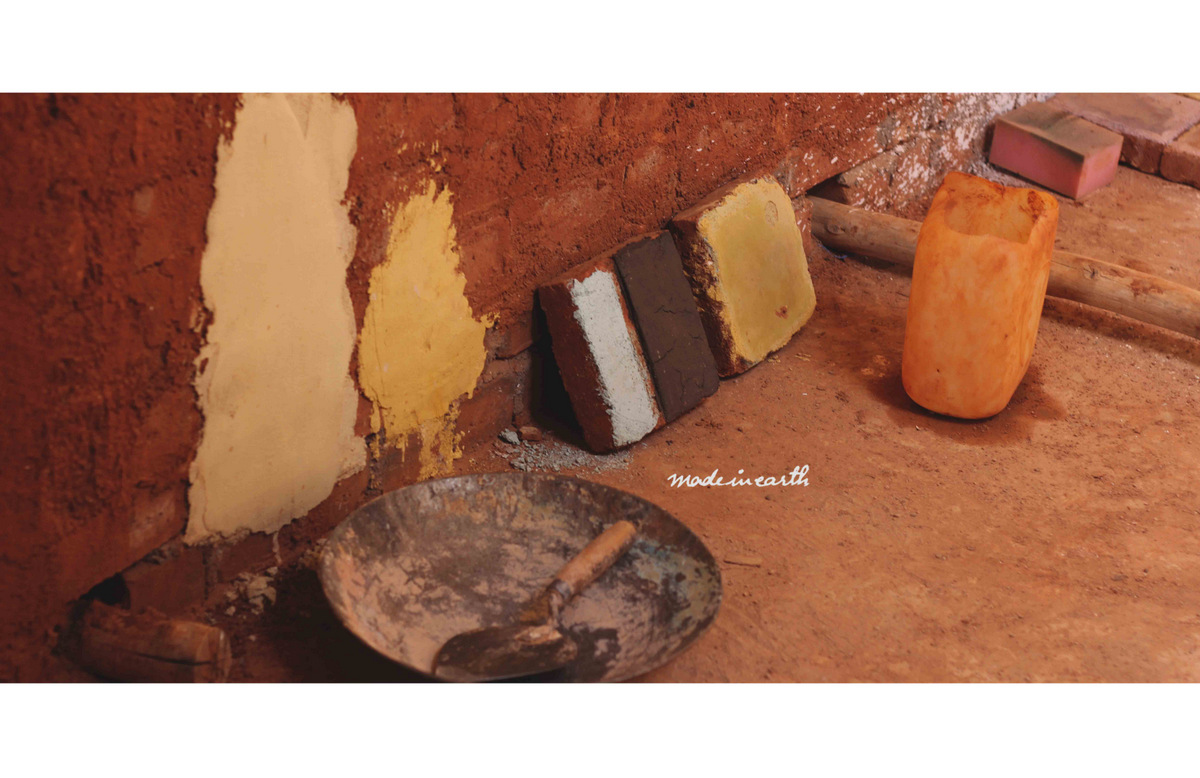
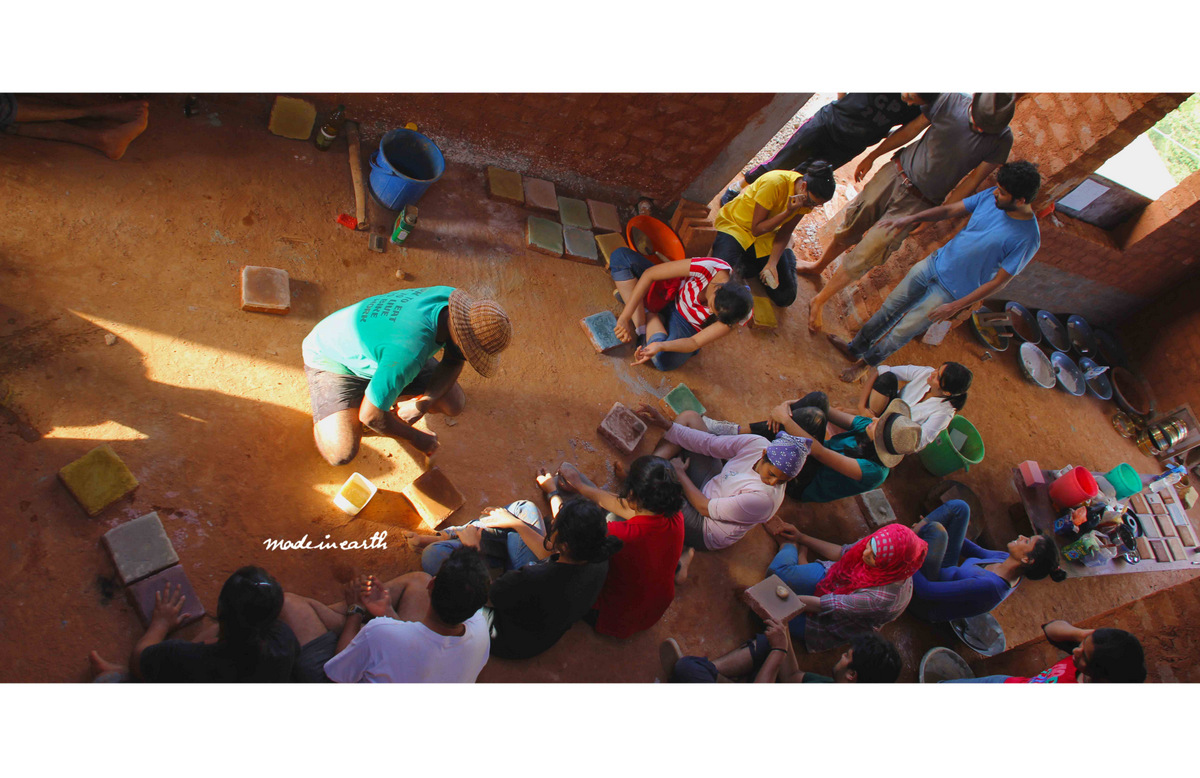
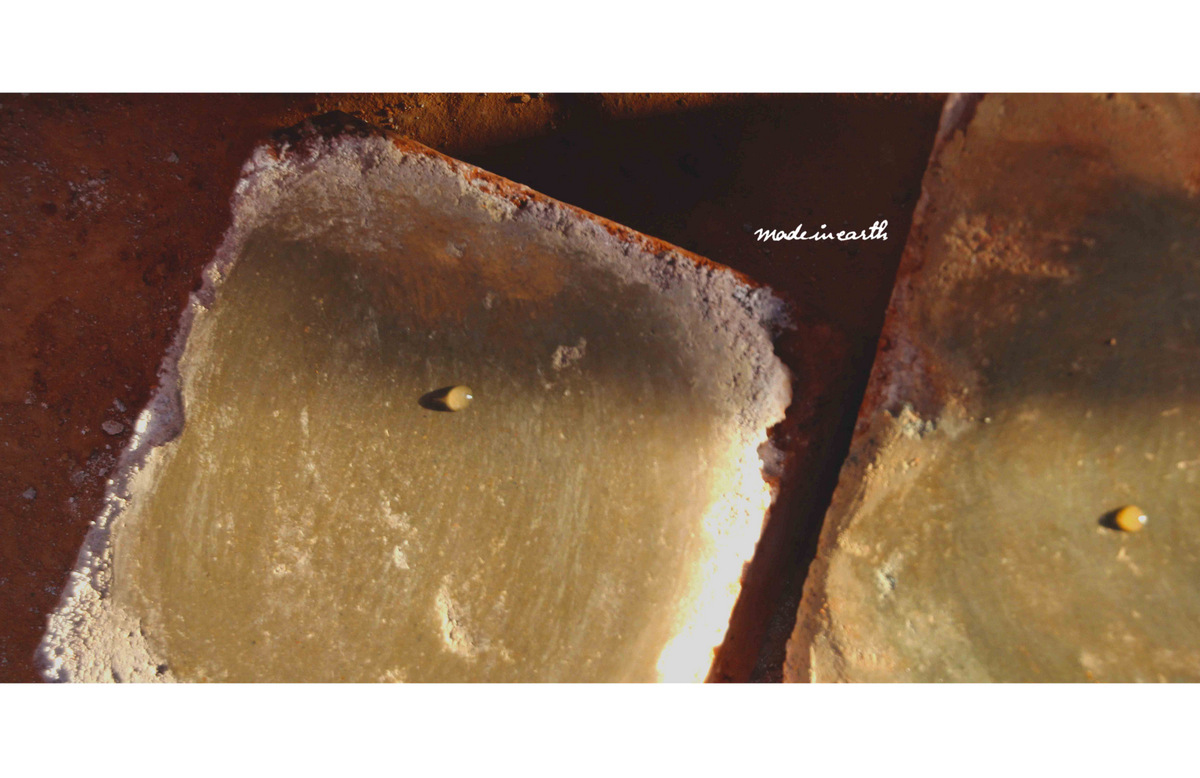
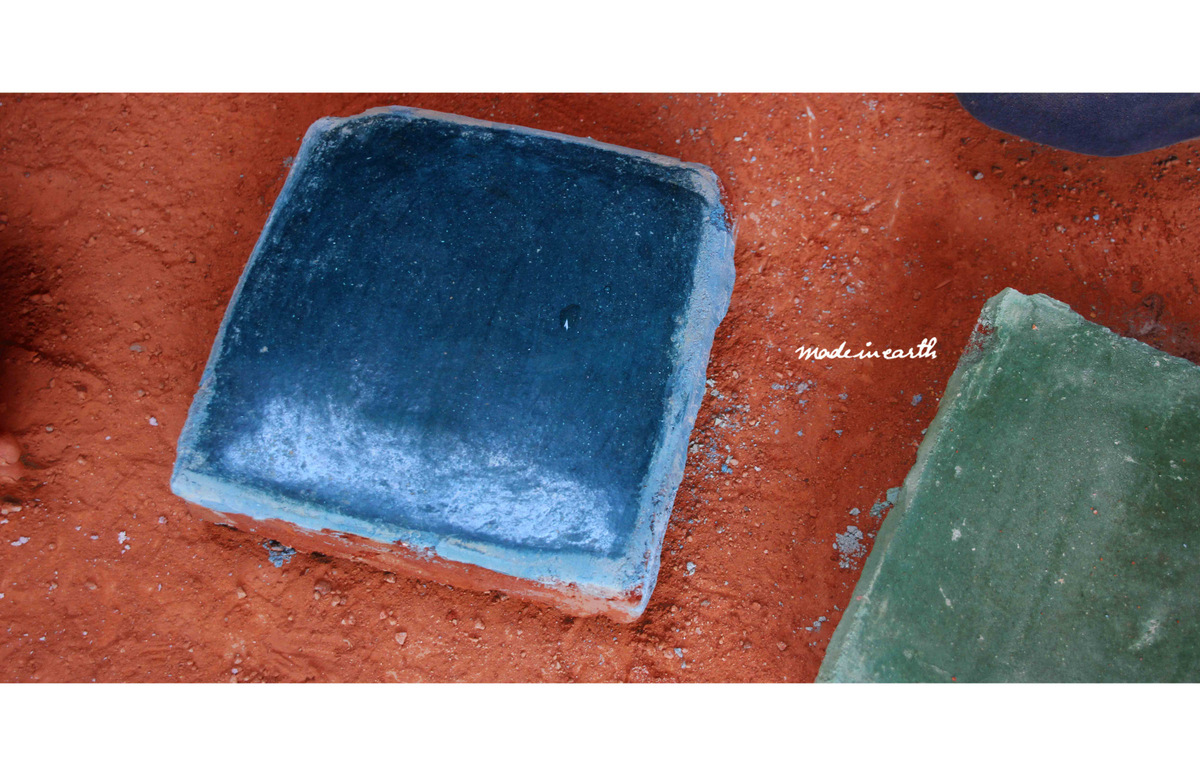
By Santosh PrabhuTadelakt Workshop Participant & Intern at Made In Earth
2015 Cute and Care
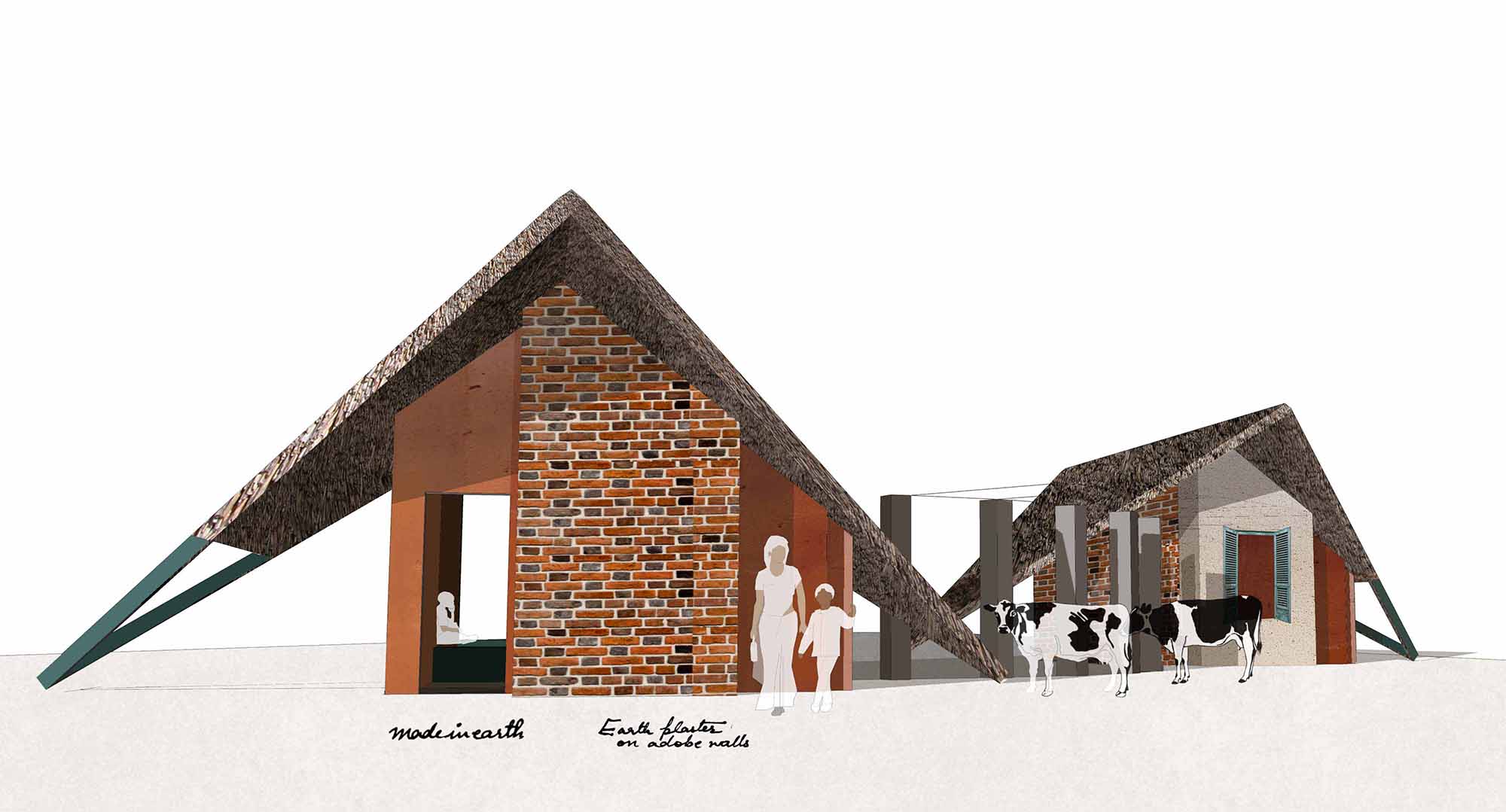
Suma and Shuba are two sisters from Bangalore with secret alter egos. They are setting up an organic farm near the small village of Seegehalli, in the outer reaches of the city. The quaint farm is a 400 m long strip of land jeweled with a row of coconut trees on either side. They dream of eventually retiring here to a quieter and more natural lifestyle. We have started to visualize the basic requirement for life on the farm. Nicknamed ‘Cute’ and ‘Care’ by our interns, the two cottages would be the first step in realising Suma and Shubha’s dream. The ‘Cute’ cottage is to accommodate the two on their weekend visits and enable them to spend more time on the farm, while the ‘Care’ cottage is to house a small family who would be present to take care of the farm at all times. It seems to us that this is the perfect place for a small adobe home, as we have wonderful soil as well as a local skill set to produce Adobes. Follow this thread to see how these designs evolve as we walk Suma and Shubha, gradually towards their dream.
The Earth Kitchen
Hungry morning.
Cooking was yet to happen.
Ingredients were ready.
Were just waiting for all the cooks to arrive.
It was a hungry morning.
And it was no regular food fest; for one cook to cook for all.
It was something more special;
more unique and intimate, where everyone cooks;
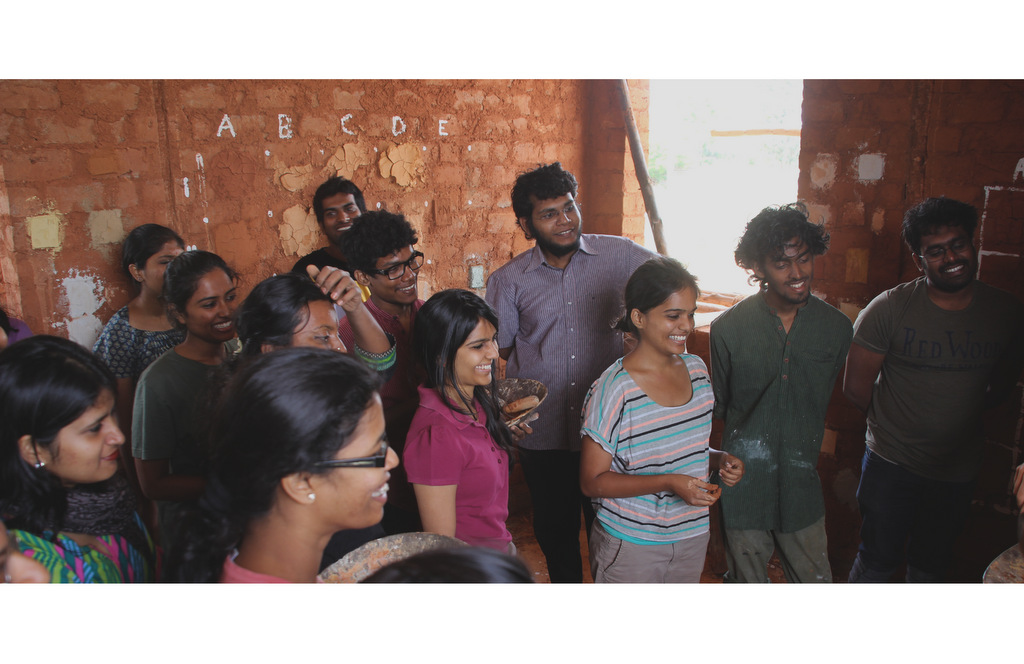
Here we were all cooks;
trying to get the ingredients right,
for one perfect food for everyone;
with little secret spice, for individual’s taste.
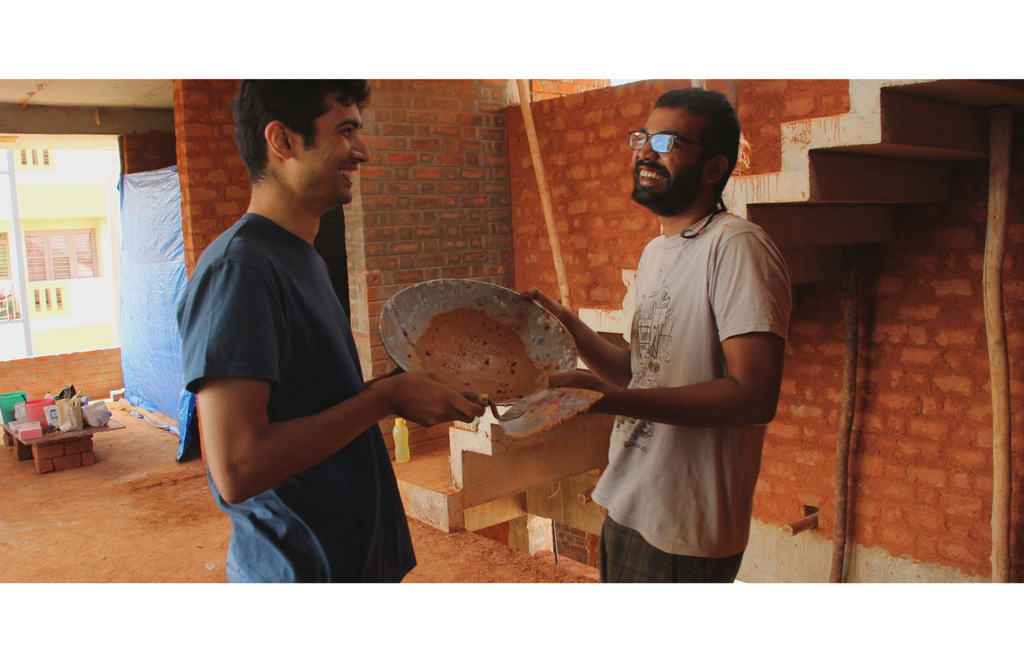
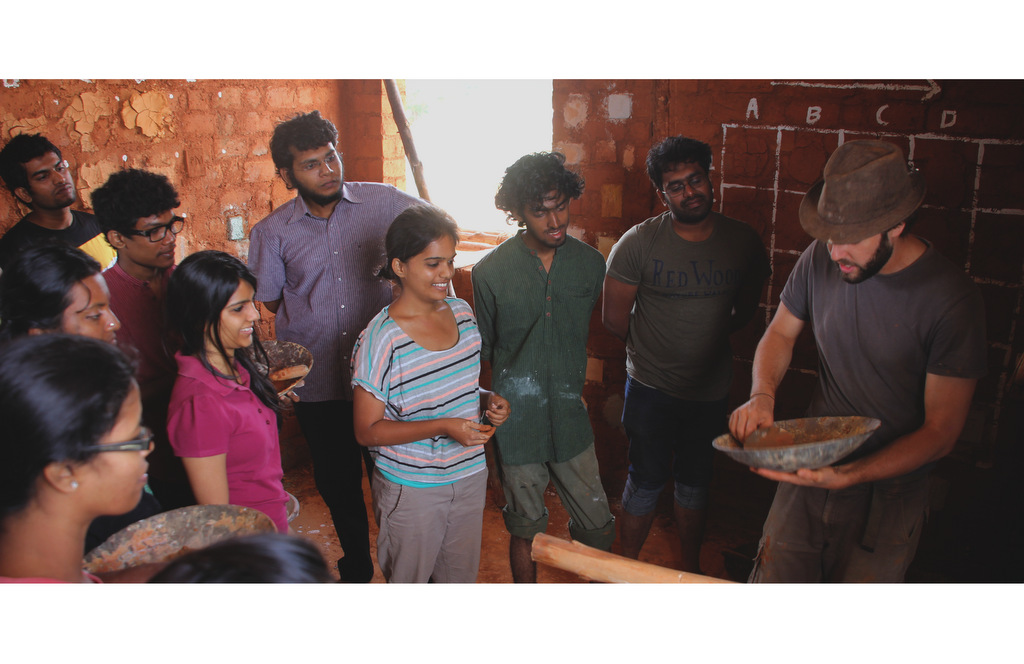
Everyone gathered at the kitchen.
The kitchen smelt different,
The smell made us more hungry; Hungry to cook
For it was no regular kitchen.
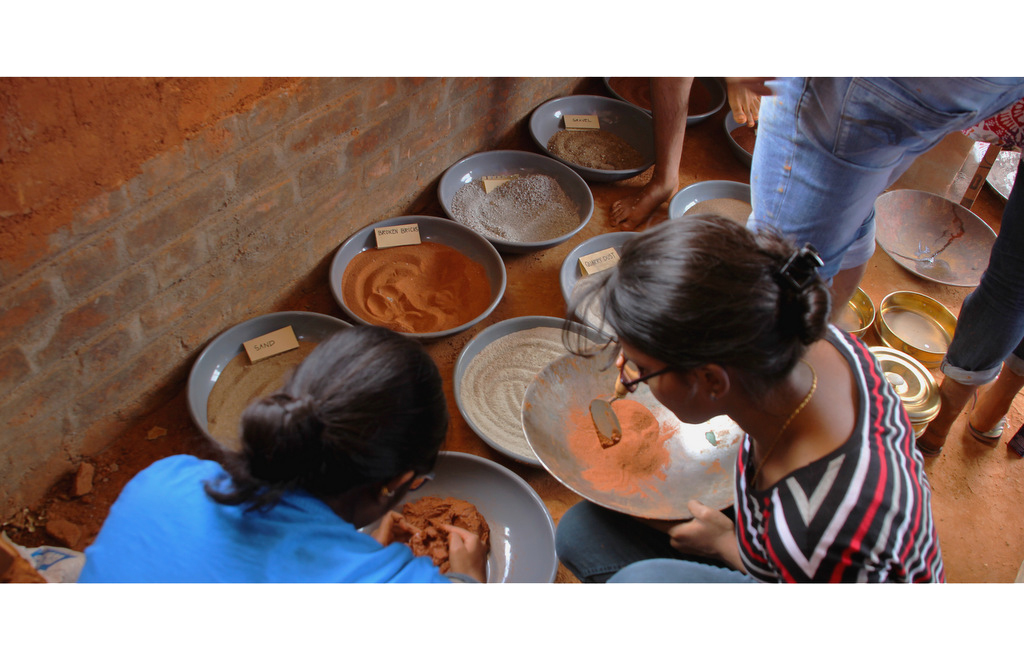
We had two master-chefs; And one master-ingredient;
We were all new to cooking; to this type of cooking;
Major ingredient was so much familiar;
Easy to play with; Easy to cook;
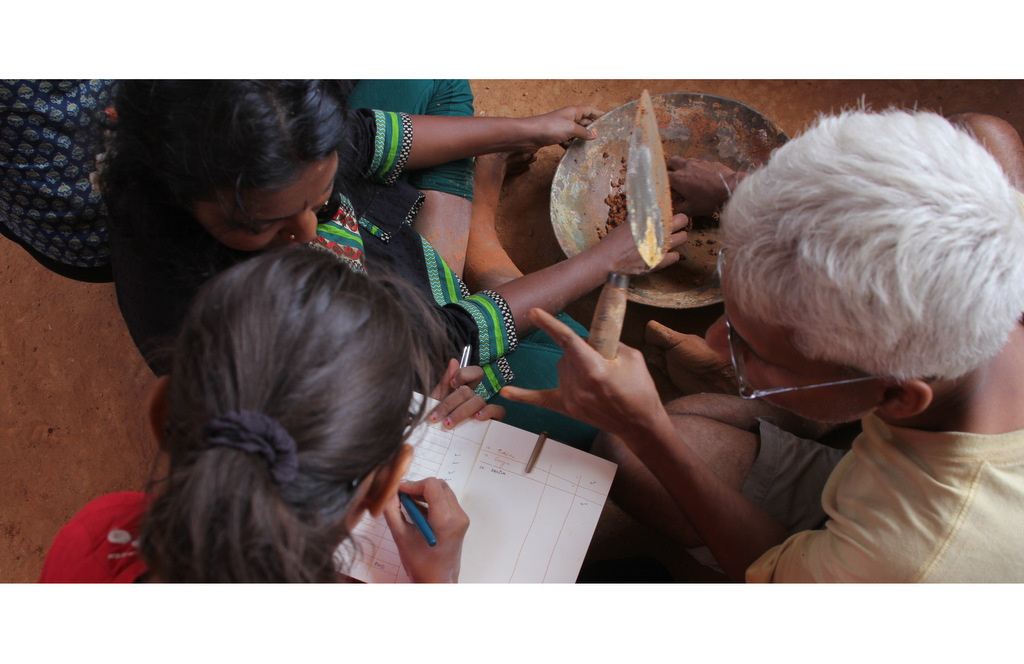
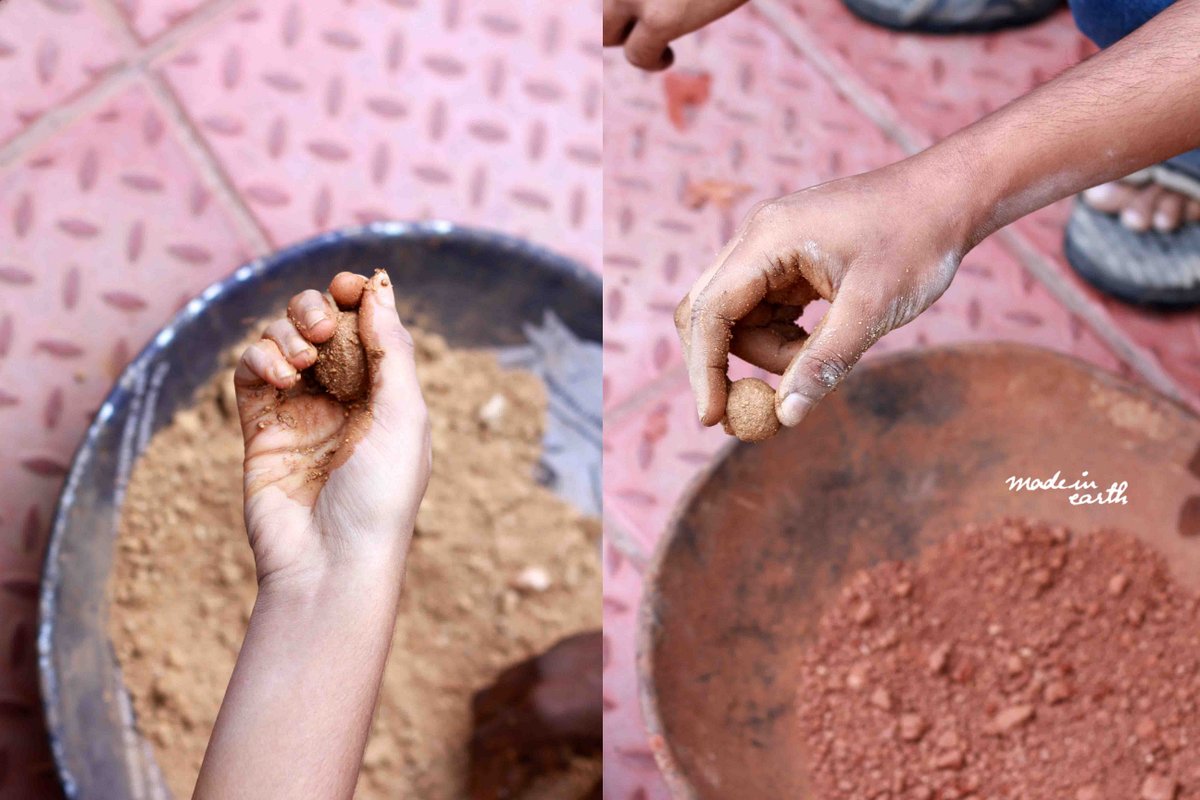
To get it ready, it needed crushing;
And careful watering, And then mixing,
It must feel good in your fingers
For people to appreciate what we cook;
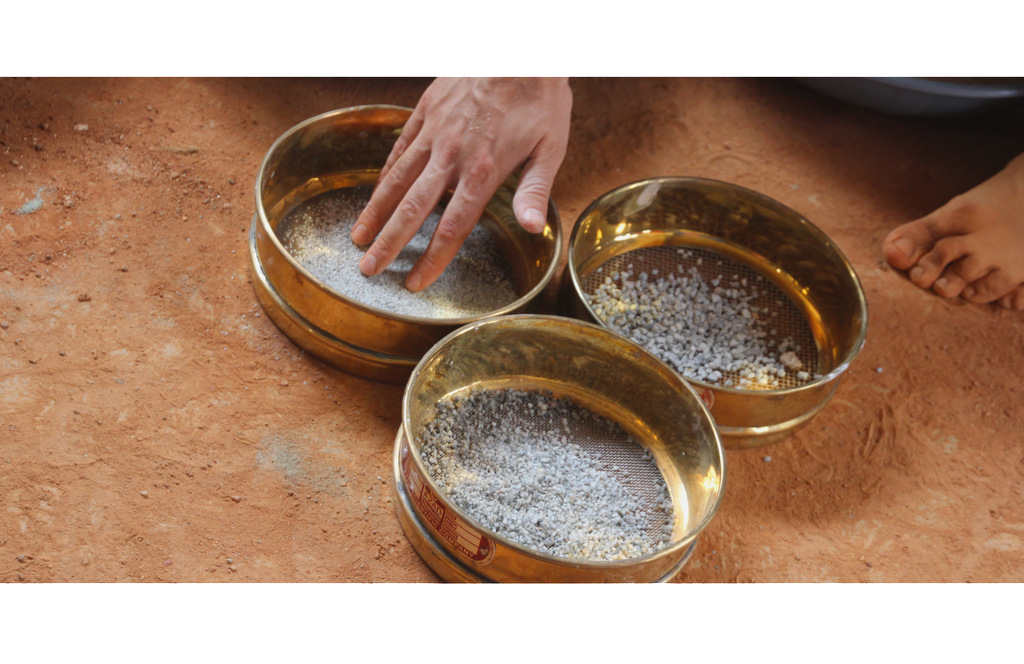
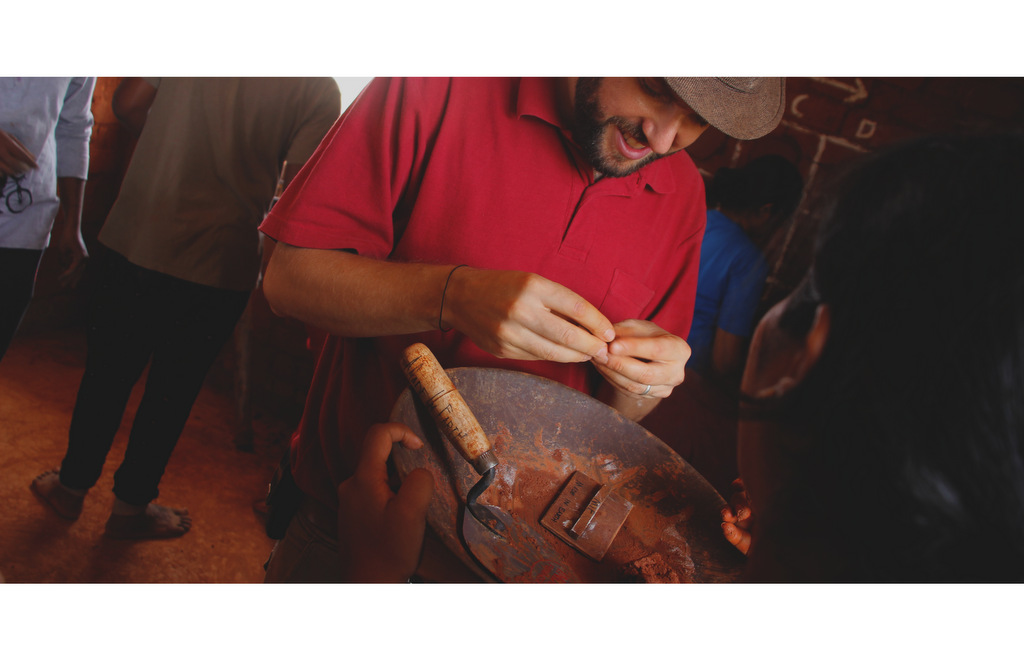
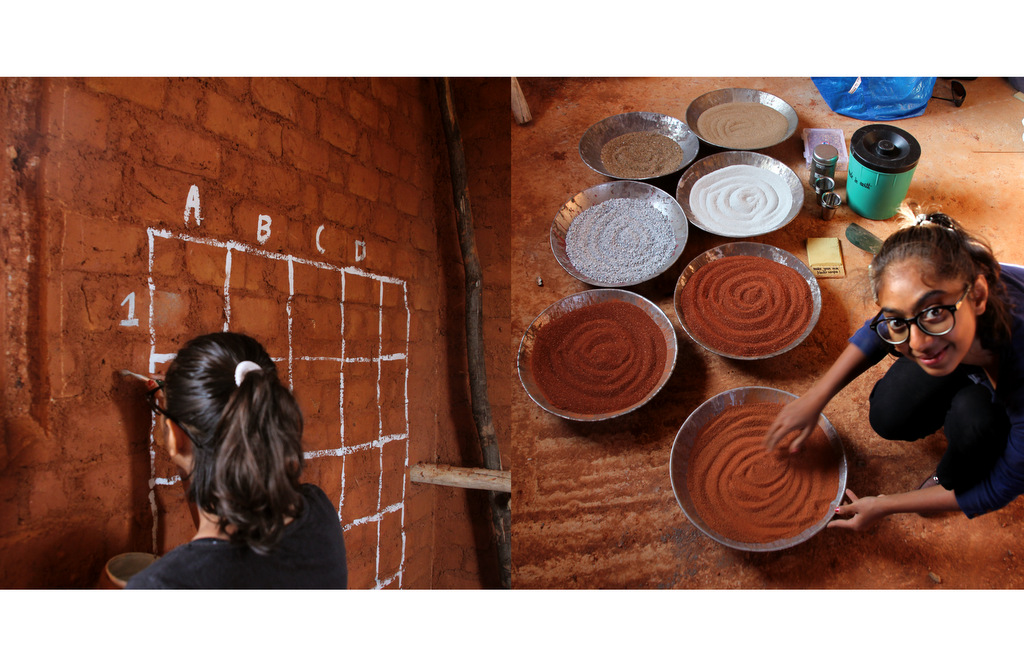
We made a plan; We categorised the ingredients;
For making it easier to experiment;
To Aggregate, Binders, Mass,
Organic reinforcement and added flavours;
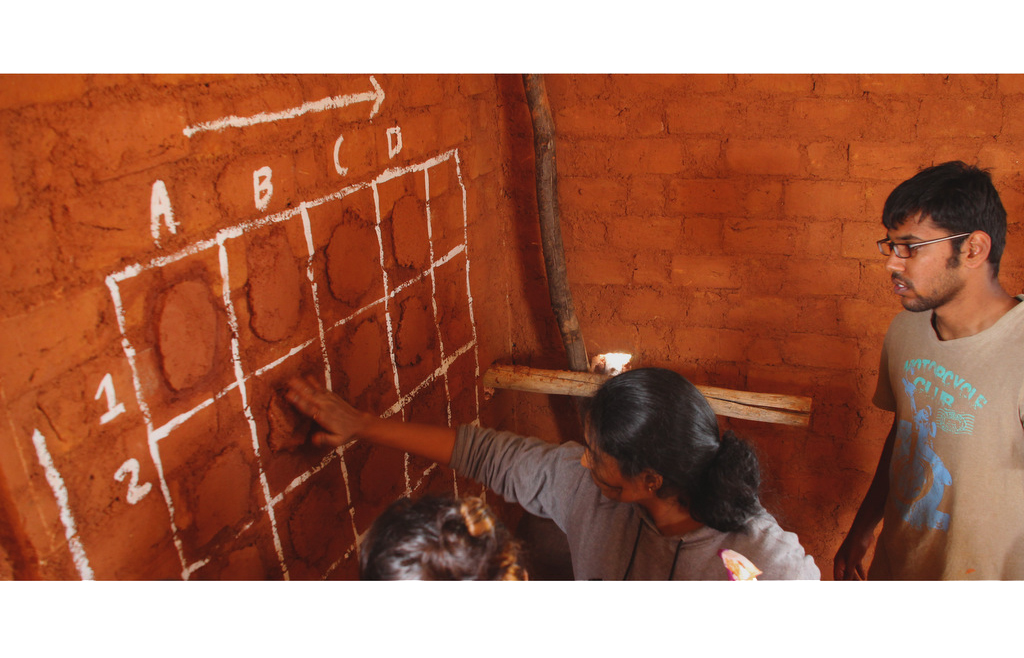
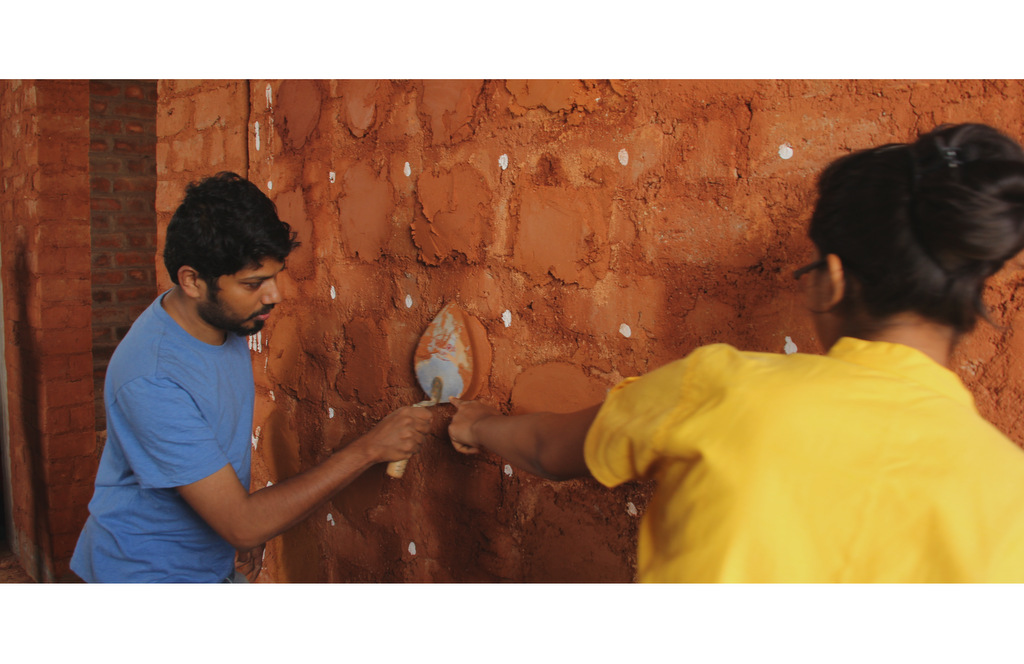
We needed two dishes, to fulfil our hunger;
One main course and one dessert;
we called it base and finishing,
For it was no regular kitchen;
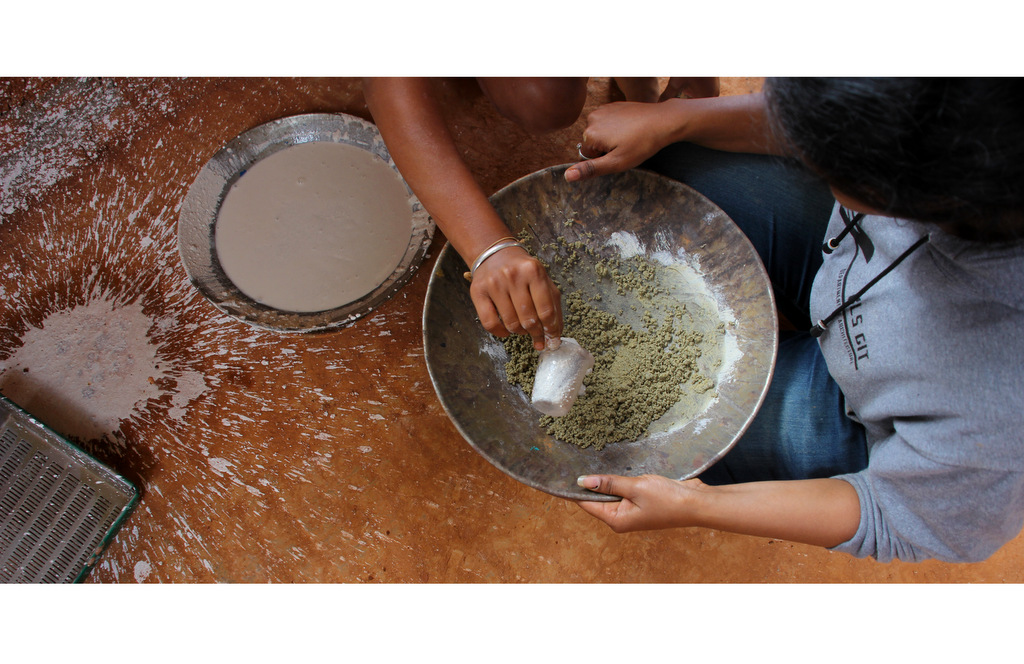
We made a strategy; to get the recipe right;
we drew a grid, kept master-ingredient consistent;
Sprinkled aggregate towards the right;
Added binder down the grid.
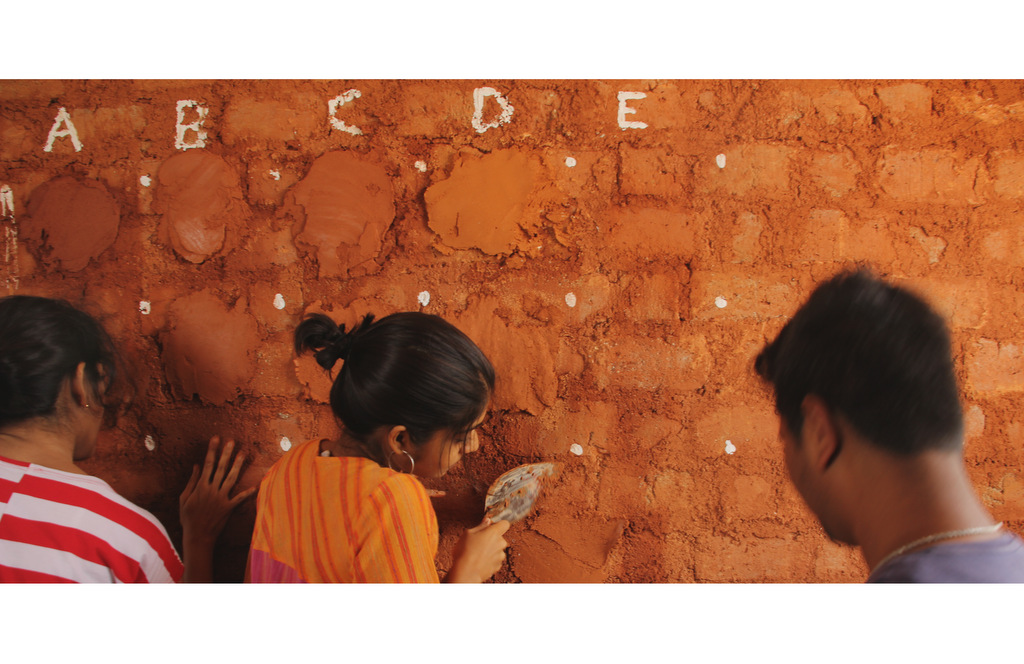
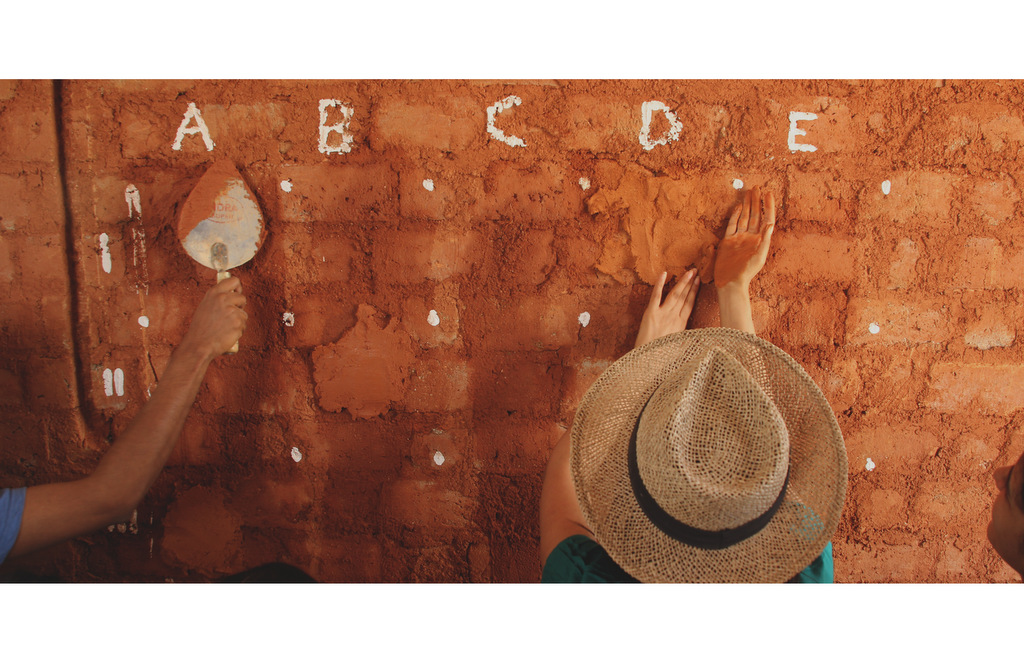
We made experiments; we made recipes;
Added colours and natural flavours
For this food was no regular food;
Like no other food, this food can breath.
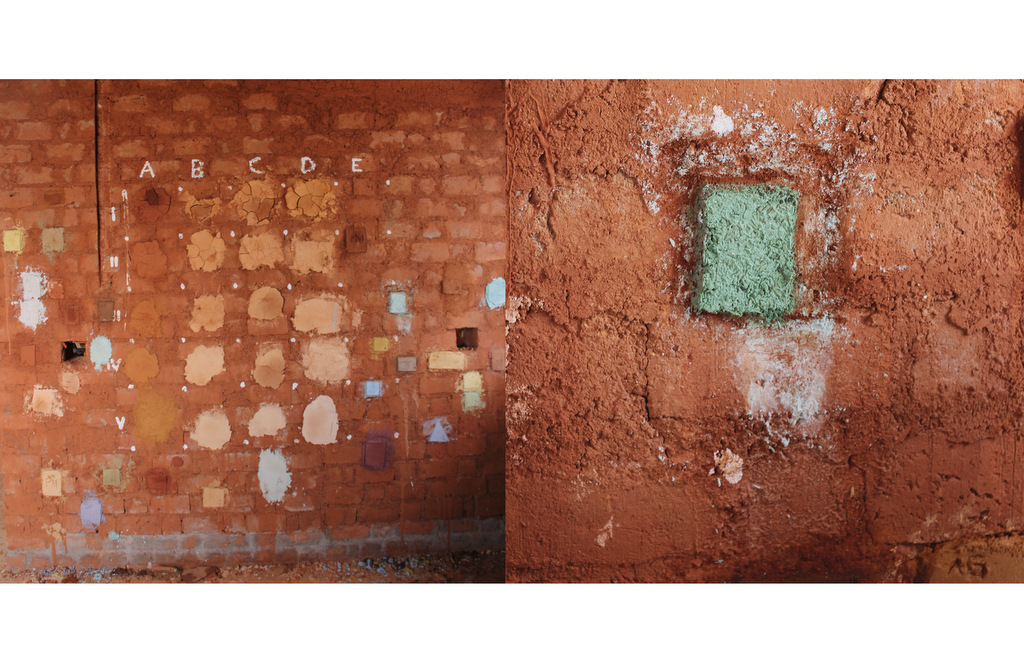
The food can’t crack, nor can it break,
nor can it chip off, and has load to take;
We tested its strength, hanging a bottle or two
For it was no regular food.
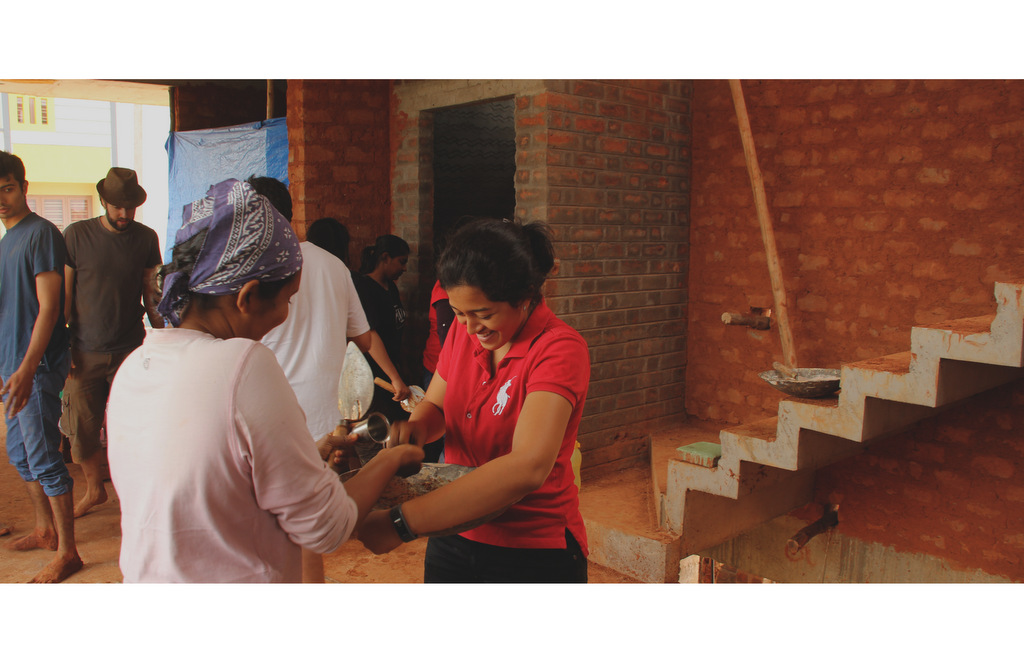
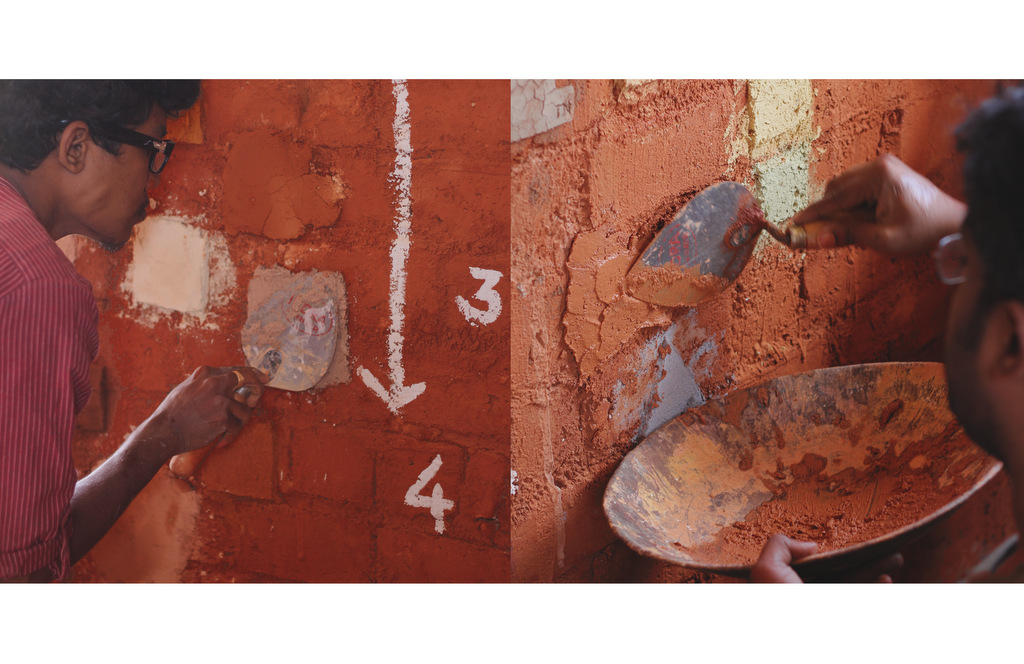
We made the mix, we got the food
for each one, their own recipe;
We cared its cracks and loved it a lot,
For it was a food for hunger and not to eat;
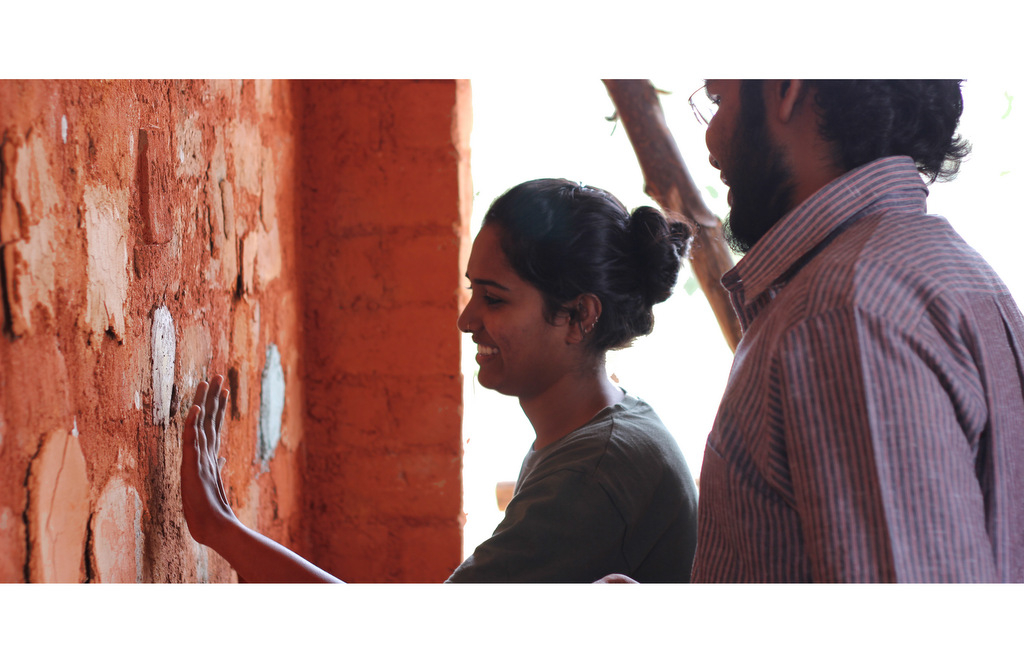
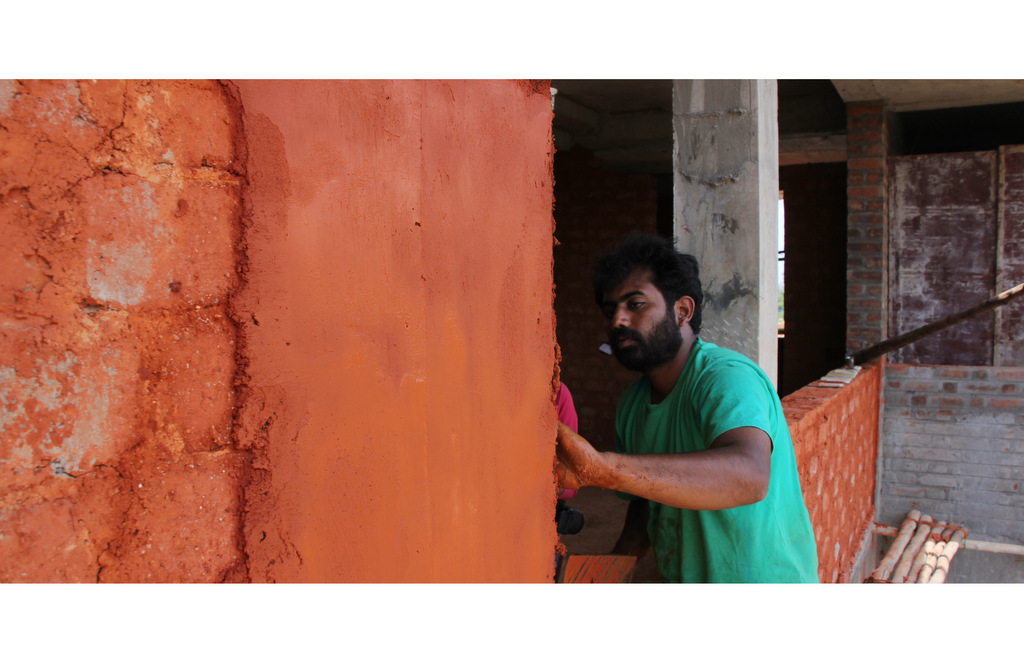
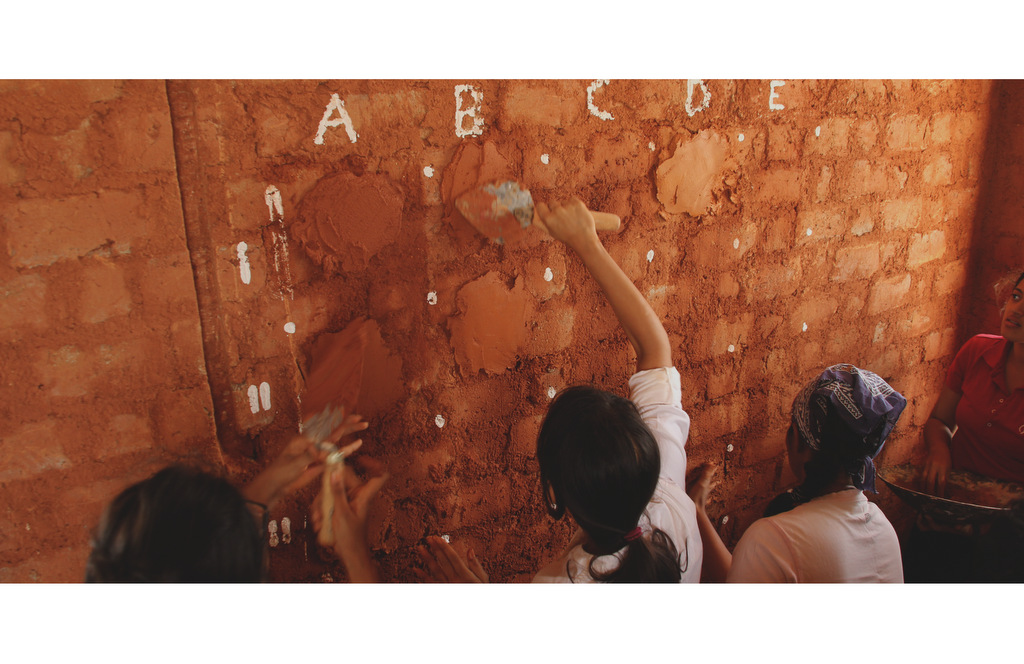
It was no regular kitchen,
And we called it the Earth kitchen;
It was no regular food,
We call it Natural plaster;
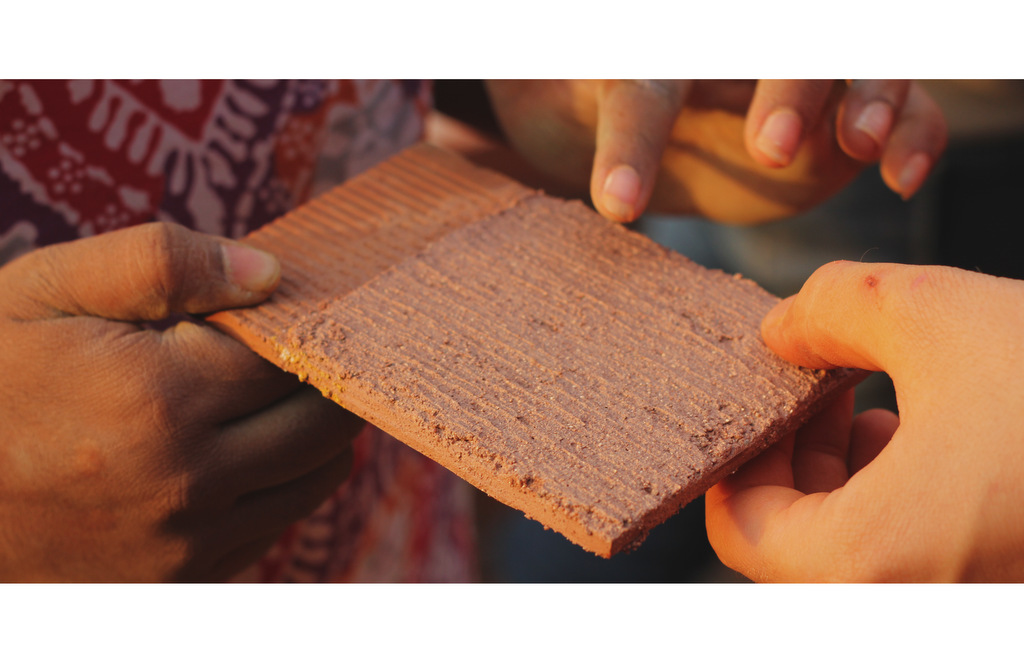
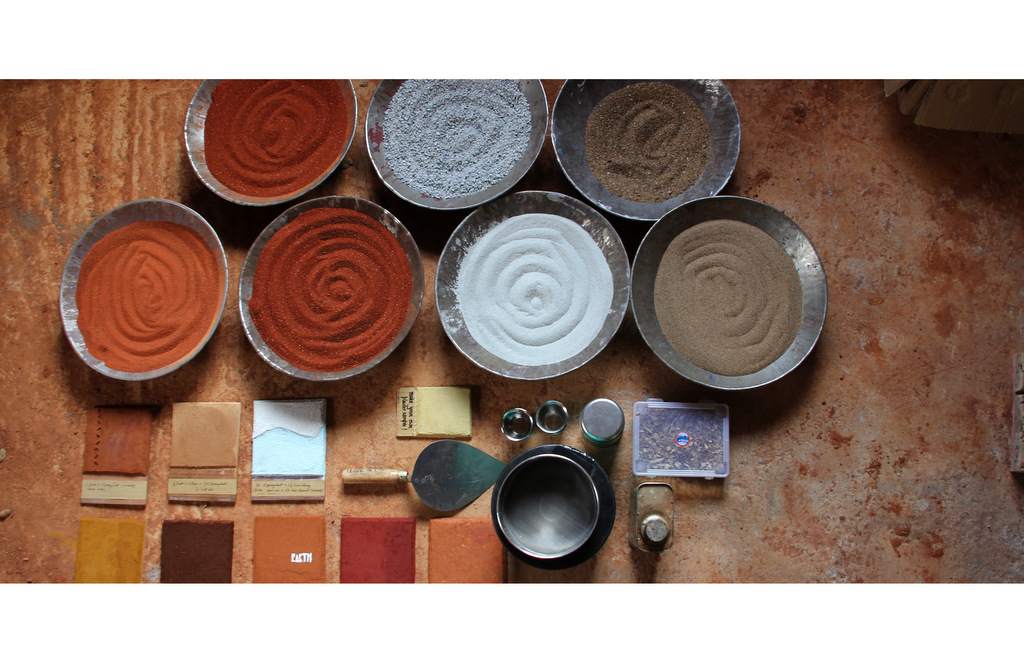
by Santosh Prabhu,
Team Made In Earth
From a series of workshops on natural plaster held at Bangalore in July 2015
Tadelakt and more, a natural plasters workshop, July 2015
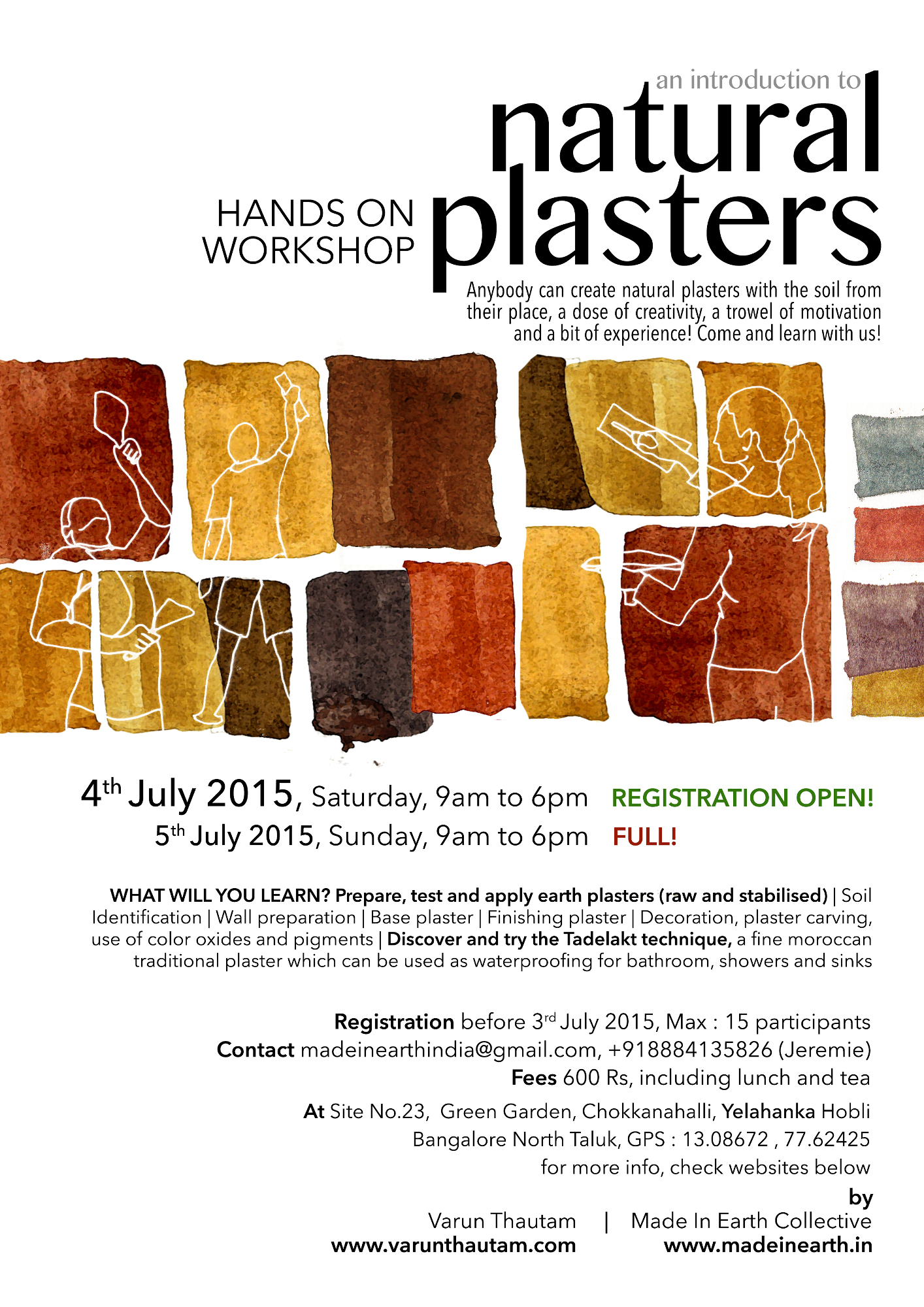 A plaster that breathes, regulates temperature and humidity inside the building, absorbs both noise and odors and that ages beautifully with time. Add to that the infinite possibilities in aesthetics; Coloured or Natural, smooth or grainy, regular or patterned, contemporary or rustic; earth plaster is irresistible!

Additionally, unlike paints and other chemical coatings they do not emit any volatile components which could be harmful to our health and being locally available, they reduce the environmental impact of your construction.
Anybody can create and apply its own natural plaster with the soil of its place, a dose of creativity, a trowel of motivation and a bit of experience!
Come and learn with us!
The venue | The workshop will take place at the construction site of a contemporary earth house, designed by Ar. Varun Thautam in north Bangalore. An opportunity for you to discover other earth construction techniques such as Adobes, and vault masonry with the free spanning technique.
Site No.23, Green Garden
Chokkanahalli, Yelahanka Hobli
Bangalore North Taluk
GPS coordinates : 13.08672 , 77.62425
Equipment | Be ready to get dirty! Carry a good hat and drinking water
Registration and fees | 600 Rs including lunch and tea, Registration before thursday 3rd of July.
>> Access the online registration form
Contact | madeinearthindia@gmail.com , +91 888 413 58 26 (jeremie)
Organisers | Varun Thautam www.varunthautam.com & Made In Earth Collective www.madeinearth.in